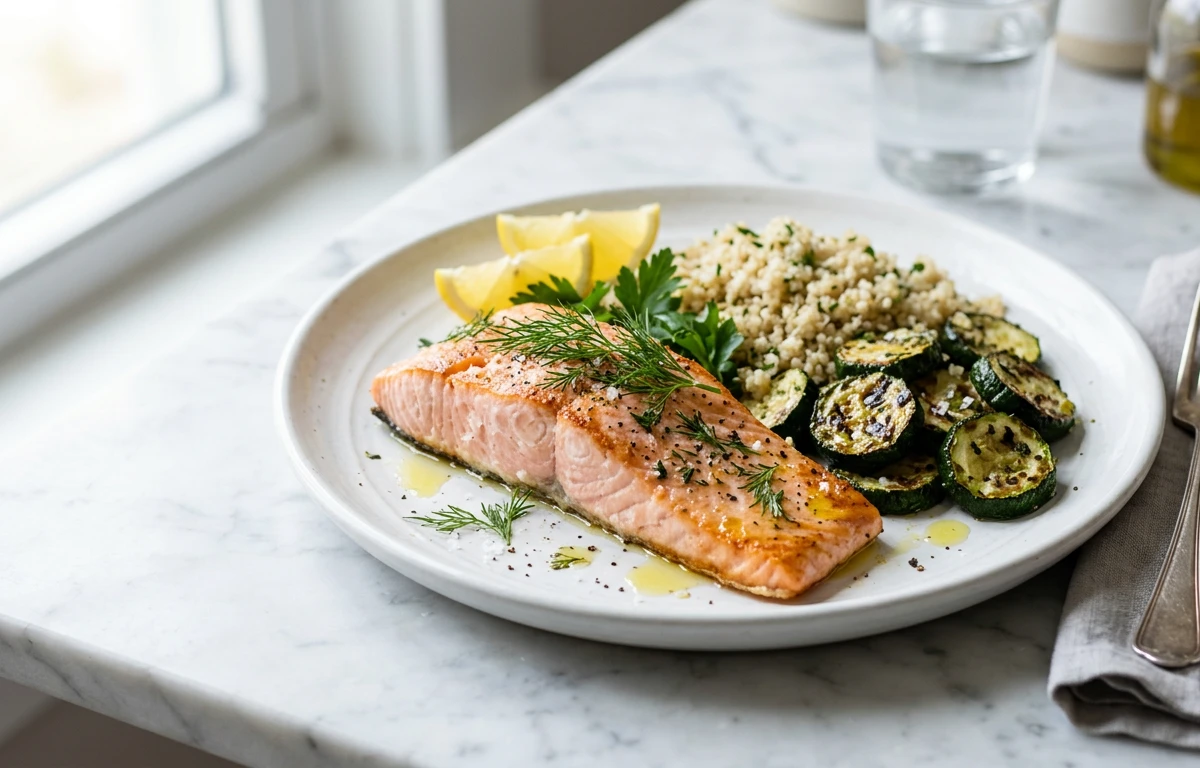
Baked Salmon with Roasted Zucchini & Quinoa
Flaky, tender baked salmon fillets paired with golden roasted zucchini and fluffy quinoa. A light yet satisfying one-tray meal that comes together in under 40 minutes with minimal cleanup. Perfect for a wholesome weeknight dinner.
For 4 servings
- prep
Preheat oven and prep the sheet pan.
1.Preheat oven to 400°F (200°C).2.Line a large baking sheet with parchment paper. - prep · ~20 min
Cook the quinoa.
1.Rinse 1 cup quinoa under cold water in a fine-mesh strainer.2.In a saucepan, combine quinoa with 2 cups water and bring to a boil.3.Reduce heat to low, cover, and simmer for 15 minutes until water is absorbed.4.Remove from heat, fluff with a fork, and keep covered.TIPFluff the quinoa gently — stirring too hard makes it mushy. - mix
Season the zucchini.
1.In a mixing bowl, toss sliced zucchini with 1 tbsp olive oil, garlic powder, half the minced garlic, oregano, and black pepper.2.Spread zucchini in a single layer on one side of the prepared baking sheet. - prep
Season the salmon.
1.Pat salmon fillets dry with a paper towel.2.Brush fillets with remaining 1 tbsp olive oil and squeeze lemon juice over them.3.Sprinkle with remaining minced garlic and a pinch of salt.TIPDrying the salmon first helps it brown instead of steam. - bake · ~15 min
Bake salmon and zucchini together.
1.Place salmon fillets skin-side down on the empty side of the baking sheet.2.Bake for 12-15 minutes until salmon flakes easily with a fork and zucchini is tender and golden at the edges.3.Salmon internal temperature should reach 145°F (63°C).TIPCheck at 12 minutes — thinner fillets cook faster. - assemble
Plate the dish.
1.Divide cooked quinoa among four plates.2.Place a baked salmon fillet beside each mound of quinoa.3.Arrange roasted zucchini on the side. - garnish
Garnish with fresh parsley and serve with lemon wedges.
What to keep in mind.
7 tips from the recipe — small details that make a real difference to the final dish.
- 1Pat salmon fillets completely dry before seasoning to ensure a golden, non-steamed crust.
- 2Arrange zucchini in a single layer on the sheet pan so they roast, not steam.
- 3Check salmon doneness at 12 minutes; thinner fillets can overcook quickly.
- 4Rinse quinoa thoroughly to remove its natural bitter coating (saponin).
- 5Let the cooked quinoa rest covered for 5 minutes off heat, then fluff with a fork.
- 6For extra flavor, roast zucchini cut-side down for deeper caramelization.
- 7Store leftovers in an airtight container for up to 2 days; reheat gently to avoid drying salmon.
Adapt it for your goals.
Mediterranean twist
Swap dried oregano for dried dill or za'atar, and add crumbled feta cheese and cherry tomatoes to the zucchini before roasting for a Greek-inspired flavor.
High proteinHigh-protein
Replace quinoa with an equal amount of cooked lentils or chickpeas for extra plant-based protein and fiber.
Low carb / KetoLow-carb / Keto
Skip the quinoa and double the zucchini or add roasted broccoli. Serve with a side of cauliflower rice.
Vegan alternativeVegan alternative
Substitute salmon with thick slices of firm tofu or portobello mushrooms, marinated in lemon, garlic, and oregano.
Why this is on our healthy list.
Rich in Omega-3 Fatty Acids
Salmon provides heart-healthy omega-3s that support brain function and reduce inflammation.
Complete Plant Protein
Quinoa is a rare plant-based complete protein containing all nine essential amino acids.
Low in Saturated Fat
This dish uses olive oil and lean salmon, making it a heart-friendly meal with minimal saturated fat.
Good Source of Vitamin C
Fresh lemon juice and parsley add vitamin C, which aids iron absorption from the quinoa.
Hydrating and Low-Calorie Vegetable
Zucchini adds volume, fiber, and moisture without many calories, helping with satiety.
Frequently asked questions
Yes, but thaw them completely in the refrigerator overnight and pat very dry before seasoning to avoid excess moisture.