
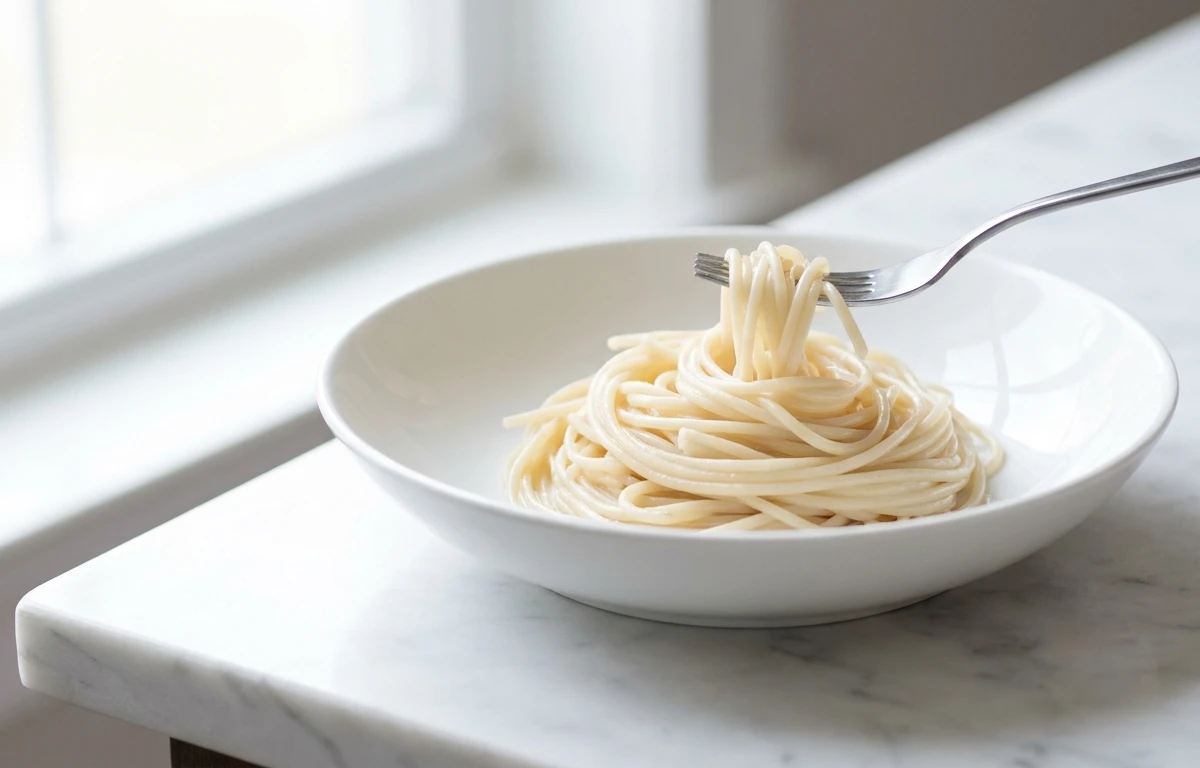
Boiled Pasta
Perfectly tender boiled pasta, ready to be tossed with your favorite sauce or served simply with a drizzle of olive oil. This basic technique is the foundation of countless Italian-American meals, and getting it right means paying attention to salt, timing, and that ideal al dente bite.
For 4 servings
- prep · ~10 min
Bring a large pot of water to a rolling boil.
Fill a large pot with 4 liters of water. Cover with a lid and heat over high heat until the water reaches a vigorous, rolling boil. This will take about 8-10 minutes depending on your stove.
- boil · ~1 min
Salt the water and add the pasta.
1.Once boiling, add the salt to the water and stir once.2.Add the dried pasta all at once and stir immediately to prevent sticking.3.Let the water return to a full boil, uncovered. - boil · ~10 min
Cook the pasta until al dente.
1.Maintain a rolling boil, stirring the pasta every 2 minutes.2.At the 7-minute mark, taste a piece for doneness — it should be tender but still firm to the bite.3.Continue boiling and testing every 30 seconds until it reaches your desired texture. - prep · ~1 min
Reserve pasta water, then drain well.
1.Before pouring out the water, ladle out 1 cup of the starchy pasta cooking water and set it aside.2.Pour the pasta and remaining water through a colander in the sink.3.Shake the colander well to remove excess water. Do not rinse the pasta. - mix · ~1 min
Toss the hot pasta with olive oil.
Immediately return the drained pasta to the warm pot or a serving bowl. Drizzle with the olive oil and toss to coat evenly. This prevents clumping and adds a light sheen.
TIPTossing right after draining is key — the residual heat helps the oil coat each strand smoothly. - serve
Serve immediately with your favorite sauce.
Transfer to plates or bowls and top with tomato sauce, pesto, or a pat of butter. If the pasta seems dry, add a splash of the reserved pasta water to loosen it up.
What to keep in mind.
6 tips from the recipe — small details that make a real difference to the final dish.
- 1Always salt the water after it reaches a full boil — this helps the salt dissolve evenly and seasons the pasta from within.
- 2Stir the pasta immediately after adding it to the water and again every 2 minutes to prevent clumping and ensure even cooking.
- 3Start tasting the pasta 1-2 minutes before the package directions suggest; al dente should have a tiny white core when bitten.
- 4Reserve at least 1 cup of pasta cooking water before draining — its starch is essential for emulsifying and thinning sauces.
- 5Do not rinse the cooked pasta unless you are making a cold salad; the starch on the surface helps sauce cling to each strand.
- 6Toss the drained pasta with olive oil immediately while it's still hot to prevent sticking and add a glossy finish.
Adapt it for your goals.
Whole-wheat
Substitute whole-wheat pasta for regular dried pasta. It has a nuttier flavor and more fiber, but requires a slightly longer boil time and more attentive stirring to avoid sticking.
gluten freeGluten-free
Use gluten-free pasta made from rice, corn, or quinoa. These cook faster and can turn mushy quickly, so reduce the boil time by 1-2 minutes and test frequently.
low sodiumLow-sodium
Reduce the salt in the pasta water to 1/4 teaspoon, or omit it entirely. The pasta will be less seasoned, so compensate by using a bold, salty sauce or finishing with a sprinkle of flaky sea salt.
herb infusedHerb-infused
Add 2-3 cloves of garlic (smashed) and a few sprigs of fresh basil or parsley to the boiling water along with the salt. This infuses the pasta with subtle aromatic notes before draining.
Why this is on our healthy list.
Low in Fat
Boiled pasta is naturally low in fat — this recipe uses only a small drizzle of olive oil for coating, making it a light base for vegetable or lean protein sauces.
Source of Complex Carbs
Dried pasta provides slowly digestible carbohydrates that supply steady energy, especially if you choose whole-grain or legume-based varieties.
Contains Resistant Starch
When pasta is cooked al dente and not overcooked, it retains some resistant starch, which may support digestive health and have a lower glycemic impact.
Sodium Control
By salting the cooking water judiciously (0.5 tsp per 4 liters), you control the sodium level yourself rather than relying on pre-seasoned or boxed mixes.
Frequently asked questions
This usually happens if the water wasn't boiling vigorously enough when you added the pasta, or if you forgot to stir it right after adding. Stir once immediately and again every 2 minutes during cooking.


