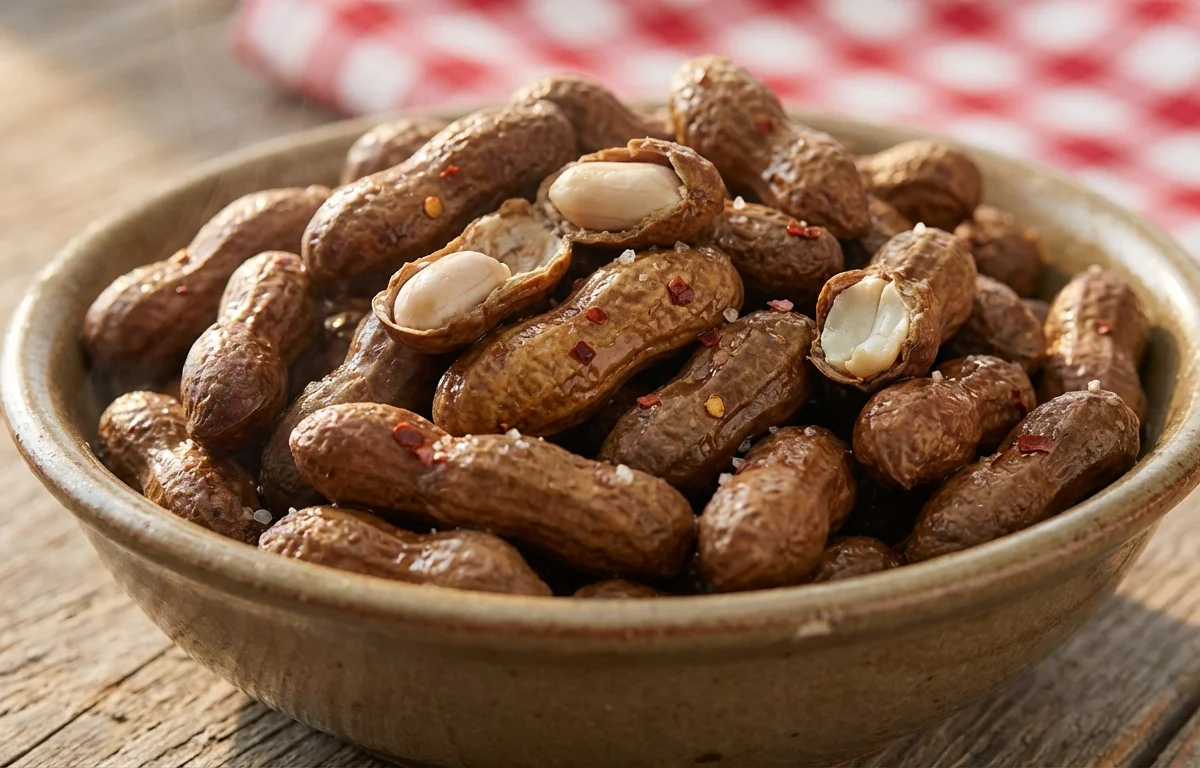
Boiled Peanuts
Soft, salty peanuts simmered slowly in their shells until tender and briny. A beloved Southern roadside snack that transforms raw peanuts into something wonderfully savory and addictive. Best enjoyed warm with a cold drink on a sunny afternoon, they're messy, satisfying, and utterly delicious.
For 6 servings
- prep · ~2 min
Rinse and sort the peanuts.
1.Place 2 lb raw peanuts in a colander and rinse under cold running water.2.Discard any floaters, cracked shells, or debris.3.Drain well. - prep · ~1 min
Fill the pot with peanuts, salt, and water.
1.Place rinsed peanuts into a large stock pot.2.Add 0.5 cup salt over the top of the peanuts.3.Pour 3 liters of cold water into the pot until peanuts are fully submerged by at least 2 inches.TIPThe peanuts will float — place a heavy heat-proof plate on top to keep them submerged during cooking. - boil · ~15 min
Bring the pot to a rolling boil.
Place the pot over high heat and bring the water to a rolling boil. Stir occasionally to help dissolve the salt.
- simmer · ~150 min
Simmer gently for 2 to 3 hours until tender.
1.Reduce heat to medium-low to maintain a gentle simmer.2.Cover the pot and cook for about 2 hours, checking every 30 minutes.3.Add more hot water if the level drops below the peanuts.4.Start tasting for doneness after 2 hours — the peanut inside should be soft and creamy, not crunchy.5.Total cooking time ranges from 2 to 3 hours depending on freshness and size.TIPRaw 'green' peanuts (freshly harvested) cook in about 2 hours; dried raw peanuts may need closer to 3 hours or more. - rest · ~30 min
Let peanuts soak in the brine.
Turn off the heat and let the peanuts sit in the hot salty brine for 30 minutes. This deepens the saltiness and makes them even more tender.
TIPFor saltier peanuts, leave them in the brine longer — even overnight in the fridge. - serve · ~1 min
Drain and serve warm.
1.Pour the peanuts into a large colander to drain the brine.2.Transfer to a serving bowl while still warm.3.Serve with an extra bowl for the empty shells.TIPBoiled peanuts are best eaten warm. Reheat leftovers in the microwave with a splash of water.
What to keep in mind.
6 tips from the recipe — small details that make a real difference to the final dish.
- 1Use raw 'green' peanuts when in season for the shortest cook time and creamiest texture.
- 2Place a heavy heat-proof plate on top of the peanuts to keep them submerged during boiling.
- 3Start tasting for doneness after 2 hours — the peanut inside should be soft and creamy, not crunchy.
- 4For saltier peanuts, let them soak in the brine longer, even overnight in the fridge.
- 5Reheat leftovers in the microwave with a splash of water to restore moisture.
- 6Discard any floaters, cracked shells, or debris during the initial rinse to ensure even cooking.
Adapt it for your goals.
Spicy Cajun
Add 2 tablespoons Cajun seasoning, 1 tablespoon cayenne pepper, and 4 smashed garlic cloves to the pot. This gives the peanuts a bold, spicy kick that's popular in Gulf Coast seafood boils.
garlic herbGarlic herb
Add 6 crushed garlic cloves and a bundle of fresh thyme and rosemary during simmering. The aromatics infuse the brine for a fragrant, savory twist.
low sodiumLow-sodium
Reduce salt to 1/4 cup and add lemon juice, bay leaves, and black peppercorns. Makes a milder, less salty snack ideal for those watching their sodium intake.
soy gingerSoy ginger
Replace half the salt with 1/4 cup soy sauce and add 2-inch piece of ginger sliced thin. Creates an umami-rich, Asian-inspired boiled peanut reminiscent of edamame.
Why this is on our healthy list.
Rich in Plant Protein
Peanuts are legumes packed with protein, making them a satisfying and filling snack that supports muscle repair and satiety.
Good Source of Healthy Fats
The monounsaturated and polyunsaturated fats in peanuts support heart health when eaten in moderation as part of a balanced diet.
Contains Dietary Fiber
Boiled peanuts retain fiber that aids digestion and helps maintain steady blood sugar levels.
High in B Vitamins
Peanuts naturally provide niacin and folate, which are important for energy metabolism and cell health.
Frequently asked questions
Dried raw peanuts can take longer to soften than fresh green peanuts. Continue simmering, adding hot water as needed, and test every 30 minutes until they reach a creamy texture.