
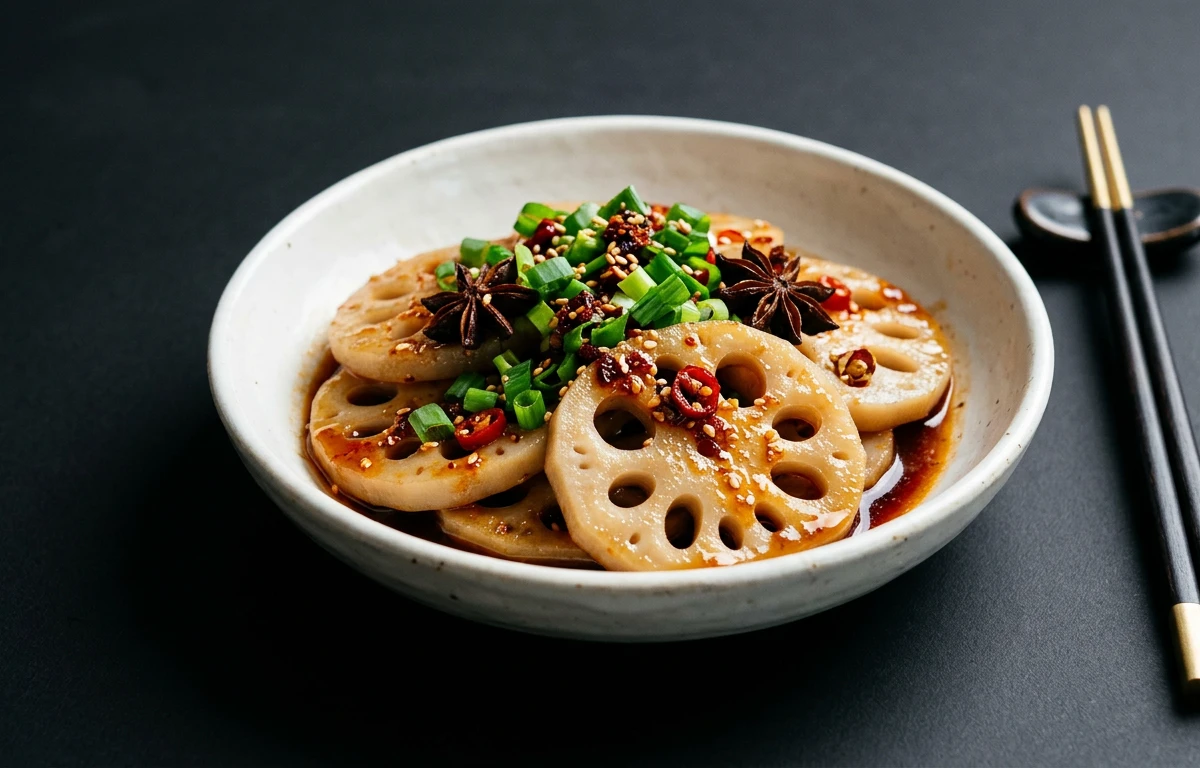
Braised Lotus Stem in Savory Sauce
Tender, juicy rounds of lotus stem braised in a lightly spiced, aromatic sauce. This Kashmiri-inspired dish balances the natural earthiness of the root with a savory, creamy gravy that pairs effortlessly with steamed rice or naan.
For 4 servings
- prep · ~10 min
Prep and parboil the lotus stem.
1.Peel the lotus stem, slice off the woody ends, and cut into 1 cm thick rounds.2.Rinse the slices well and plunge them into a pot of boiling water with a pinch of salt.3.Boil for 5-7 minutes until slightly tender but still firm. Drain and set aside. - fry · ~8 min
Shallow-fry the lotus stem.
1.Heat 1 tablespoon of mustard oil in a wide, heavy-bottomed pan to its smoking point, then cool it slightly.2.Add the parboiled lotus stem slices in a single layer and pan-fry until lightly golden on both sides.3.Remove the lotus stem with a slotted spoon and set aside.TIPUse gentle heat so the spices don't burn while the lotus stem browns. - saute · ~12 min
Build the aromatic base.
1.In the same pan, heat the remaining 1 tablespoon of mustard oil.2.Add cumin seeds, crushed green cardamom, and the bay leaf. Sauté until spluttering and fragrant.3.Add the sliced onions and cook until deeply golden and soft.4.Sprinkle in the ginger powder, fennel powder, and turmeric. Stir for 30 seconds.TIPCook the onions on a medium-low flame; golden, not burnt, gives the sauce its sweet depth. - simmer · ~30 min
Simmer the lotus stem in the sauce.
1.Lower the heat, add the whisked yogurt, and stir continuously for 2 minutes to prevent curdling.2.Pour in the water, add salt, and bring the gravy to a gentle boil.3.Add the fried lotus stem slices back into the pan, cover, and simmer on low heat for 20-25 minutes.4.Stir occasionally, and cook until the lotus stem is very tender and the gravy has thickened.TIPWhisk the yogurt thoroughly and keep the heat low when adding it; this prevents the sauce from splitting. - garnish · ~5 min
Finish and serve the dish.
1.Turn off the heat. Stir in the garam masala and lemon juice.2.Let the dish rest for 5 minutes.3.Transfer to a serving bowl and garnish with fresh, chopped cilantro.
What to keep in mind.
6 tips from the recipe — small details that make a real difference to the final dish.
- 1Parboil the lotus stem just until slightly tender; it will finish cooking in the gravy and become perfectly tender without turning mushy.
- 2Heat mustard oil to its smoking point, then let it cool slightly before frying — this tames its pungency and adds a distinctive Kashmiri flavor.
- 3Whisk the yogurt until completely smooth and add it over low heat while stirring constantly to prevent curdling in the sauce.
- 4Don't skip the lemon juice and garam masala at the end — they brighten the dish and add a final layer of warmth.
- 5Let the dish rest for 5 minutes after cooking so the flavors meld and the gravy thickens to a creamy consistency.
- 6If the gravy becomes too thick while simmering, splash in a little warm water to reach your preferred consistency.
Adapt it for your goals.
Vegan
Replace the yogurt with a thick, unsweetened cashew cream or full-fat coconut yogurt to keep the gravy creamy and tangy without dairy.
Extra SpicyExtra Spicy
Add 1-2 finely chopped green chilies along with the onions, and a pinch of red chili powder with the turmeric for those who love heat.
Low OilLow-Oil
Skip the shallow-frying step: after parboiling, directly add the lotus stem to the sauce and simmer. Use only 1 tbsp oil for the tadka to reduce fat while keeping flavor.
Protein BoostProtein Boost
Add 200g of paneer cubes or firm tofu chunks along with the fried lotus stem to turn this into a heartier, protein-rich main dish.
Why this is on our healthy list.
Rich in Dietary Fiber
Lotus stem is an excellent source of dietary fiber, which supports healthy digestion and helps maintain steady blood sugar levels.
Good Source of Vitamin C
Lotus root provides vitamin C, an antioxidant that supports immune health and collagen production for healthy skin.
Low in Calories
This dish is naturally low in calories, making it a satisfying yet light option for a vegetable-forward meal when paired with rice or flatbread.
Contains Anti-Inflammatory Spices
Turmeric, ginger, and fennel powder in the recipe offer natural anti-inflammatory properties that may support joint and overall health.
Frequently asked questions
Whisk the yogurt until perfectly smooth, keep the heat low when adding it, and stir continuously for at least 2 minutes as it blends into the pan.


