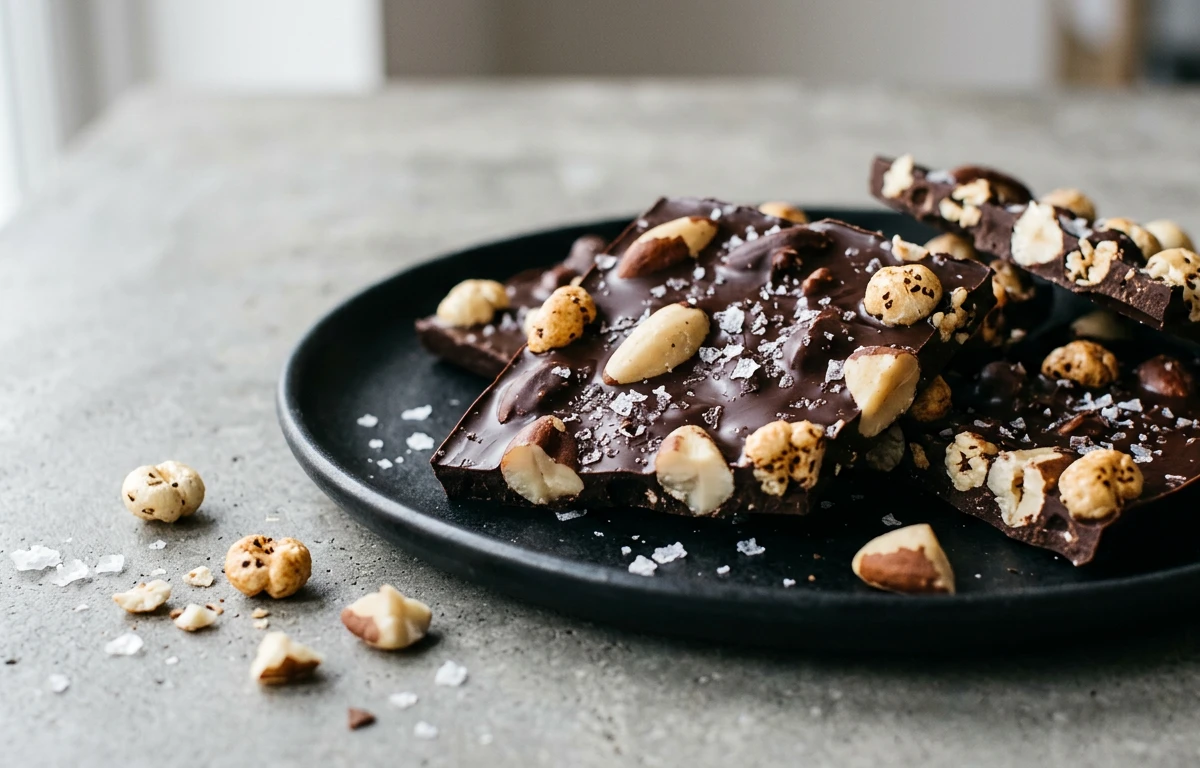
Brazil Nut & Chocolate Bark
Gorgeous, glossy sheets of dark chocolate studded with crunchy Brazil nuts and a whisper of flaky sea salt. This two-ingredient wonder comes together in minutes, needs no baking, and breaks into beautiful shards — perfect for gifting, snacking, or an after-dinner treat.
For 8 servings
- prep
Prepare the baking sheet and nuts.
1.Line a baking sheet with parchment paper, letting the edges overhang slightly.2.Roughly chop 100g Brazil nuts into chunky pieces; set aside a few whole ones for garnish. - other · ~5 min
Melt the dark chocolate.
1.Place 300g roughly chopped dark chocolate in a heatproof bowl.2.Set the bowl over a saucepan of barely simmering water, making sure the bowl doesn't touch the water.3.Stir gently with a spatula until the chocolate is fully melted and smooth (about 4-5 minutes).4.Remove the bowl from the heat and wipe the bottom dry.TIPDon't let any water or steam get into the chocolate — it will seize and turn grainy. - mix
Fold in the Brazil nuts.
1.Tip the chopped Brazil nuts into the bowl of melted chocolate.2.Fold together with the spatula until every nut piece is coated in chocolate. - assemble
Spread the chocolate mixture onto the baking sheet.
1.Pour the chocolate-nut mixture onto the parchment-lined baking sheet.2.Use the spatula to spread it into an even layer about 0.5 cm thick.3.Press the reserved whole Brazil nuts gently into the surface.4.Scatter a pinch of flaky sea salt evenly over the top.TIPWork quickly before the chocolate begins to set. - rest
Chill until completely set.
1.Transfer the baking sheet to the refrigerator.2.Chill for at least 30 minutes, or until the chocolate is fully hardened. - serve
Break into shards and serve.
1.Lift the bark off the parchment paper.2.Break into 8 rustic pieces with your hands.TIPFor clean edges, score the chocolate with a sharp knife before breaking.
What to keep in mind.
7 tips from the recipe — small details that make a real difference to the final dish.
- 1Use a good-quality 70% dark chocolate for the best flavor and smooth melting.
- 2Make sure the bowl and spatula are completely dry before melting chocolate to prevent seizing.
- 3Chop Brazil nuts into chunky pieces for varied texture in every bite.
- 4Spread the chocolate mixture to an even 0.5 cm thickness so it breaks into neat shards.
- 5Refrigerate for at least 30 minutes; if your kitchen is warm, chill for up to 45 minutes.
- 6Store bark in an airtight container in the fridge for up to 2 weeks.
- 7For a gift, keep bark in a cool spot; wrap in parchment and tie with twine.
Adapt it for your goals.
Vegan
Use dairy-free dark chocolate (most 70% bars are vegan) to make this bark entirely plant-based, perfect for vegan gifting or snacking.
low sugarLow-sugar
Swap dark chocolate for a sugar-free variety (sweetened with stevia or monk fruit) to reduce sugar while keeping the rich cocoa flavor.
spicedSpiced
Add ½ teaspoon of cinnamon or a pinch of cayenne pepper when folding in the nuts for a warm, gently spicy twist.
Why this is on our healthy list.
Rich in Healthy Fats
Brazil nuts are one of the best sources of selenium, an antioxidant mineral that supports thyroid function and immune health.
Antioxidant-Rich Dark Chocolate
Dark chocolate with 70% cocoa provides flavonoids that help combat oxidative stress and support heart health.
Frequently asked questions
Yes, but the bark will be sweeter and less firm; milk chocolate has less cocoa butter and may not set as hard.