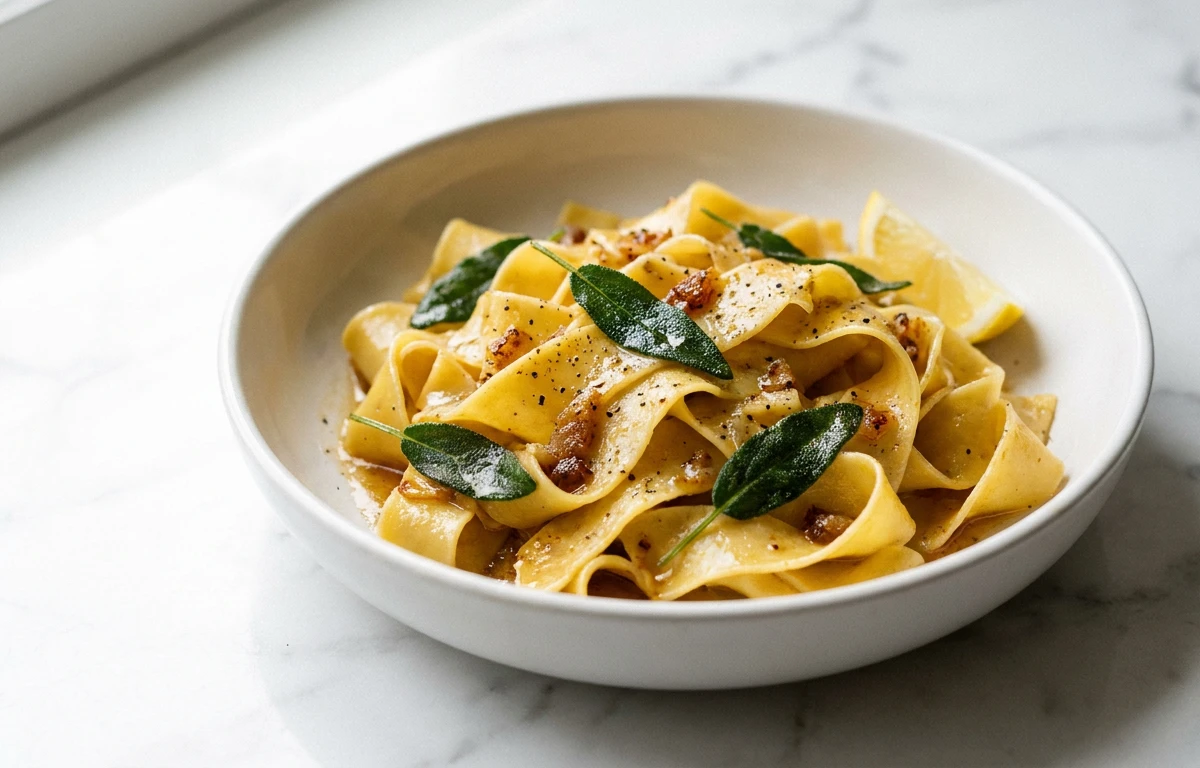
Brown Butter & Sage Sauce
A nutty, fragrant sauce where butter is gently toasted until golden and speckled with crispy sage leaves. This classic Italian condiment transforms simple pasta, gnocchi, or pan-seared fish into an elegant meal in under 10 minutes.
For 4 servings
- prep · ~2 min
Cube the butter and get the sage ready.
Cut cold butter into even, small cubes so it melts uniformly. Pat the sage leaves completely dry with a paper towel to minimize splattering.
TIPCold butter melts more evenly, giving you better control over the browning process. - saute · ~4 min
Melt and brown the butter.
Place the butter in a cold skillet, then set over medium heat. Once melted, it will begin to foam. Swirl the pan continuously and watch for the milk solids at the bottom to turn a deep golden-brown. The moment you smell a nutty, toasty aroma, immediately move to the next step.
TIPUse a light-colored pan if you have one. It makes spotting the color change from yellow to amber much easier. - fry
Crisp the sage leaves.
Drop the dry sage leaves into the foaming brown butter. They will sizzle and crisp up in about 15-20 seconds. Once the bubbling around them subsides, the leaves are done.
TIPProtect your hands and face. Any moisture on the sage will cause the hot butter to spatter. - mix
Season and remove from heat immediately.
Add a pinch of salt and a crack of black pepper. Immediately pull the pan off the heat and pour the sauce into a heatproof bowl to stop the cooking. The butter can go from perfect to burnt in seconds.
TIPDon't drain the brown bits. Those toasty milk solids are exactly where the deep, nutty flavor lives.
What to keep in mind.
6 tips from the recipe — small details that make a real difference to the final dish.
- 1Use a light-colored skillet to easily monitor the butter's color change from yellow to deep amber.
- 2Pat sage leaves bone-dry with paper towels to prevent violent spattering when they hit the hot butter.
- 3Swirl the pan constantly during browning to ensure even toasting of milk solids and avoid burnt spots.
- 4Remove the pan from heat the instant the butter smells nutty — it darkens and burns quickly off the heat.
- 5Pour the finished sauce into a cool bowl to halt cooking and preserve the perfect amber color.
- 6Serve immediately after making; brown butter sauce doesn't reheat well as the solids can scorch.
Adapt it for your goals.
Garlic-brown butter
Add 1 thinly sliced garlic clove to the pan just after the butter browns, cooking for 10 seconds before adding sage. You get a savory, aromatic layer perfect with pasta.
lemon brown butterLemon-brown butter
After removing from heat, stir in 1 teaspoon fresh lemon juice and a pinch of lemon zest. The acidity cuts the richness beautifully — ideal for fish or vegetables.
brown butter with capersBrown butter with capers
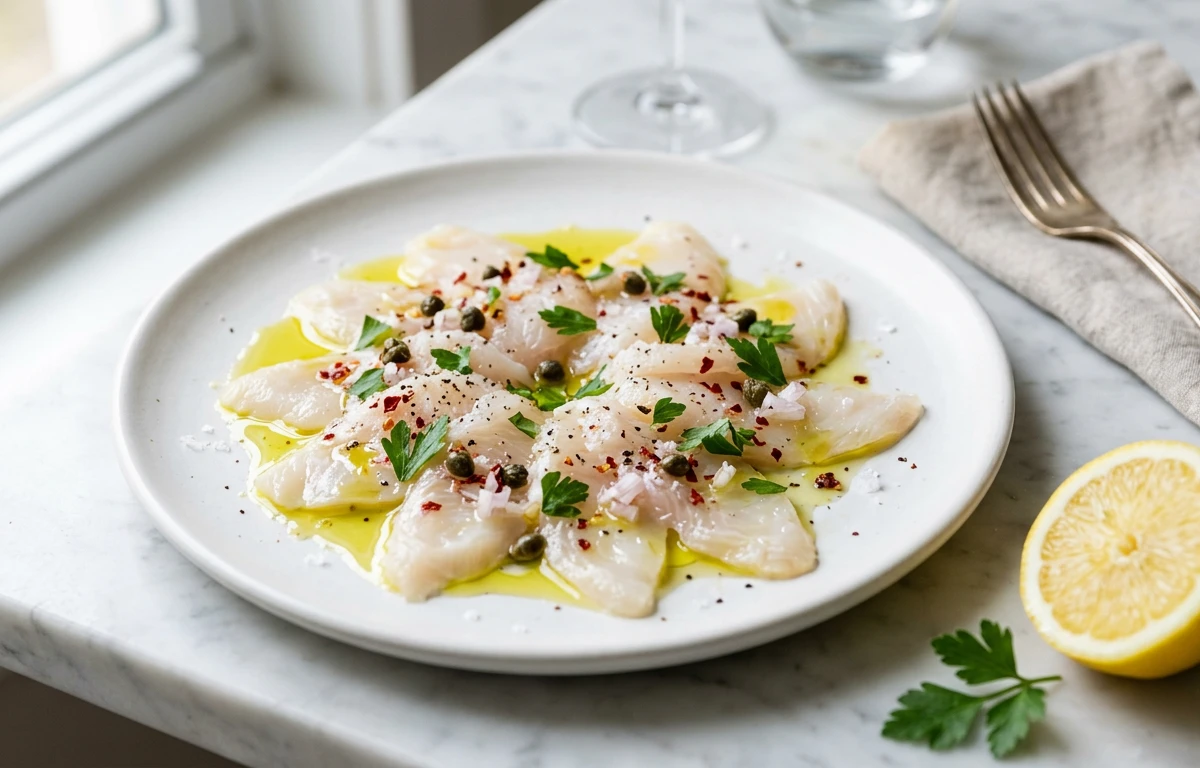
Add 1 tablespoon drained capers along with the sage. Their briny pop contrasts the nutty butter — excellent over seared fish or roasted potatoes.
brown butter & hazelnutBrown butter & hazelnut
Add 2 tablespoons chopped toasted hazelnuts after removing from heat. Their crunch and earthiness double down on the nutty notes for a decadent pasta topping.
vegan brown butterVegan brown butter
Substitute butter with a high-fat vegan butter or coconut oil and add a pinch of nutritional yeast for a cheesy-nutty undertone. Works well over roasted squash or gnocchi.
Why this is on our healthy list.
Rich in Vitamin A
Butter provides a significant source of vitamin A from dairy fat, which supports vision and immune function.
Antioxidant-Rich Herbs
Sage contains rosmarinic acid and other antioxidant compounds that help combat oxidative stress.
Moderate Saturated Fat Profile
Using unsalted butter allows you to control sodium while enjoying a modest amount of saturated fat for energy and satisfaction.
Butyrate Support
Butter is a natural source of butyrate, a short-chain fatty acid that supports gut health and reduces inflammation.
Quick & Minimal Ingredients
This sauce uses only a handful of whole-food ingredients with no added preservatives, making it a clean, from-scratch option.
Frequently asked questions
Yes, but omit the added pinch of salt and taste before serving, as salted butter can make the sauce too salty once reduced.