Cabbage Pea Sabzi
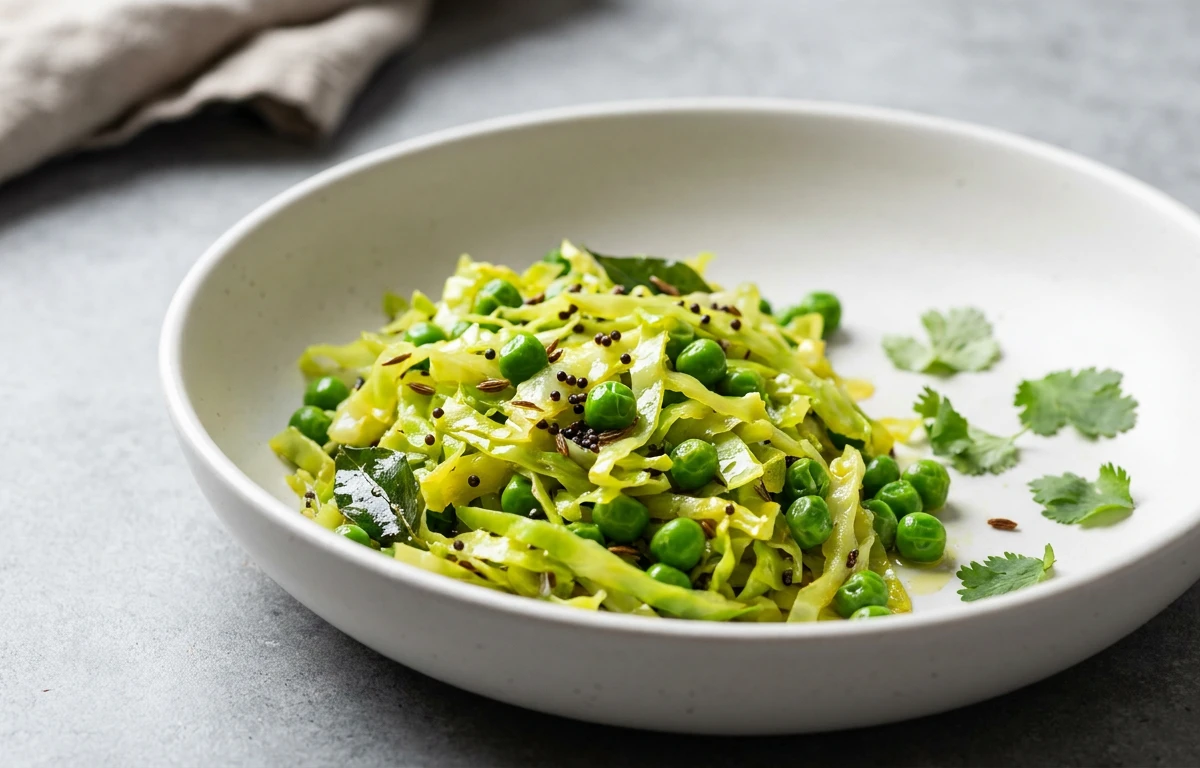
A simple, everyday North Indian dry sabzi made with finely shredded cabbage and sweet green peas, lightly spiced with cumin and turmeric. This quick stir-fry comes together in under 20 minutes and pairs beautifully with roti or dal rice for a comforting weeknight meal.
For 4 servings
- prep
Prep the vegetables.
1.Remove any wilted outer leaves from the cabbage.2.Cut cabbage into quarters, remove the core, and finely shred.3.Measure out the peas and slit the green chilies lengthwise. - temper · ~2 min
Temper the cumin seeds.
1.Heat 1 tbsp oil in a kadai over medium heat.2.Add cumin seeds and let them crackle until fragrant (30 seconds). - saute · ~1 min
Bloom the spices and add aromatics.
1.Add slit green chilies and sauté for 10 seconds.2.Lower the heat, add turmeric powder and coriander powder, and stir for 15 seconds until fragrant.TIPKeep the heat low while blooming the powdered spices — they burn quickly and turn bitter. - saute · ~6 min
Wilt the cabbage.
1.Add the shredded cabbage to the kadai and toss well to coat with spices.2.Add salt and mix thoroughly.3.Cover and cook on medium-low heat for 5 minutes until cabbage softens.TIPCabbage releases its own moisture on salting, so no extra water is needed. - saute · ~5 min
Add peas and finish cooking.
1.Stir in the green peas and mix evenly.2.Cover again and cook for another 4-5 minutes until the peas are tender and any remaining moisture evaporates.3.Stir occasionally to prevent sticking — the sabzi should be fully dry. - garnish
Finish with garam masala and coriander.
1.Sprinkle garam masala on top and mix once.2.Turn off the heat and garnish with chopped coriander leaves.TIPAdding garam masala at the end preserves its aromatic fragrance. - serve
Serve hot with roti or dal rice.
Transfer to a serving bowl and enjoy warm alongside freshly made phulkas or as part of a simple dal-rice meal.
What to keep in mind.
6 tips from the recipe — small details that make a real difference to the final dish.
- 1Shred the cabbage as finely as possible for even cooking and a tender texture.
- 2Use a kadai or wide pan to allow the cabbage to wilt quickly without steaming.
- 3Do not add water; the salt draws out enough moisture from the cabbage to cook it.
- 4If using frozen peas, add them straight from the freezer without thawing to preserve color.
- 5Cook the sabzi until fully dry to avoid a soggy texture when pairing with roti.
- 6For a smoky flavor, finish with a pinch of hing (asafoetida) during tempering.
Adapt it for your goals.
Low-carb / keto
Omit the green peas and substitute with chopped bell peppers or zucchini to reduce carbohydrates while keeping the dish colorful and satisfying.
veganVegan
This recipe is naturally vegan; simply ensure the oil used is plant-based and serve with vegan flatbreads.
protein boostProtein boost
Add a handful of roasted peanuts or crumbled paneer in the final minutes for extra protein and a contrasting texture.
Spicier versionSpicier version
Increase the slit green chilies to 4 and add 1/2 tsp red chili flakes during tempering for a fiery kick.
Why this is on our healthy list.
Rich in Vitamin C
Cabbage is a excellent source of immune-supporting vitamin C, especially when cooked minimally to retain nutrients.
High in Dietary Fiber
Both cabbage and green peas contribute fiber that aids digestion and promotes a feeling of fullness.
Low in Calories
This vegetable-based sabzi is naturally low in calories, making it a light and nutritious addition to any meal.
Anti-Inflammatory Spices
Turmeric and cumin provide anti-inflammatory compounds that may support overall wellness.
Frequently asked questions
You likely added extra water or overcrowded the pan. Cabbage releases enough moisture on its own; cook uncovered for the last few minutes to let it evaporate completely.



.webp)