
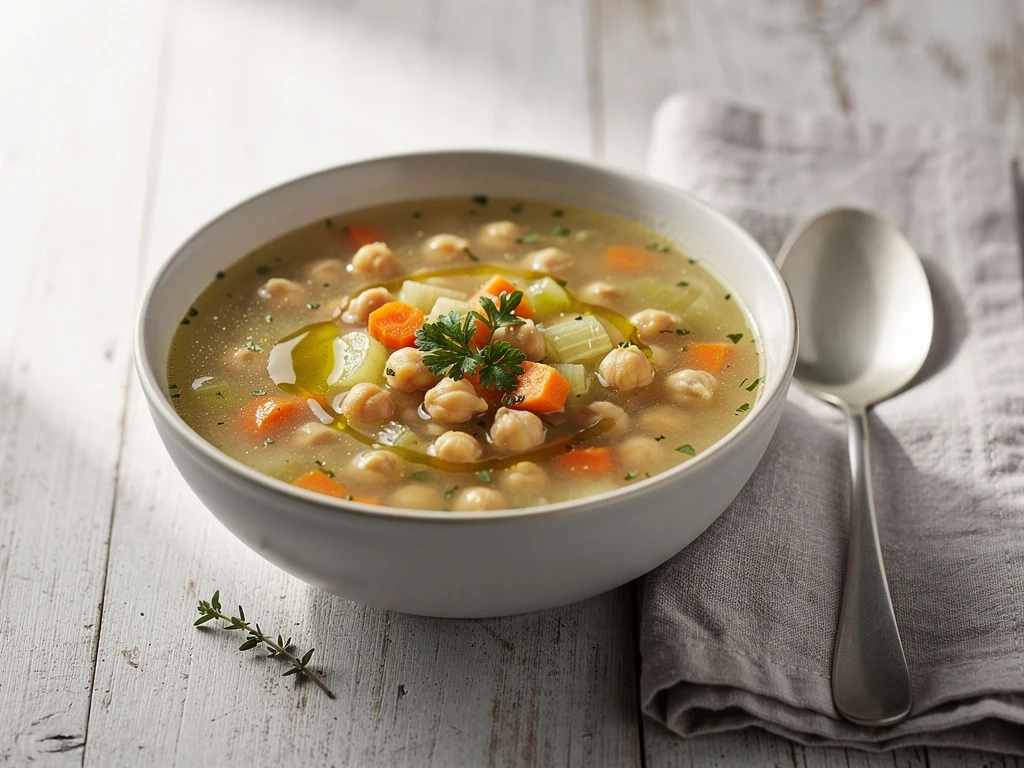
Chickpea Soup
A light, comforting soup made with chickpeas and vegetables in a savory herb broth. This recipe is carefully crafted to be low in sodium, potassium, and phosphorus, making it a safe and flavorful choice for a renal diet.
For 1 serving
- ~6 min
Sauté the aromatics
1.Heat the olive oil in a small saucepan over medium heat.2.Add the chopped onion and red bell pepper. Cook for 4-5 minutes, stirring occasionally, until softened.3.Add the minced garlic and cook for another minute until fragrant. - ~12 min
Simmer the soup
1.Pour in the low-potassium vegetable broth and bring to a gentle simmer.2.Add the rinsed chickpeas, dried thyme, black pepper, and the small amount of salt.3.Reduce the heat to low, cover, and let it simmer for 10-12 minutes to allow the flavors to meld. - ~2 min
Finish and serve
1.Remove the saucepan from the heat.2.Stir in the fresh lemon juice.3.Pour the soup into a bowl, garnish with fresh parsley, and serve immediately.
What to keep in mind.
4 tips from the recipe — small details that make a real difference to the final dish.
- 1Thoroughly rinsing canned chickpeas is crucial to reduce their sodium and potassium content.
- 2Use a certified low-potassium vegetable broth. If unavailable, make a simple broth by simmering cabbage, celery ends, and carrots in water.
- 3Boost flavor without salt by using fresh herbs, a squeeze of lemon, or a pinch of salt-free garlic and herb seasoning.
- 4For a creamier texture, you can mash a few of the chickpeas with the back of a spoon against the side of the pot before serving.
Why this is on our healthy list.
Kidney-Friendly
Carefully formulated to be low in sodium, potassium, and phosphorus, supporting renal health.
Heart Healthy
Low sodium content helps manage blood pressure, a critical factor for both heart and kidney health.
Plant-Based Protein
Provides a moderate amount of plant-based protein from chickpeas, which is often recommended in renal diets.
Frequently asked questions
Yes, this soup is specifically designed for a CKD-friendly diet. It is low in sodium, potassium, and phosphorus, which are key nutrients to monitor for kidney health. Always consult your doctor or dietitian before making dietary changes.


