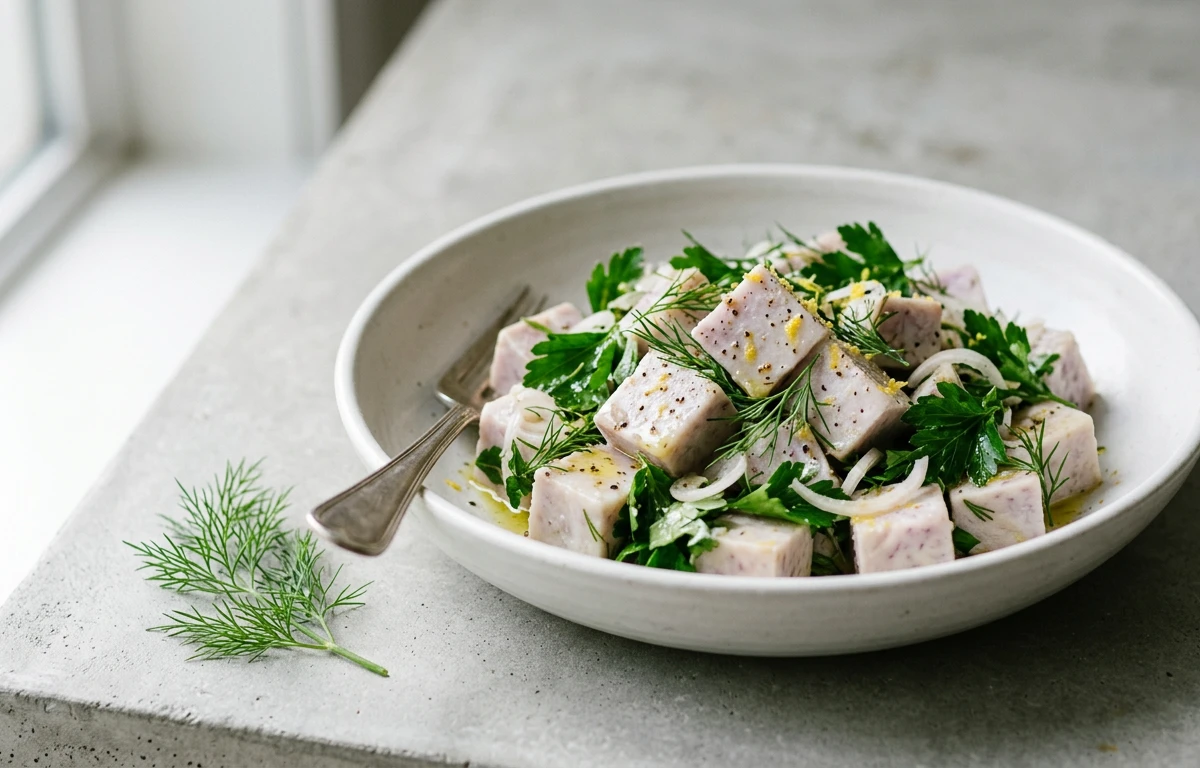
Chilled Taro & Herb Salad
Cool, creamy taro root tossed with a medley of fresh herbs and a bright lemon dressing. The taro is boiled until just tender, then chilled to bring out its subtly sweet, nutty flavor. A refreshing side dish that's perfect alongside grilled meats or as a light lunch on its own.
For 4 servings
- prep
Peel and cube the taro root.
Wash the taro root well. Using a peeler or knife, remove the rough brown skin. Cut into uniform 1-inch cubes.
TIPWear gloves or oil your hands lightly. Taro can make skin itchy. - boil · ~15 min
Boil the taro until fork-tender.
Place the cubed taro in a pot and cover with water. Add salt. Bring to a boil, then reduce the heat and simmer for 12 to 15 minutes, until the taro is easily pierced with a fork. Drain well.
TIPDon't overcook. The taro should hold its shape and not become mushy. - rest · ~60 min
Chill the boiled taro.
Spread the drained taro pieces on a plate and let them cool completely at room temperature. Then transfer to the refrigerator and chill for at least 1 hour.
TIPChilling is essential. It firms up the texture and makes the salad refreshing. - temper · ~1 min
Make the tempering.
1.Heat oil in a small pan over medium heat until shimmering.2.Add mustard seeds and let splutter (30 sec).3.Add cumin seeds and sauté until fragrant (15 sec). - mix
Combine all salad ingredients.
In a large bowl, gently mix the chilled taro, chopped onion, green chili, coriander leaves, and mint. Pour the warm tempering over the mixture. Add lemon juice, turmeric powder, remaining salt, and black pepper. Toss gently until everything is well coated.
TIPUse a gentle hand. Treat the taro cubes like delicate treasure to avoid mashing them. - rest · ~10 min
Rest briefly to meld flavors.
Let the salad sit at room temperature for 10 minutes to allow the herbs and spices to infuse. This brief rest intensifies the flavors.
- serve
Serve chilled or at room temperature.
Garnish with an extra squeeze of lemon and serve immediately.
What to keep in mind.
6 tips from the recipe — small details that make a real difference to the final dish.
- 1Always use gloves when handling raw taro to avoid skin irritation from calcium oxalate crystals.
- 2Cut the taro into uniform 1-inch cubes so they cook evenly and don't break apart.
- 3Drain the boiled taro well and let it cool completely before chilling to prevent excess moisture in the salad.
- 4Do not skip chilling the taro for at least 1 hour — it firms the texture and makes the salad refreshing.
- 5Add the warm tempering just before serving to keep the fresh herbs vibrant and the dressing aromatic.
- 6Taste and adjust salt and lemon juice after the 10-minute rest, as the taro absorbs seasoning over time.
Adapt it for your goals.
Vegan
This recipe is already vegan. To make it heartier, add 1/2 cup boiled chickpeas — they complement the taro's creaminess and add protein.
Low OilLow-Oil
Skip the tempering and simply mix raw mustard and cumin powder into the lemon dressing for a lighter, no-oil version that still delivers punchy flavor.
SpicySpicy
Add 1/4 teaspoon red chili flakes or an extra minced green chili to the tempering for those who love heat.
Herb SwapHerb Swap
Replace mint with fresh dill or Thai basil for a different herbaceous profile that pairs well with the warm tempering.
Why this is on our healthy list.
Rich in Resistant Starch
Chilled taro develops resistant starch, which acts as a prebiotic fiber that supports healthy gut bacteria and aids digestion.
Good Source of Potassium
Taro is a mineral-rich root vegetable that provides potassium, which can help balance sodium levels and support healthy blood pressure.
Loaded with Antioxidant Herbs
Fresh cilantro and mint are packed with antioxidants like quercetin and menthol, which help reduce inflammation and freshen breath.
Low in Saturated Fat
With only 1 teaspoon of oil total, this salad is very low in unhealthy fats and relies on natural flavors for taste.
Frequently asked questions
Yes, you can use boiled and cubed potatoes or sweet potatoes, but the texture and nutty flavor will be different.