
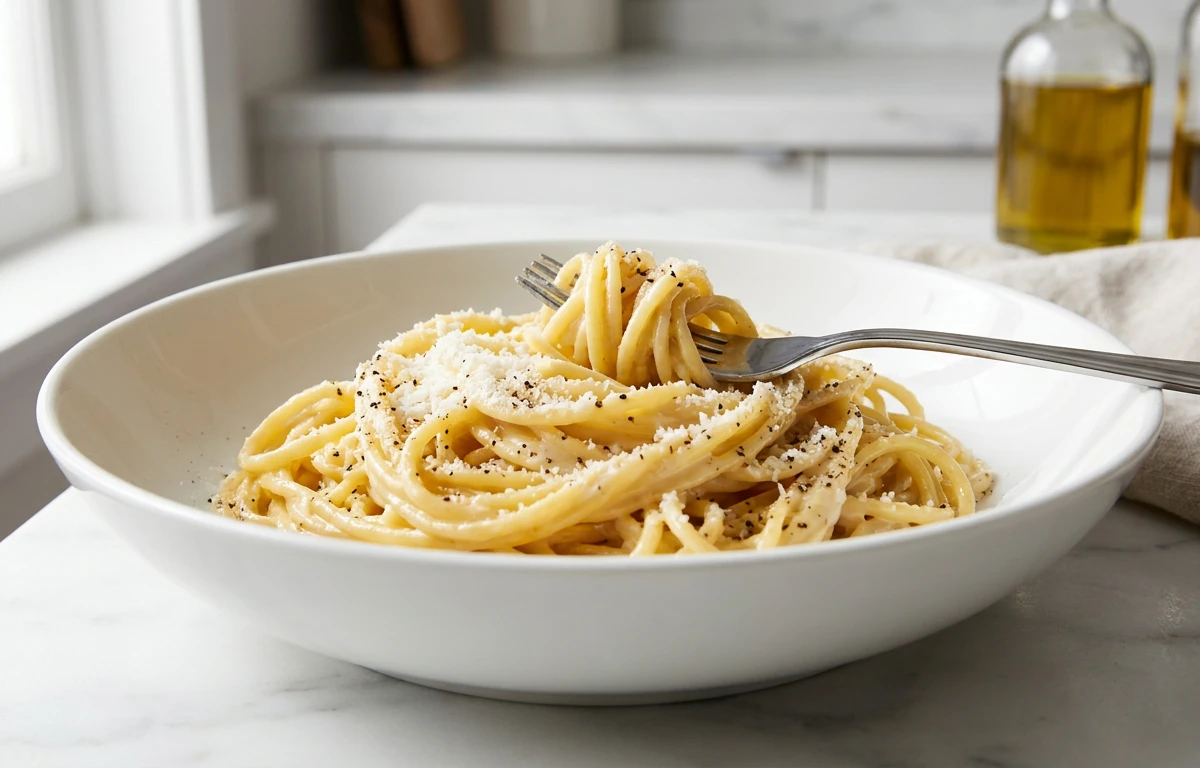
Classic Cacio e Pepe
A stunningly simple Roman pasta that turns just cheese, pepper, and pasta water into a creamy, luxurious sauce. No butter, no cream — just technique. Salty Pecorino Romano and freshly cracked black pepper coat every strand of spaghetti in a rich, velvety emulsion.
For 4 servings
- prep · ~2 min
Toast the black pepper.
1.Place a large dry skillet over medium heat.2.Add the coarsely cracked black peppercorns and toast, swirling the pan often, until deeply fragrant (1-2 minutes).3.Transfer pepper to a small bowl and set aside. Reserve the skillet for finishing the pasta.TIPToasting the pepper unlocks its essential oils and gives the dish its signature spicy depth. - boil · ~9 min
Boil the spaghetti.
1.Fill a large pot with 4 liters of water and bring to a rolling boil.2.Add the salt, then add the spaghetti.3.Cook until very al dente — about 1 minute less than the package instructions. Stir occasionally to prevent sticking.4.Reserve at least 2 cups of starchy pasta water before draining. Do not rinse the pasta.TIPUndercooking the pasta slightly is essential — it will continue cooking in the skillet with the sauce. - mix · ~1 min
Prepare the cheese-pepper paste.
1.In a mixing bowl, combine the freshly grated Pecorino Romano with the toasted black pepper.2.Add about ½ cup of cold water and stir with a spoon to form a thick, smooth paste. Set aside.TIPMixing the cheese with cold water before adding to the pasta prevents it from clumping or turning stringy from heat shock. - assemble · ~3 min
Emulsify the sauce and finish the pasta.
1.Return the reserved skillet to very low heat. Add about ½ cup of reserved pasta water.2.Transfer the drained, very al dente spaghetti directly to the skillet.3.Add the cheese-pepper paste on top of the pasta. Do not stir yet — let the residual heat begin melting the cheese for 30 seconds.4.Using tongs, toss vigorously and continuously, adding splashes of reserved pasta water as needed, until the sauce transforms into a creamy, glossy coating that clings to every strand (2-3 minutes).5.The sauce should be fluid and silky, not clumpy or dry. Adjust with more pasta water if it tightens up.TIPIf the cheese clumps, the pan is too hot. Immediately lift it off the heat and add a splash of cold water while tossing aggressively to rescue the emulsion. - serve
Twirl and serve immediately.
Divide the pasta among warm plates, twirling high nests with tongs. Finish with an extra shower of grated Pecorino Romano and one more crack of black pepper. Serve at once — the sauce stiffens as it cools.
What to keep in mind.
8 tips from the recipe — small details that make a real difference to the final dish.
- 1Use a Microplane or the finest rasp to grate the Pecorino Romano for a smooth emulsion.
- 2Reserve at least 2 cups of pasta water; you will need more than you think to thin the sauce.
- 3Never rinse the cooked pasta — the surface starch is key to binding the sauce.
- 4Work over very low heat when emulsifying; high heat will cause the cheese to seize into clumps.
- 5If the sauce tightens or clumps, immediately remove the pan from heat and toss in a splash of cold pasta water.
- 6Warm the serving bowls in a low oven so the pasta stays hot and the sauce remains fluid.
- 7Crack the peppercorns with a mortar and pestle or the bottom of a pan — avoid a fine grind.
- 8Make the cheese-pepper paste while the pasta cooks so it’s ready to go when you drain.
Adapt it for your goals.
High-protein
Swap half the spaghetti for chickpea or lentil pasta to boost protein and fiber while keeping the same creamy sauce technique.
gluten freeGluten-free
Use gluten-free spaghetti made from rice and corn; cook to firm al dente and reserve extra pasta water, as GF pasta releases less starch.
low oilLow-oil
Add a splash of the pasta water to a non-stick skillet with minimal oil; the emulsion works beautifully without any added fat.
veganVegan
Replace Pecorino Romano with a high-quality vegan parmesan made from cashews or almonds, and use a pinch of black salt for a savory note.
spicy aromaticSpicy-aromatic
Add 1 teaspoon of red pepper flakes when toasting the black pepper for a gentle heat that complements the cheese.
Why this is on our healthy list.
Rich in Calcium
Pecorino Romano is packed with calcium from sheep’s milk, supporting strong bones and teeth in a single serving.
Protein from Cheese
A generous portion of Pecorino Romano provides high-quality protein, helping muscle repair and satiety.
No Added Fat
This recipe relies entirely on the natural fat in cheese and starch from pasta water — no butter or cream is used.
Natural Spice Benefits
Black pepper contains piperine, a compound that may aid digestion and enhance absorption of nutrients from food.
Frequently asked questions
The pan is too hot. Remove it from the heat immediately and add a splash of cold pasta water, then toss vigorously to rescue the emulsion.


