Classic Pan-Seared Duck Breast
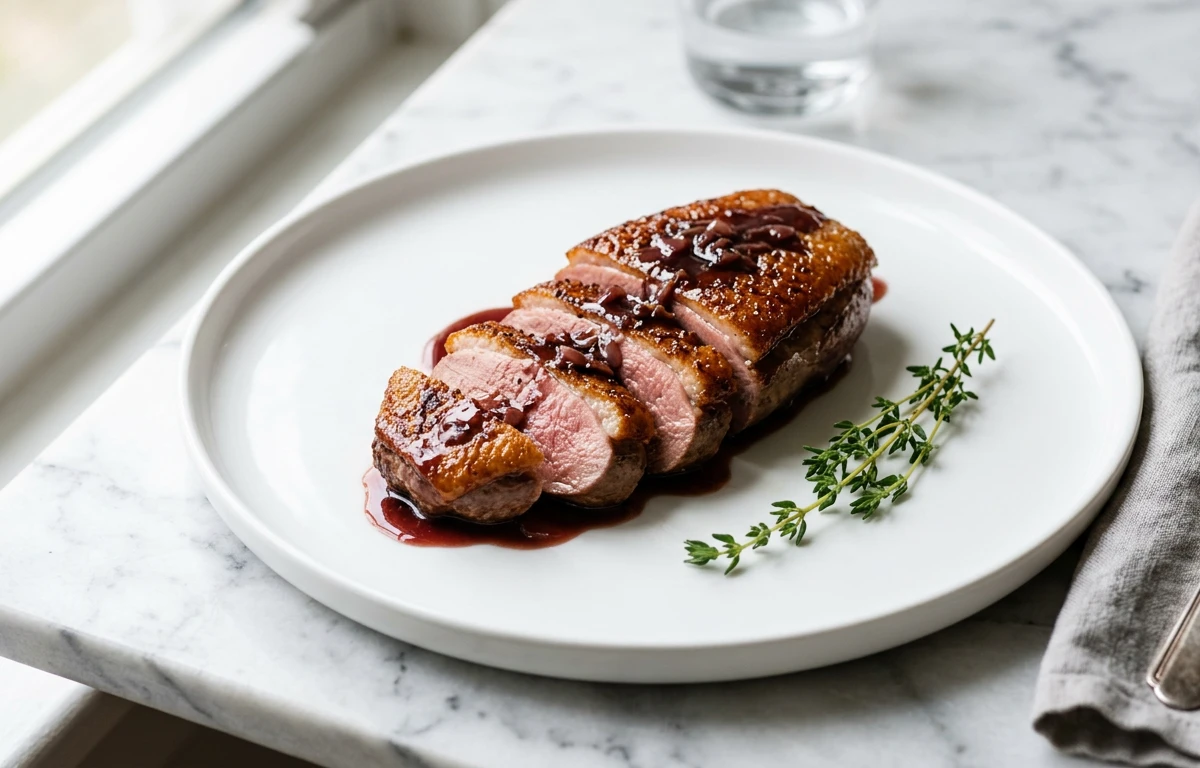
Perfectly seared duck breast with crackling golden skin and tender, rosy meat. This classic French technique renders the fat slowly for a crispy finish, finished with a luscious orange pan sauce. Simple enough for a weeknight yet elegant enough for guests.
For 4 servings
- prep · ~5 min
Score the duck skin and season.
1.Pat the duck breasts completely dry with paper towels.2.Using a sharp knife, score the skin in a crosshatch pattern, cutting through the fat but not into the meat.3.Season both sides generously with 0.5 tsp salt and a pinch of black pepper. - fry · ~12 min
Render the fat and crisp the skin.
1.Place the duck breasts skin-side down in a cold cast iron skillet.2.Set the pan over medium-low heat and cook undisturbed for 10 to 12 minutes, until the skin is deep golden and crispy and most of the fat has rendered.3.Tilt the pan occasionally and carefully spoon out excess rendered fat into a heatproof bowl, leaving about 1 tablespoon in the pan.TIPStarting in a cold pan guarantees maximum fat rendering and perfectly crisp skin. - fry · ~4 min
Sear the flesh side to medium-rare.
1.Flip the duck breasts and add the thyme sprigs and smashed garlic to the pan.2.Cook for 3 to 4 minutes for medium-rare, until an instant-read thermometer inserted into the thickest part reads 54°C (130°F).3.Transfer the duck to a cutting board, cover loosely with foil, and rest for 5 minutes.4.Discard the thyme and garlic from the pan but reserve the pan drippings.TIP130°F for medium-rare, 140°F for medium. Duck is best served pink. - saute · ~2 min
Make the quick orange pan sauce.
1.Pour the orange juice and honey into the same hot pan.2.Let it bubble and reduce for 1 to 2 minutes, scraping up the browned bits from the bottom, until slightly syrupy. - assemble · ~1 min
Slice and serve.
Slice each duck breast against the grain into thin pieces. Arrange on plates and drizzle with the orange pan sauce.
What to keep in mind.
6 tips from the recipe — small details that make a real difference to the final dish.
- 1Pat the duck skin completely dry before scoring to ensure maximum crispness.
- 2Use a sharp knife to score only through the fat, not into the meat, to avoid drying out the breast.
- 3Start the duck in a cold pan so the fat renders slowly and evenly without burning.
- 4Spoon out excess rendered fat during cooking — save it for roasting potatoes or vegetables.
- 5Rest the duck for at least 5 minutes after searing to let juices redistribute for tender meat.
- 6Deglaze the pan with orange juice while it’s still hot to lift all the flavorful browned bits.
Adapt it for your goals.
Spiced orange
Add a star anise or a cinnamon stick to the pan while making the sauce for a warm, aromatic twist that complements the orange and honey.
balsamic cherryBalsamic cherry
Replace the orange juice and honey with 3 tbsp balsamic vinegar and 1/4 cup pitted cherries for a tart, fruity sauce that pairs beautifully with duck.
herb crustedHerb-crusted
Before searing, press a mix of chopped fresh rosemary, thyme, and crushed fennel seeds onto the flesh side for an herbaceous crust.
low sugarLow-sugar
Skip the honey and deglaze with orange juice only; finish with a splash of soy sauce and a pinch of black pepper for a savory, less sweet sauce.
Why this is on our healthy list.
Rich in Iron and B Vitamins
Duck breast is a good source of heme iron and B vitamins (especially B3 and B6), which support energy metabolism and red blood cell production.
High-Quality Protein
Each duck breast provides about 25 grams of complete protein, essential for muscle repair and satiety.
Source of Vitamin C from Orange
Fresh orange juice adds a boost of vitamin C, which supports immune function and helps with iron absorption from the duck.
Contains Heart-Healthy Monounsaturated Fats
The fat in duck breast is largely monounsaturated, similar to olive oil, which may support heart health when consumed in moderation.
Frequently asked questions
No — pat it dry with paper towels instead. Rinsing spreads bacteria and adds moisture that prevents the skin from crisping.