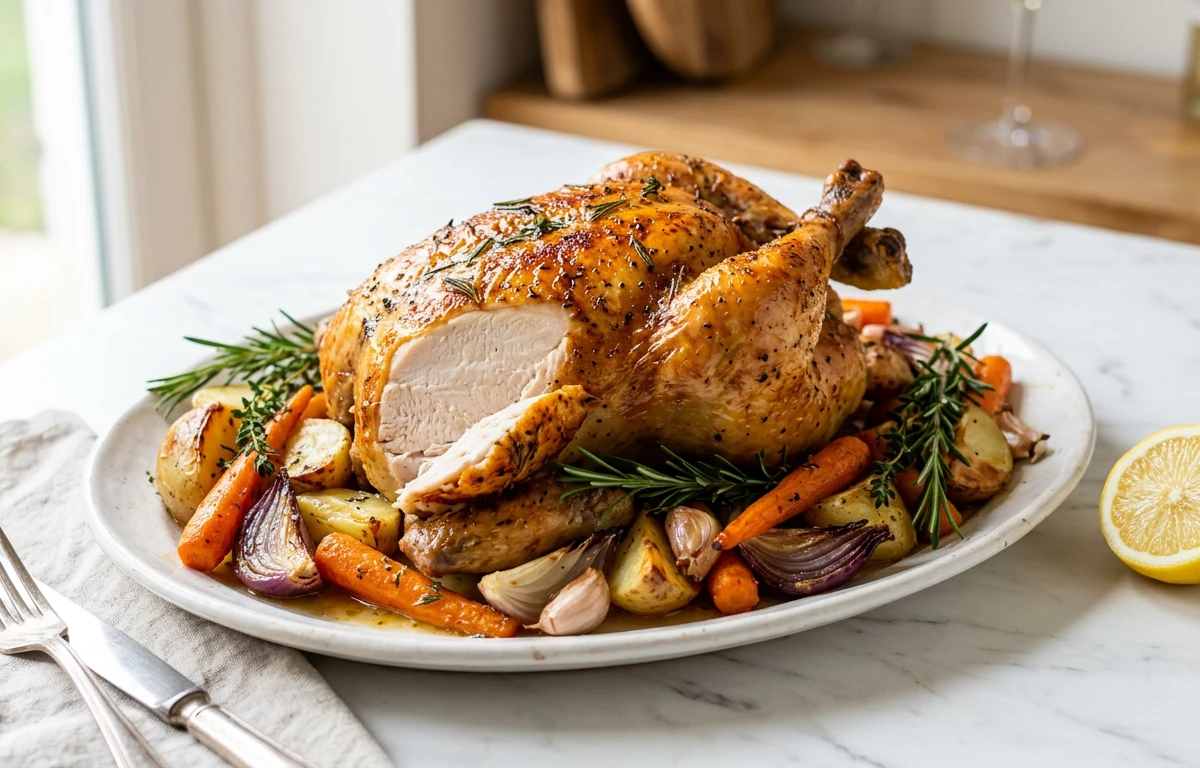
Classic Roast Chicken & Root Veggies
A golden, crispy-skinned whole roast chicken surrounded by caramelized root vegetables, all cooked together in one pan. The chicken stays incredibly juicy while the carrots, potatoes, and parsnips soak up all the savory pan juices. This timeless Sunday dinner centerpiece fills the house with the most comforting aroma and is easier to make than it looks.
For 4 servings
- prep · ~10 min
Preheat the oven and prepare the chicken.
1.Position a rack in the center of the oven and preheat to 425°F (220°C).2.Remove the giblets from the chicken cavity and pat the entire chicken completely dry with paper towels — dry skin means crispy skin.3.Season the cavity generously with a pinch of salt and pepper, then stuff with the lemon halves, smashed garlic cloves, and half the rosemary and thyme.TIPPat the chicken really dry — any moisture left on the skin will steam instead of roast, preventing that golden crisp finish. - prep · ~5 min
Season the chicken and truss the legs.
1.In a small bowl, mix the softened butter with the remaining chopped rosemary, thyme, and a pinch of salt and pepper.2.Gently loosen the skin over the breast with your fingers and spread half the herb butter under the skin, directly on the meat. Rub the remaining butter all over the outside of the chicken.3.Truss the legs together with kitchen twine and tuck the wing tips under the body to prevent burning.TIPTrussing keeps the chicken in a compact shape so it roasts evenly — the breast and thighs finish cooking at the same time. - prep · ~5 min
Toss the root vegetables.
1.In a large bowl, combine the quartered potatoes, carrot chunks, parsnip chunks, and onion quarters.2.Drizzle with olive oil and season with the remaining salt and pepper. Toss well until everything is evenly coated. - roast · ~20 min
Arrange the pan and start roasting.
1.Scatter the vegetables in an even layer around the edges of the roasting pan, leaving the center clear.2.Place the chicken breast-side up in the center of the pan on top of the vegetables.3.Transfer the pan to the oven and roast at 425°F for 20 minutes to get the skin started.TIPStarting at a higher temperature kicks off the browning before the gentle finish. Don't skip this blast of heat. - roast · ~70 min
Reduce heat and continue roasting until golden and cooked through.
1.After 20 minutes, reduce the oven temperature to 375°F (190°C).2.Continue roasting, basting the chicken with the pan juices every 20 minutes to keep it moist.3.Roast until the skin is deeply golden and an instant-read thermometer inserted into the thickest part of the thigh reads 165°F (74°C), about 60 to 70 minutes more.4.If the skin is browning too fast before the chicken is cooked through, tent loosely with foil.TIPAlways check temperature in the thigh — not the breast. The thigh takes the longest and you want both to hit 165°F. - rest · ~15 min
Rest the chicken before carving.
1.Remove the pan from the oven and transfer the chicken to a cutting board. Tent loosely with foil.2.Let it rest for 15 minutes so the juices redistribute — cutting too early makes the meat dry.3.If the vegetables need a little more color, return them to the oven while the chicken rests.TIPResting is non-negotiable. The internal temperature will rise another 3-5°F and those juices stay in the meat instead of running all over the board. - serve
Carve and serve with the roasted vegetables.
1.Carve the chicken into breasts, thighs, drumsticks, and wings.2.Arrange the meat on a platter surrounded by the caramelized root vegetables.3.Spoon any remaining pan juices over the top and serve immediately.
What to keep in mind.
6 tips from the recipe — small details that make a real difference to the final dish.
- 1Pat the chicken completely dry with paper towels before seasoning — moisture is the enemy of crispy skin.
- 2Let the chicken rest for a full 15 minutes after roasting so the juices redistribute evenly throughout the meat.
- 3Use an instant-read thermometer in the thickest part of the thigh (not the breast) to guarantee doneness at 165°F.
- 4Baste the chicken with pan juices every 20 minutes to keep the breast meat moist and add layers of flavor.
- 5If vegetables brown too quickly, remove them from the pan and set aside while the chicken finishes cooking.
- 6Tent the chicken loosely with foil if the skin is browning too fast before the meat is fully cooked through.
Adapt it for your goals.
High-protein
Swap the root vegetables for broccoli florets, Brussels sprouts, and cauliflower. These veggies roast faster and are lower in carbs, making this a great option for a low-carb or keto-friendly meal.
herb swapHerb-swap
Replace rosemary and thyme with dried oregano, smoked paprika, and a pinch of cayenne for a more robust, smoky flavor profile that leans Mediterranean or Spanish.
jainJain
Omit the onion and garlic from the vegetable mix and cavity; use asafoetida (hing) powder sparingly in the herb butter to mimic the savory depth. This makes the dish suitable for Jain dietary practices that avoid root vegetables.
citrus & fennelCitrus & fennel
Add fennel wedges and orange slices to the vegetable tray. The fennel caramelizes into a sweet, anise-like side, and the orange brightens the pan juices for a lighter, springtime twist.
gluten free (naturally)Gluten-free (naturally)
This recipe is already gluten-free. Confirm that your kitchen twine is unbleached and that all spice blends you add are certified gluten-free. No changes needed.
Why this is on our healthy list.
Rich in Vitamin A
Carrots and parsnips are excellent sources of beta-carotene, which the body converts into vitamin A, supporting vision and immune function.
High-Quality Protein
Chicken breast and thighs provide complete protein with all essential amino acids, helping maintain muscle mass and repair tissues.
Good Source of Fiber
Root vegetables like potatoes, carrots, and parsnips contribute dietary fiber, which aids digestion and promotes gut health.
Low in Added Sugar
This dish relies on the natural sweetness of roasted vegetables and has no added sugar, making it a balanced option for blood sugar management.
Frequently asked questions
Most likely the chicken wasn't dried thoroughly before seasoning. Pat it dry with paper towels and make sure the skin is tight against the meat. Also, check that your oven is fully preheated to 425°F before putting the bird in.