Classic Sabut Moong Dal
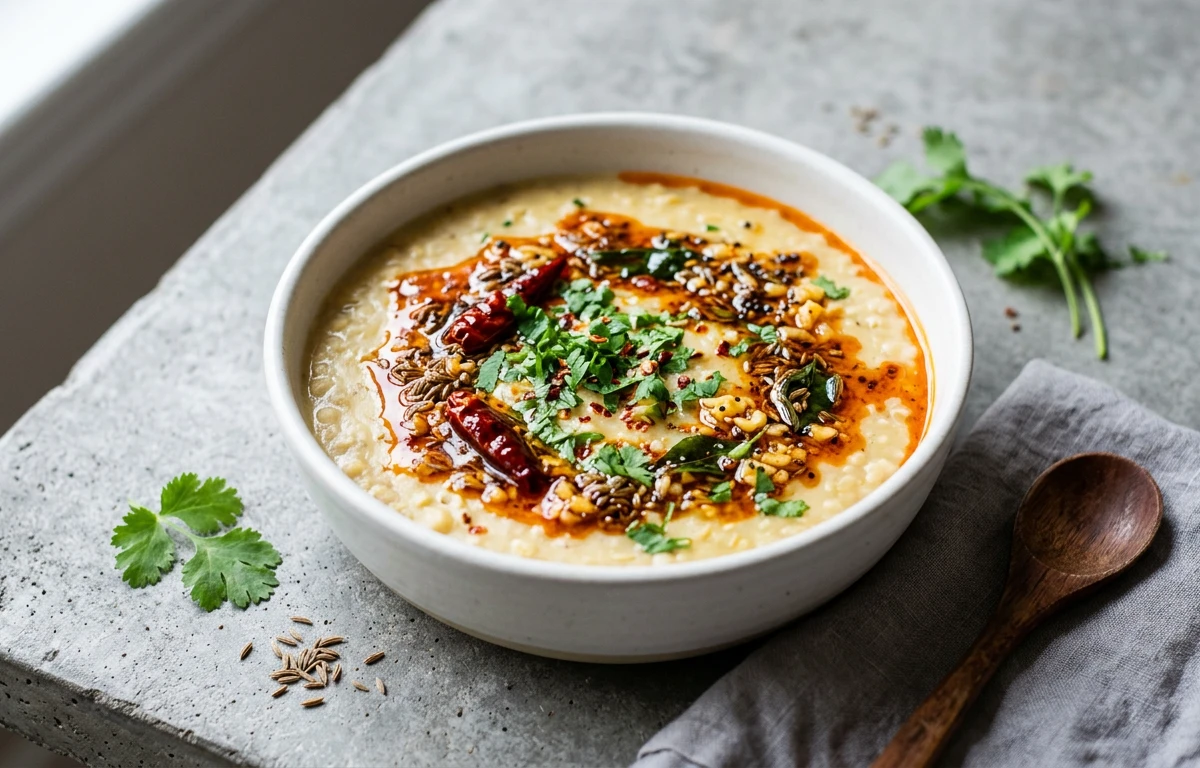
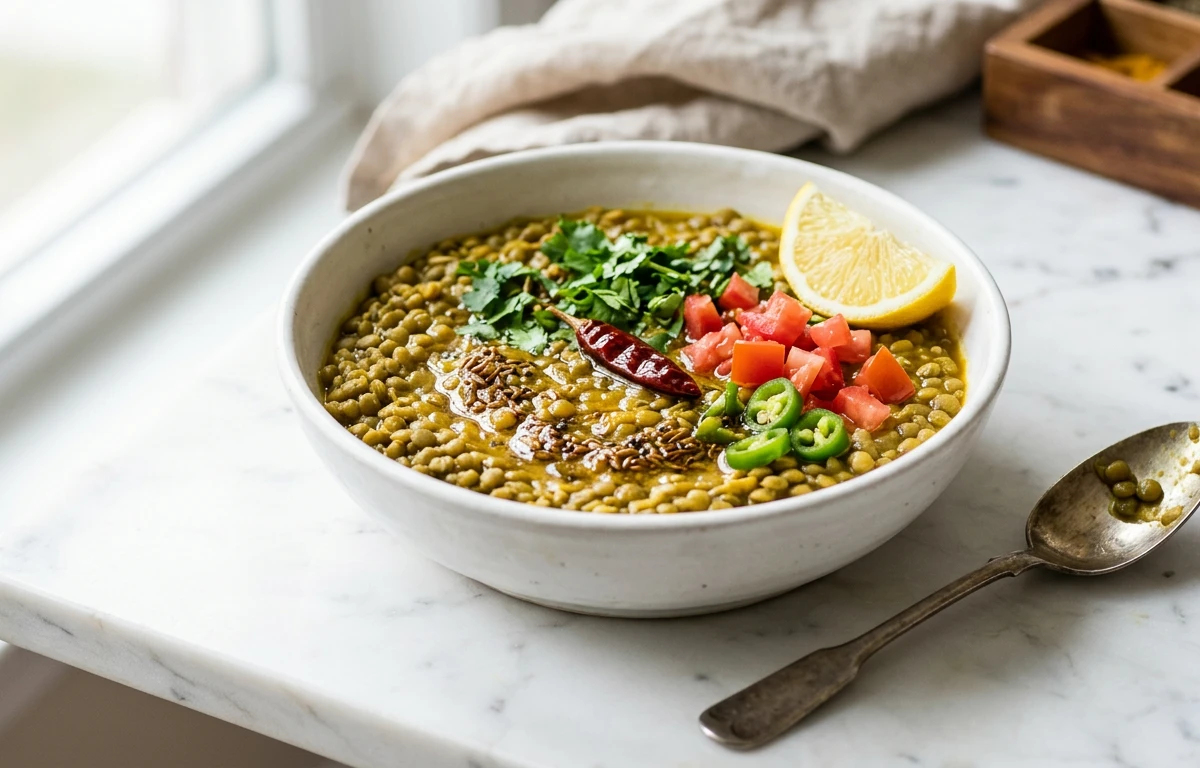
Hearty, protein-packed whole green moong beans slow-simmered with ginger, garlic, and earthy spices. This rustic North Indian dal has a rich, creamy texture from the beans breaking down naturally, finished with a sizzling cumin and red chili tadka. A bowl of pure comfort.
For 4 servings
- prep
Soak the whole moong dal.
Wash the whole moong dal thoroughly under running water. Soak in enough water to cover by 2 inches for 2 hours. Drain before cooking.
- pressure cook · ~18 min
Pressure cook the soaked dal.
1.Add the drained moong dal, 3 cups water, salt, and turmeric powder to a pressure cooker.2.Close the lid and cook on medium-high heat until the first whistle.3.Lower the heat and cook for 4 to 5 more whistles (about 15 to 18 minutes).4.Let the pressure release naturally. Open and mash the dal lightly with a ladle.TIPMashing helps thicken the dal naturally — no cream or butter needed. - temper · ~3 min
Make the tadka.
1.Heat ghee in a heavy-bottomed pan over medium heat until it shimmers.2.Add cumin seeds and let them crackle (about 30 seconds).3.Tear dried red chilies and add to the pan; they'll puff and darken in seconds.4.Sprinkle in asafoetida and immediately add chopped onions.TIPKeep everything ready before starting the tadka — spices burn quickly. - saute · ~15 min
Sauté the aromatics.
1.Cook the onions until golden brown, stirring often (7 to 8 minutes).2.Add ginger and garlic; sauté until the raw smell disappears (1 to 2 minutes).3.Add chopped tomatoes, slit green chilies, and coriander powder.4.Cook until tomatoes soften completely and oil separates from the mixture (5 to 6 minutes).TIPPatience here builds deep flavor — don't rush the onion browning. - mix
Combine the dal with the tadka.
Pour the cooked and mashed dal into the pan with the tadka. Stir well to combine. If the dal is too thick, add ½ to 1 cup of water to reach your preferred consistency.
- simmer · ~11 min
Simmer the dal until flavors meld.
Bring the dal to a gentle boil, then lower the heat and simmer uncovered for 10 to 12 minutes. Stir occasionally to prevent sticking. The dal will thicken slightly and the flavors will deepen.
TIPThe dal thickens as it cools — keep it slightly thinner than your final desired consistency. - mix
Finish with garam masala and lemon juice.
Turn off the heat. Stir in the garam masala and fresh lemon juice. Taste and adjust salt if needed.
TIPAdding garam masala off heat preserves its aromatic punch. - garnish
Garnish with fresh coriander leaves and serve hot.
What to keep in mind.
7 tips from the recipe — small details that make a real difference to the final dish.
- 1Soak whole moong dal for at least 2 hours to ensure even cooking and a creamy texture.
- 2Let the pressure release naturally — it allows the dal to finish cooking gently and absorb flavors better.
- 3Don't skip mashing the dal after cooking; it releases natural starches for a velvety consistency without adding cream.
- 4Cook the onions until deep golden brown — this builds the foundation of the dish's savory-sweet flavor.
- 5Add garam masala only after turning off the heat; high heat destroys its delicate aromatics.
- 6The dal thickens as it cools, so keep it slightly soupier than desired for perfect consistency at serving.
- 7Refrigerate leftovers in an airtight container for up to 5 days; the flavors deepen beautifully overnight.
Adapt it for your goals.
Vegan
Substitute ghee with coconut oil or a neutral vegetable oil for a fully plant-based version that still delivers rich flavor.
lower oilLower-oil
Reduce tadka oil to 1 tablespoon and skip the final ghee drizzle; the dal's creaminess comes from the beans, not fat.
with greensWith greens
Add a handful of chopped spinach or methi (fenugreek) leaves during the simmer for extra nutrients and a slight bitterness that balances the spices.
Why this is on our healthy list.
High in Plant Protein
Whole moong dal provides a substantial amount of plant-based protein, supporting muscle repair and keeping you full longer.
Rich in Dietary Fiber
The unskinned whole green gram retains its fiber-rich coating, promoting healthy digestion and steady blood sugar levels.
Naturally Low in Fat
This dal contains only 2 tablespoons of ghee for the entire pot, making it a heart-friendly meal when paired with whole grains.
Packed with Anti-Inflammatory Spices
Turmeric, ginger, and asafoetida in this recipe offer natural anti-inflammatory compounds that support overall wellness.
Frequently asked questions
Yes, but split moong dal cooks much faster (2-3 whistles), and the texture will be less chunky and more porridge-like — still delicious.



.webp)