
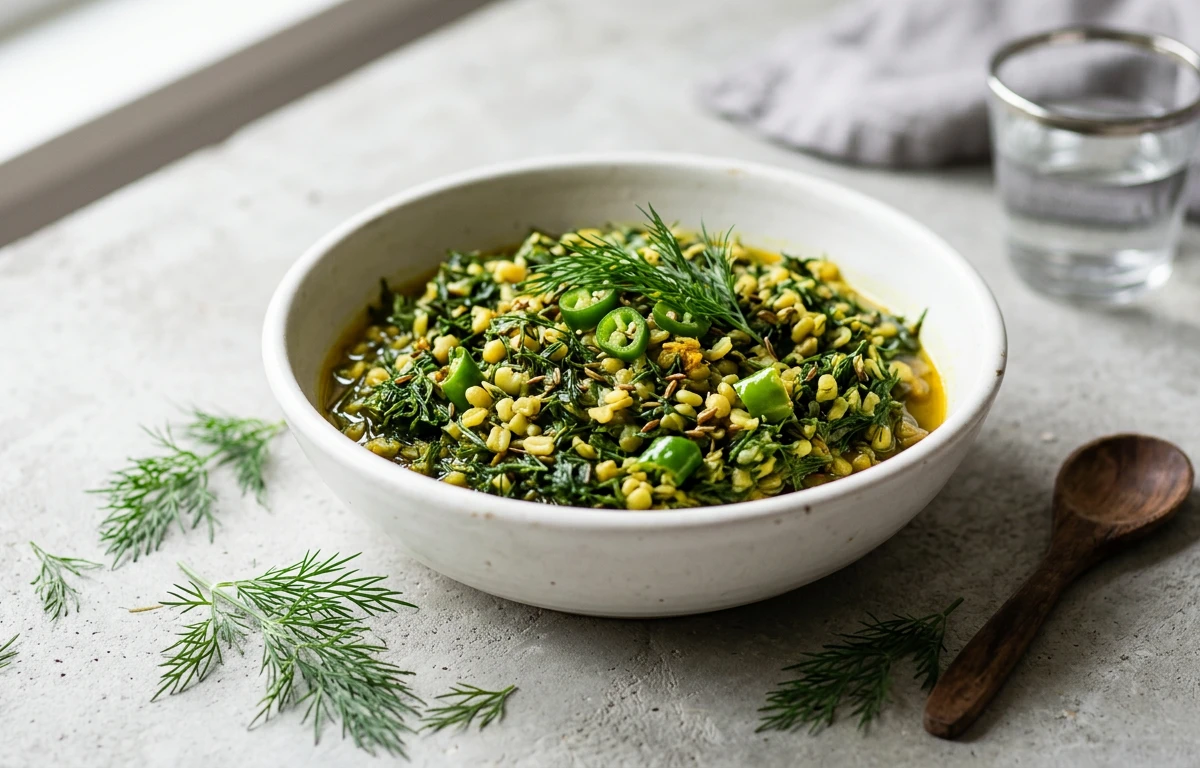
Classic Shepu Bhaji with Moong Dal
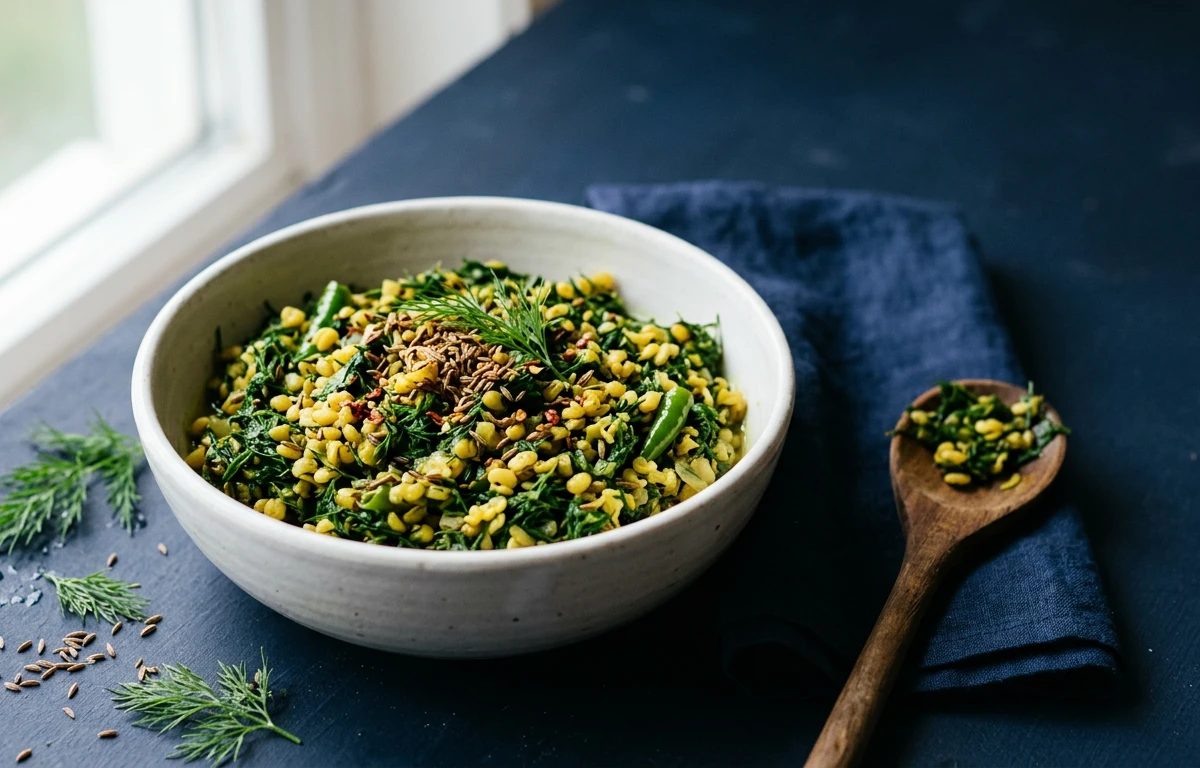
A humble Maharashtrian stir-fry that pairs feathery fresh dill with protein-packed split moong dal. The dal is soaked and steamed until just tender, then tossed with delicate shepu leaves, a crackling mustard seed tempering, and a whisper of green chili. Ready in under 30 minutes, it is earthy, lightly spiced, and incredibly comforting scooped up with warm roti or served alongside a simple dal-chawal meal.
For 4 servings
- prep
Soak and steam the moong dal.
Rinse moong dal well and soak in water for 30 minutes. Drain completely, spread in a steamer basket lined with a damp cloth, and steam for 8-10 minutes until the grains are separate and just cooked but still hold their shape. Spread on a plate to cool slightly.
TIPDon't overcook the dal — it should be tender but not mushy, so it keeps a light bite in the final stir-fry. - prep
Prep the dill leaves.
Pick tender dill sprigs, discard thick stalks, and wash thoroughly. Drain well and chop finely. Keep ready near the stove — dill wilts quickly once it hits the pan.
TIPMake sure the chopped dill is as dry as possible; excess water will steam the leaves instead of sautéing them. - temper · ~1 min
Make the tempering.
1.Heat oil in a kadhai over medium heat until shimmering.2.Add mustard seeds and let them pop fully (30 seconds).3.Add cumin seeds and fry until fragrant (15 seconds).4.Add asafoetida and slit green chilies, stirring for a few seconds. - saute · ~4 min
Add dill and sauté until wilted.
Add the chopped dill leaves all at once, sprinkle with turmeric powder and salt, and stir-fry on medium-high heat. The dill will release moisture and wilt down — cook for 3-4 minutes until the raw smell fades and the leaves are tender.
TIPStir constantly to prevent the dill sticking to the pan. If it catches, sprinkle a teaspoon of water. - mix · ~2 min
Fold in the steamed dal.
Add the steamed moong dal and grated jaggery to the pan. Toss gently with the wilted dill so the dal mixes evenly without breaking. Cook for 2 minutes on low heat until everything is warmed through and the jaggery melts. Taste and adjust salt.
TIPFolding the dal gently keeps the grains distinct and prevents the dish turning pasty. - garnish
Finish with fresh coconut and serve.
Take off the heat, sprinkle with grated fresh coconut, and give one final gentle toss. Serve warm with roti, bhakri, or as a side with dal-chawal.
What to keep in mind.
7 tips from the recipe — small details that make a real difference to the final dish.
- 1Soak the moong dal for exactly 30 minutes — any longer and it can become too soft and lose its shape when steamed.
- 2After steaming, spread the dal on a plate to cool; this stops the carryover cooking and keeps the grains separate.
- 3Pat the chopped dill leaves dry with a kitchen towel to prevent steaming instead of stir-frying.
- 4Let the mustard seeds pop completely before adding cumin seeds, or the cumin can burn before the mustard finishes.
- 5If the dill releases too much water, increase the heat to high and stir-fry until the moisture evaporates.
- 6Add the jaggery at the end — it melts quickly into the hot vegetables and balances the slight bitterness of dill.
- 7This bhaji tastes even better the next day, as the flavours meld; store it in the fridge for up to 2 days.
Adapt it for your goals.
Low-oil
Reduce oil to ½ teaspoon and dry-roast the mustard and cumin seeds in the pan before adding the dill. This cuts the fat while maintaining the traditional tempering flavour — ideal for those watching their oil intake.
high proteinHigh-protein
Double the moong dal to 1 cup and steam as usual, then fold it in. This boosts the protein content significantly, making the dish a more substantial meal for active lifestyles or post-workout recovery.
jainJain
Replace the asafoetida with a pinch of powdered hing that is certified Jain-friendly, and skip the green chili (use a pinch of black pepper instead). This adaptation respects Jain dietary restrictions while keeping the essence of the tempering.
veganVegan
The recipe is already vegan as written, but for extra richness, stir in 1 tablespoon of raw peanut powder (ground peanuts) at the end along with the coconut. This adds a nutty depth without any animal products.
with garlicWith garlic
Add 2 finely chopped garlic cloves to the tempering just after the cumin seeds, frying for 10 seconds before adding the dill. This adds a pungent, savoury note that many families in coastal Maharashtra use in their shepu bhaji.
Why this is on our healthy list.
Rich in Plant Protein
Moong dal is a legume packed with protein and fibre, supporting muscle repair and digestive health without the heavy feel of meat-based proteins.
Digestive Aid from Asafoetida
A pinch of asafoetida (hing) in the tempering is traditionally used to reduce bloating and gas, making this dish gentle on the stomach.
Source of Iron and Vitamins from Dill
Dill leaves provide iron, calcium, and vitamin C, which together support immunity and bone strength — especially useful in a plant-based diet.
Healthy Fats from Fresh Coconut
The grated coconut garnish adds medium-chain triglycerides (MCTs), a type of fat that can provide quick energy and support brain function.
Frequently asked questions
No — dried dill lacks the moisture and delicate texture needed for this stir-fry. Fresh dill is essential for both the flavour and the wilting process.



.webp)
.webp)