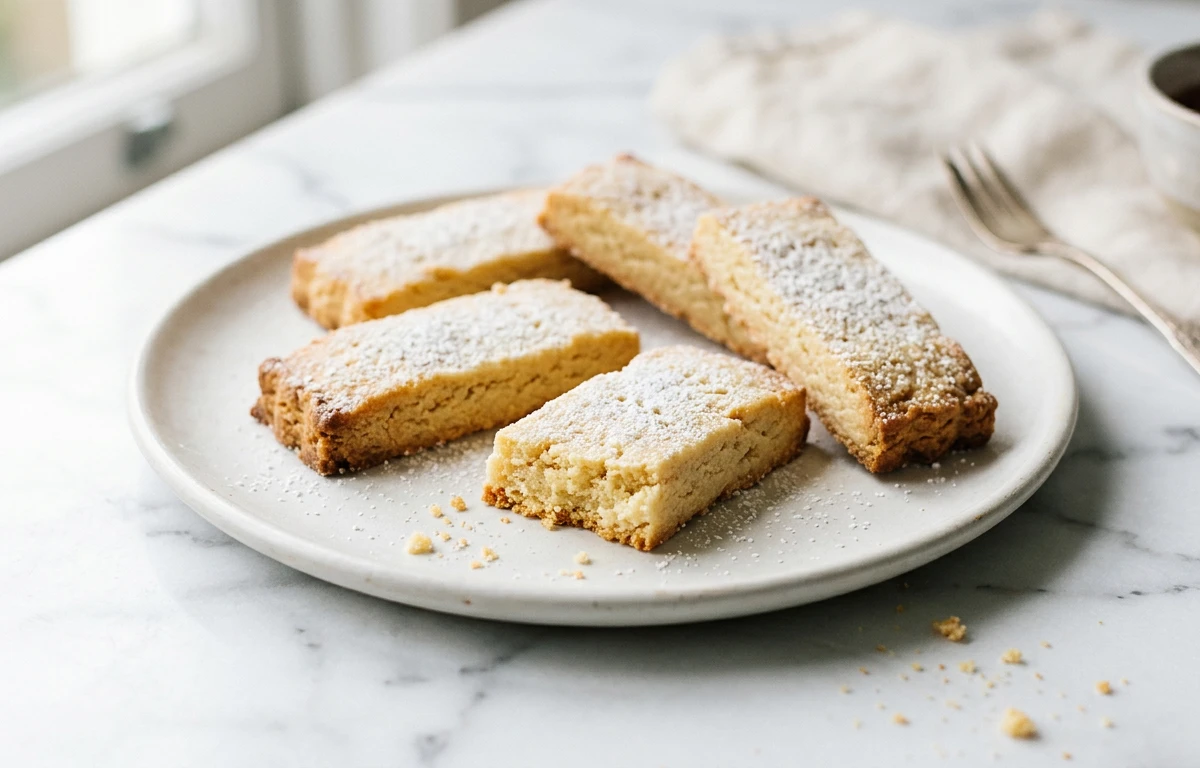
Classic Shortbread Cookies
Buttery, crumbly, and melt-in-your-mouth tender, these classic shortbread cookies are a timeless treat. Made with just three simple ingredients — butter, sugar, and flour — they come together effortlessly and bake up golden and irresistible. Perfect with a cup of tea or as a holiday cookie tin staple.
For 4 servings
- prep
Preheat oven and prepare baking sheet.
1.Preheat the oven to 325°F (160°C).2.Line a baking sheet with parchment paper. - mix · ~4 min
Cream the butter and sugar.
1.Place softened butter in a large mixing bowl.2.Add the sifted powdered sugar and vanilla extract.3.Beat with an electric mixer on medium speed until pale, light, and fluffy (about 3-4 minutes).4.Scrape down the sides of the bowl once halfway through.TIPThe butter must be properly softened — press it gently. If your finger leaves a dent easily, it's ready. Cold butter won't cream properly. - mix · ~2 min
Add the dry ingredients.
1.Sift the all-purpose flour and salt together.2.Add the flour mixture to the creamed butter in two additions, mixing on low speed each time.3.Mix just until the dough comes together and no dry flour streaks remain. Do not overmix.TIPStop mixing as soon as the dough forms. Overmixing develops gluten and makes the cookies tough instead of tender. - prep · ~3 min
Shape and roll the dough.
1.Turn the dough out onto a lightly floured surface.2.Gently gather it into a smooth disc with your hands.3.Roll the dough out evenly to about 1/3 inch (8 mm) thickness.4.Prick the surface all over with a fork for even baking.TIPWork quickly and handle the dough as little as possible. If the dough becomes too soft, chill it in the fridge for 10 minutes. - prep · ~2 min
Cut out the cookies.
1.Using a 2-inch cookie cutter, cut out shapes from the rolled dough.2.Gather the scraps, re-roll, and cut again.3.Arrange the cookies on the prepared baking sheet, spacing them about 1 inch apart. - bake · ~20 min
Bake until pale golden.
Bake in the preheated oven for 18-20 minutes, or until the edges are just beginning to turn pale golden. The tops should remain pale. Rotate the baking sheet halfway through for even baking.
TIPWatch the cookies closely during the last 2 minutes. Shortbread should be barely colored — golden edges with pale tops. Overbaking ruins the delicate texture. - rest · ~5 min
Cool the cookies.
1.Remove the baking sheet from the oven.2.Let the cookies cool on the baking sheet for 5 minutes — they are very fragile when hot.3.Transfer carefully to a wire rack to cool completely.TIPShortbread firms up as it cools. Don't skip the 5-minute rest on the baking sheet, or the cookies may crumble when you move them. - serve
Serve or store.
Serve the shortbread cookies at room temperature with tea, coffee, or milk. Store leftovers in an airtight container at room temperature for up to 10 days.
What to keep in mind.
7 tips from the recipe — small details that make a real difference to the final dish.
- 1Use European-style butter (82% butterfat) for extra richness and a better crumbly texture.
- 2Chill the shaped dough for 15 minutes before baking to prevent spreading and maintain clean edges.
- 3Prick each cookie with a fork to allow steam to escape, preventing air bubbles and ensuring even baking.
- 4For the most tender shortbread, handle the dough as little as possible and avoid over-creaming the butter.
- 5Store baked shortbread in an airtight container at room temperature; they keep well for up to 10 days.
- 6If the dough becomes too soft to work with, refrigerate for 10 minutes before rolling and cutting.
- 7Use a sharp cutter and dip it in flour between cuts to prevent sticking and get clean shapes.
Adapt it for your goals.
Chocolate-Dipped
Dip one edge of cooled shortbread into melted dark chocolate and let set for a decadent twist that adds a rich, bittersweet contrast to the buttery cookie.
Lavender & LemonLavender & Lemon
Add 1 tablespoon dried culinary lavender buds and 1 tablespoon finely grated lemon zest to the flour for a floral, citrusy shortbread perfect for spring tea parties.
Gluten FreeGluten-Free
Replace all-purpose flour with a 1:1 gluten-free baking flour blend; add 1/4 teaspoon xanthan gum if the blend doesn't include it to maintain the crumbly texture.
Salted CaramelSalted Caramel
Fold 1/3 cup finely chopped salted caramel pieces into the dough just before shaping for pockets of gooey, sweet-salty flavor in every bite.
VeganVegan
Substitute butter with a high-quality vegan block butter (like Miyoko's) and use vegan powdered sugar to keep the same rich texture and flavor plant-based.
Why this is on our healthy list.
Moderate Indulgence
With only butter, sugar, and flour, these cookies are a simple treat that's lower in additives and preservatives than many store-bought versions.
Source of Energy
Butter provides healthy fats and fat-soluble vitamins like A and D, which support energy and nutrient absorption when eaten in moderation.
Lower Sugar Option Possible
The powdered sugar can be reduced by 20% without affecting texture, cutting down on total sugar while keeping the cookies tender.
Frequently asked questions
Either the butter was too soft or the dough wasn't chilled before baking. Chill the shaped cookies for at least 15 minutes to keep their shape.