
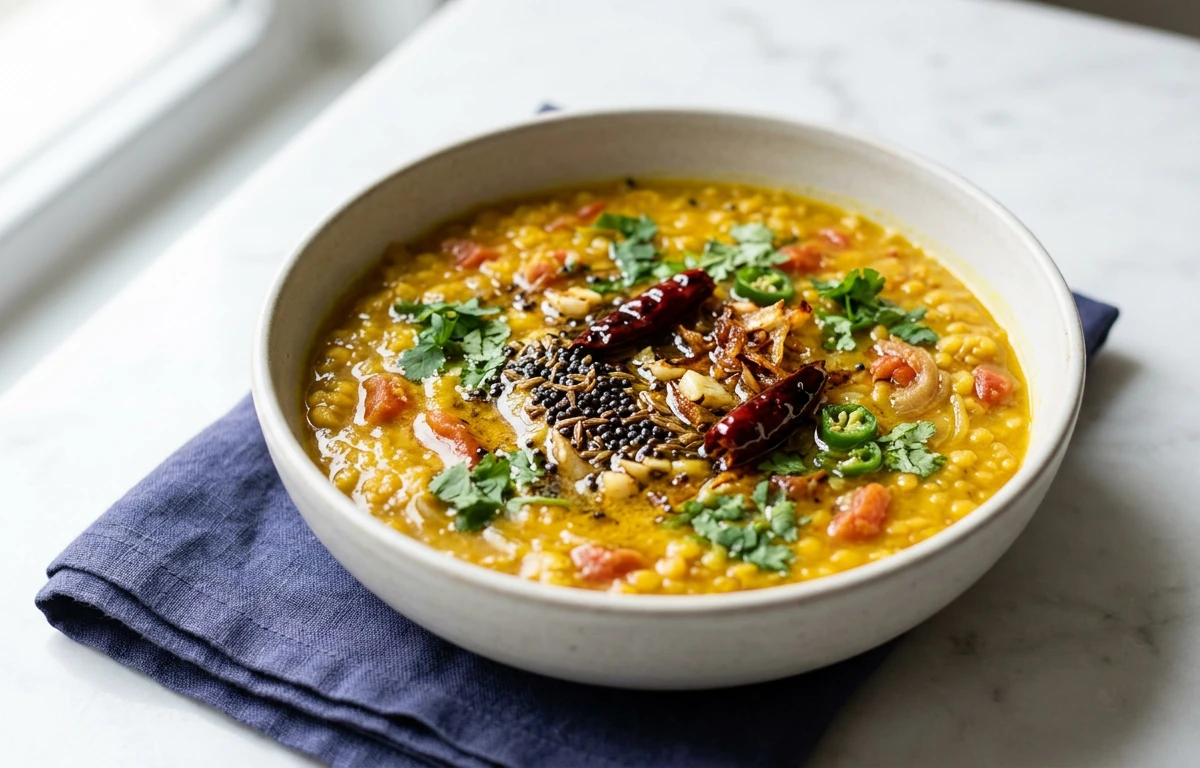
Classic Toor Dal Tadka
A warm, comforting bowl of everyday yellow lentils tempered with cumin, garlic, and dried red chilies. This classic Indian dal is creamy yet light, with a gentle earthiness from turmeric and a fragrant, crackling tadka poured over the top. Ready in under 30 minutes, it pairs perfectly with steamed rice or roti.
For 4 servings
- prep
Wash and soak the toor dal.
Rinse the toor dal in 3-4 changes of water until the water runs clear. Drain and soak in fresh water for 30 minutes, then drain again.
TIPSoaking softens the dal and reduces cooking time. If short on time, soak in hot water for 10 minutes. - pressure cook · ~12 min
Pressure cook the dal with turmeric and tomato.
1.Add drained dal to the pressure cooker with 3 cups water, turmeric, and salt.2.Stir in the chopped tomato.3.Close the lid and pressure cook on medium heat for 4-5 whistles or about 12 minutes.4.Let the pressure release naturally, then open the lid.5.Whisk the dal well until smooth and creamy.TIPIf the dal is too thick, stir in 0.5 cup hot water to reach a pouring consistency. - simmer · ~4 min
Simmer the dal to meld flavors.
Set the opened pressure cooker on low heat. Stir the dal and let it bubble gently for 3-4 minutes. Taste and adjust salt if needed. Turn off the heat.
- temper · ~2 min
Make the garlic-cumin tadka.
1.Heat ghee in the small tadka pan over medium heat until shimmering.2.Add cumin seeds and let them crackle for 15 seconds.3.Add sliced garlic and sauté until just golden at the edges (30-40 seconds).4.Add dried red chilies and a pinch of asafoetida; fry 10 seconds more.5.Switch off the heat and immediately stir in the red chili powder.TIPKeep the heat medium — high heat burns the garlic and turns it bitter. Golden edges are the target. - mix
Pour the tadka over the dal and finish.
Immediately pour the crackling tadka over the hot dal. It will sizzle. Stir to combine, then squeeze in the lemon juice and sprinkle with coriander leaves. Serve hot.
TIPPour the tadka just before serving to keep the garlic-cumin aroma fresh and the sizzle alive at the table.
What to keep in mind.
6 tips from the recipe — small details that make a real difference to the final dish.
- 1Soak the toor dal for at least 30 minutes to ensure even cooking and a creamy texture without mushy grains.
- 2For a smoother dal, whisk vigorously after pressure cooking — or use an immersion blender for a silky puree.
- 3Do not skip the asafoetida in the tadka; it adds a subtle onion-garlic depth and aids digestion of lentils.
- 4Add the red chili powder off the heat to prevent burning — burnt chili powder turns bitter and acrid.
- 5Taste the dal before adding the tadka; the final salt level should account for the salted tadka ghee.
- 6Leftover dal thickens as it sits; stir in a splash of hot water while reheating to restore the perfect pouring consistency.
Adapt it for your goals.
Vegan
Replace ghee with coconut oil or a neutral oil (like avocado or sunflower) for a fully plant-based version. For an extra layer of richness, stir in a spoonful of coconut cream before serving.
low oilLow-oil
Use only 1 tsp of ghee (or oil) for the tadka, and dry-roast the cumin seeds briefly before adding the garlic and chilies. The dal remains flavorful but much lighter.
high proteinHigh-protein
Add ½ cup of cooked masoor dal (red lentils) or a handful of boiled chana dal when simmering the toor dal. This boosts the protein content and adds a slightly nutty flavor.
south indian styleSouth-indian style
Swap the tomato for a spoonful of tamarind paste (adjust water) and add a pinch of curry leaves to the tadka. This yields a tangier, more traditional Kerala-style dal.
Why this is on our healthy list.
Rich in Plant Protein
Toor dal is an excellent source of vegetarian protein, providing essential amino acids when paired with grains like rice or roti.
High in Dietary Fiber
The fiber in pigeon peas supports digestive health, helps maintain stable blood sugar levels, and promotes satiety.
Good Source of Folate
Toor dal is naturally rich in folate (vitamin B9), which is important for cell growth and red blood cell formation.
Anti-Inflammatory Spices
Turmeric, cumin, garlic, and asafoetida all contain compounds with anti-inflammatory and antioxidant properties that support overall wellness.
Digestive Aid
Asafoetida (hing) is traditionally used in Indian cooking to reduce gas and bloating from legumes, making this dal gentle on the stomach.
Frequently asked questions
Yes — simmer the soaked dal in a pot with 4 cups of water for 30–40 minutes, or until completely soft. Add the tomato and turmeric after 20 minutes to prevent the lentils from sticking.


