
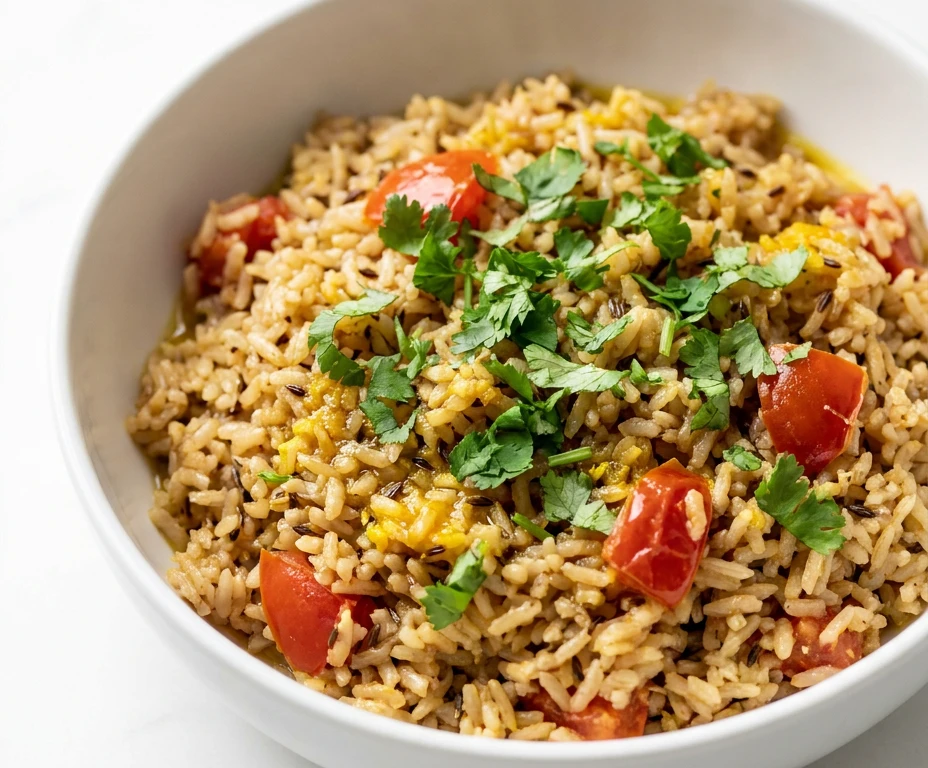
Closing Khichdi
A humble, soul-warming one-pot meal of roasted moong dal and gobindobhog rice cooked together with seasonal vegetables, finished with a gentle ghee tempering of whole spices. This niramish (no-onion, no-garlic) Bengali classic is the ultimate comfort food for rainy days and festive offerings alike.
For 4 servings
- prep · ~4 min
Roast the moong dal.
Heat 1 tbsp ghee in the pressure cooker over low-medium heat. Add the washed moong dal and roast, stirring continuously, until it releases a nutty aroma and turns lightly golden, about 3 to 4 minutes. Transfer to a bowl and set aside.
TIPDon't rush the roast — a properly roasted dal is the secret to that classic khichdi aroma. - saute · ~5 min
Sauté the vegetables and spices.
In the same pressure cooker, add the remaining 1 tbsp ghee over medium heat. Once hot, add cumin seeds, bay leaves, crushed cardamom, cinnamon stick, and dried red chilies. Let them sizzle for 30 seconds until fragrant. Add ginger paste and sauté for 30 seconds, then add chopped tomatoes, turmeric powder, and cumin powder. Cook until the tomatoes soften, about 2 minutes.
TIPKeep the heat medium — whole spices need gentle blooming to release their essential oils without burning. - prep · ~2 min
Combine rice, dal and vegetables.
Add the roasted moong dal, washed gobindobhog rice, cubed potatoes, cauliflower florets, green peas, and slit green chilies to the cooker. Stir everything together gently for a minute so the rice and dal are well coated with the spiced ghee.
TIPCoating the rice and dal in the fragrant ghee before adding water gives each grain a separate, pillowy texture. - pressure cook · ~15 min
Pressure cook the khichdi.
Pour in 4 cups of hot water and add the salt. Give it one final stir. Close the pressure cooker lid and cook on medium heat. After the first whistle, lower the heat to low and cook for exactly 2 more whistles. Turn off the heat and let the pressure release naturally.
TIPDo not force-release the pressure — the resting time lets the khichdi absorb the remaining moisture and develop its creamy consistency. - temper · ~1 min
Make the final ghee tempering.
Once the pressure is fully released, open the lid and gently mash a few potato cubes against the side of the cooker to thicken the khichdi. Heat 1 tsp extra ghee in the tadka pan, add a pinch of cumin seeds and one broken dried red chili, and let them crackle for 10 seconds. Pour this sizzling tempering over the khichdi.
- assemble · ~5 min
Rest the khichdi for 5 minutes.
Gently fold the khichdi once more, close the lid, and let it rest for 5 minutes. This allows all the flavours to settle and the consistency to become perfectly creamy.
- serve
Serve the khichdi hot.
Spoon the khichdi into bowls and serve steaming hot. Traditionally paired with a dollop of ghee on top, alongside aloo bhaja (crispy fried potato sticks) and begun bhaja (pan-fried eggplant slices) for a complete meal.
TIPThe khichdi will thicken as it cools — if reheating, add a splash of hot water and stir to loosen.
What to keep in mind.
6 tips from the recipe — small details that make a real difference to the final dish.
- 1Dry-roast the moong dal until fragrant and pale golden to unlock its nutty, earthy depth.
- 2Use hot water for pressure cooking to maintain steady heat and prevent grain shock.
- 3Let the pressure release naturally; forcing it open makes the khichdi watery and uneven.
- 4Mash a few potato cubes against the cooker wall after cooking for a naturally creamy texture.
- 5For the final tempering, wait until the ghee is shimmering hot before adding cumin and chili.
- 6The khichdi thickens as it cools — add a splash of hot water when reheating to restore consistency.
Adapt it for your goals.
Vegan
Replace ghee with coconut oil or a neutral vegetable oil in both the roasting and final tempering. The khichdi remains comforting and fragrant, suitable for plant-based diets.
High ProteinHigh-Protein
Increase moong dal to 1 cup and reduce rice to 1/2 cup. Add a handful of paneer cubes or tofu after pressure cooking for extra protein without altering the Bengali flavor profile.
Low OilLow-Oil
Roast the dal in a dry pan (no ghee) and temper with just 1 teaspoon of ghee or oil. The dish stays light yet flavorful, ideal for those watching fat intake.
Winter VegetableWinter Vegetable
Swap or supplement the cauliflower and peas with diced carrots, sweet potato, or pumpkin for a heartier, seasonal version that adds natural sweetness.
JainJain
Omit potatoes and cauliflower (root vegetables and underground stems avoided in Jain diets) and use only green peas, tomatoes, and optional bottle gourd. Skip the ginger paste if required.
Why this is on our healthy list.
High in Plant Protein
Moong dal (split yellow mung lentils) provides a rich source of plant-based protein, essential for muscle repair and satiety.
Good Source of Dietary Fiber
The combination of lentils, rice, and vegetables supports digestion and promotes stable blood sugar levels.
Rich in Iron from Lentils
Moong dal contributes iron, which helps maintain healthy blood and energy levels when paired with vitamin C from tomatoes and green chilies.
Low in Fat with Ghee Benefits
The small amount of ghee provides fat-soluble vitamins and butyrate for gut health, while the dish remains naturally low in overall fat.
Antioxidants from Spices
Turmeric, cumin, ginger, and green chilies offer anti-inflammatory and antioxidant compounds that support immunity.
Frequently asked questions
Yes, but the texture will be less creamy and sticky. Gobindobhog's high starch content is key to the authentic soft, pillowy khichdi consistency.



-curry.webp)
.webp)