
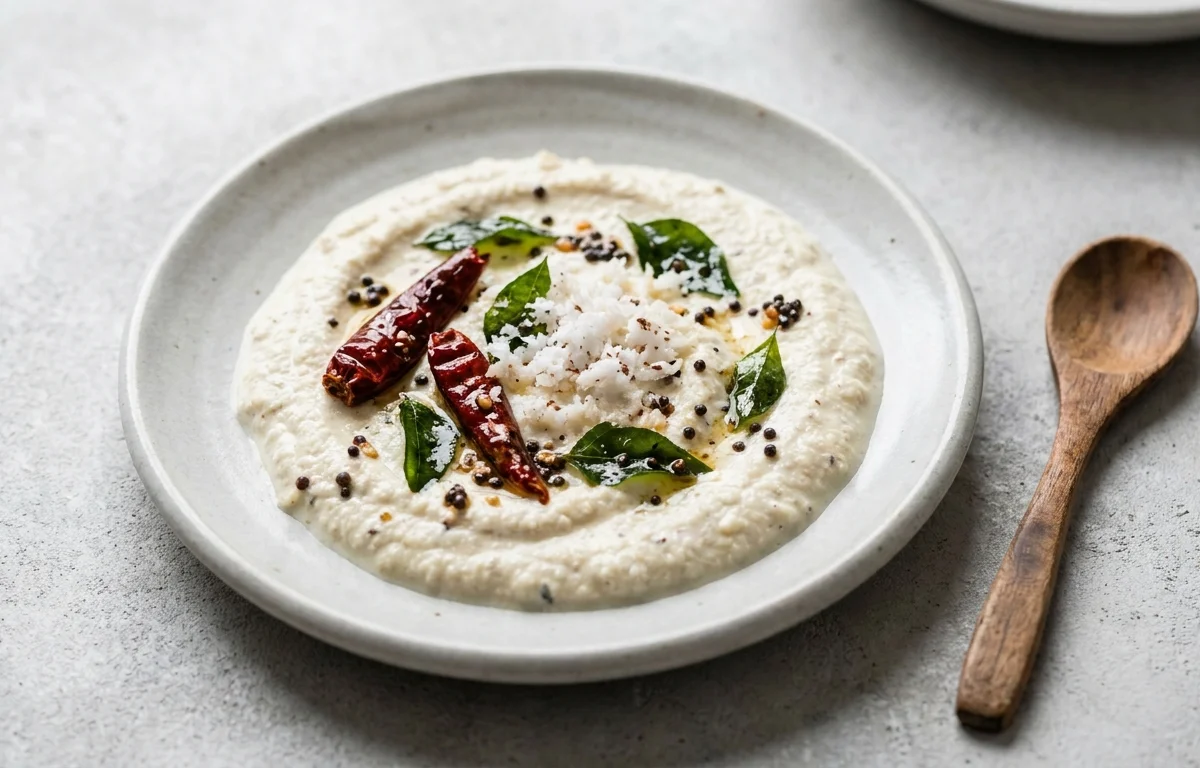
Coconut Chutney No-Salt
A fresh, creamy South Indian coconut chutney made without any added salt. Roasted chana dal and green chilies add a gentle heat and nutty depth, while a fragrant mustard seed and curry leaf tempering finishes it beautifully. Perfect paired with idli, dosa, or vada for a naturally flavorful, low-sodium meal.
For 8 servings
- prep
Prep the chutney ingredients.
1.Grate fresh coconut to yield 1 cup.2.Peel and roughly chop the ginger.3.Remove stems from green chilies. - mix
Grind the chutney base.
1.Add grated coconut, roasted chana dal, green chilies, ginger, and tamarind paste to the blender.2.Pour in 2-3 tablespoons of water and blend to a smooth, thick paste.3.Add more water a teaspoon at a time if needed to reach dipping consistency.TIPUse cold water for a fresher tasting chutney that stays bright green longer. - mix
Transfer and set aside.
Scoop the ground chutney into a serving bowl using a spatula.
- temper · ~2 min
Make the tempering.
1.Heat oil in a small pan over medium heat until shimmering.2.Add mustard seeds and let them splutter (30 seconds).3.Add urad dal and sauté until golden (20-30 seconds).4.Add dried red chili, curry leaves, and asafoetida. Stir for 10 seconds and remove from heat.TIPWatch the urad dal closely — it goes from golden to burnt in seconds. - mix
Combine tempering with chutney.
Pour the hot tempering over the ground chutney. Stir well to incorporate the flavors evenly.
- serve
Serve at room temperature.
Serve fresh coconut chutney with idli, dosa, vada, or upma. Best enjoyed within a few hours of preparation.
TIPFor later use, refrigerate and bring to room temperature before serving.
What to keep in mind.
6 tips from the recipe — small details that make a real difference to the final dish.
- 1Use cold water when grinding to keep the chutney fresh and bright green for longer.
- 2Roast the chana dal lightly in a dry pan before grinding for extra nutty aroma.
- 3Adjust green chilies based on heat preference; remove seeds for milder chutney.
- 4If the chutney thickens on standing, stir in a splash of cold water to restore consistency.
- 5Make the tempering just before serving for the most aromatic, crispy curry leaves.
- 6Refrigerate leftovers in an airtight container for up to 2 days; stir before using.
Adapt it for your goals.
Mint-cilantro
Replace 2 tbsp of coconut with fresh mint and cilantro leaves for a herby, cooling chutney that pairs beautifully with spicy fried snacks.
veganVegan
This recipe is already vegan as written, but you can substitute the ghee-like oil with any neutral plant oil for a fully plant-based tempering.
no tamarindNo-tamarind
Skip the tamarind paste and add a small piece of raw mango or a squeeze of lemon juice for a different sour note that's still salt-free.
protein boostProtein-boost
Double the roasted chana dal to 4 tbsp for a thicker, protein-rich chutney that works great as a dip for raw veggies.
jain friendlyJain-friendly
Omit the ginger and asafoetida, and use only green chilies — this variant stays within Jain dietary restrictions while remaining flavorful.
Why this is on our healthy list.
Low in Sodium
This chutney is made without any added salt, making it ideal for those managing blood pressure or on a low-sodium diet.
Rich in Healthy Fats
Fresh coconut provides medium-chain triglycerides (MCTs), which are easily metabolized for quick energy.
Contains Plant Protein
Roasted chana dal adds a modest amount of plant-based protein and fiber, supporting satiety and digestive health.
Digestive Support
Ginger, asafoetida, and curry leaves are traditionally used in South Indian cooking to aid digestion and reduce bloating.
Natural Antioxidants
Curry leaves and green chilies are rich in antioxidants like vitamin C and beta-carotene, which support immune function.
Frequently asked questions
This recipe is deliberately salt-free for those on a low-sodium diet; the tamarind, green chilies, and roasted chana dal provide enough natural flavor.


