
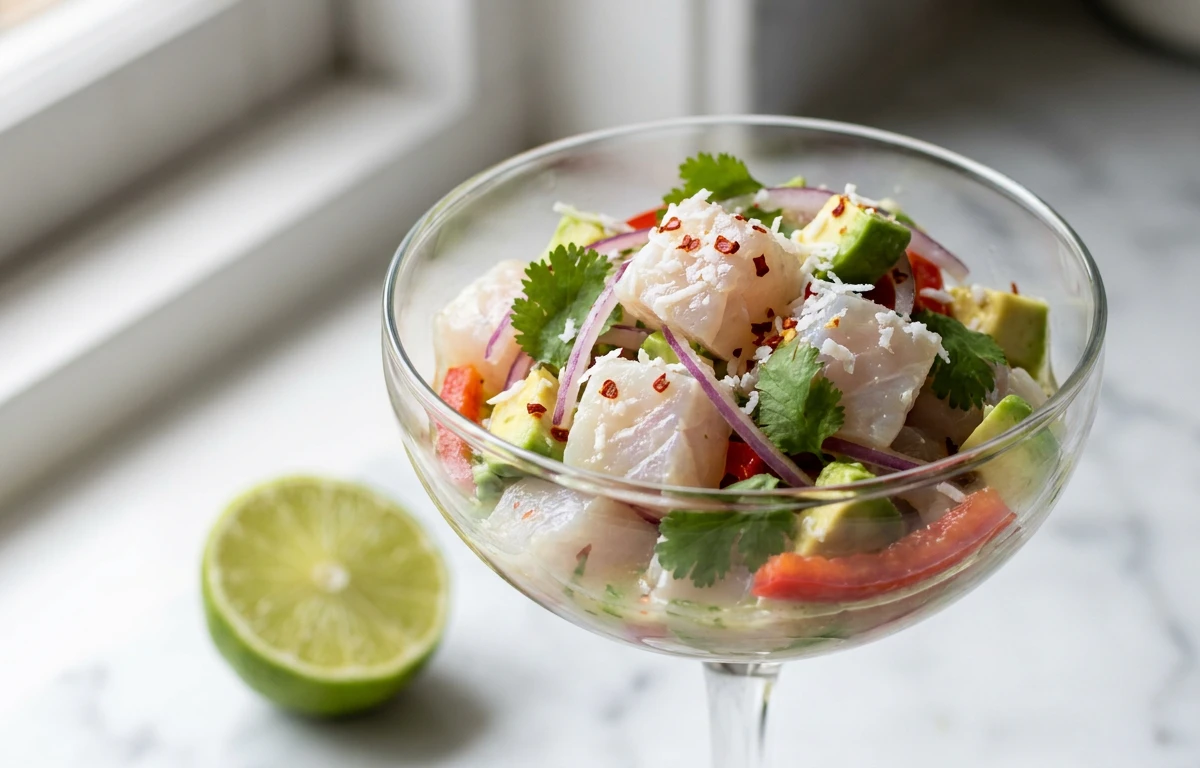
Coconut & Lime Fish Ceviche
Bright, zesty, and incredibly refreshing, this ceviche combines fresh white fish cured in lime juice with creamy coconut milk, crisp red onion, and a touch of chili heat. It's a tropical twist on a Latin American classic that comes together in minutes with no cooking required — just let the citrus do the work while you prep the rest.
For 4 servings
- prep · ~20 min
Prepare the fish and cure it in lime juice.
1.Cut the white fish fillet into small, even cubes about 1.5 cm across.2.Place fish cubes in a glass bowl and pour the lime juice over until fully submerged.3.Add salt and stir gently. Cover and refrigerate for 15 to 20 minutes until the fish turns opaque and firm.TIPUse the freshest fish you can find — it should smell like the ocean, not fishy. Frozen works too, just thaw completely and pat dry first. - prep · ~5 min
Slice the onion and chili.
1.While the fish cures, thinly slice the red onion into half-moons.2.Finely chop the deseeded green chili.3.Chop the cilantro and zest one lime. - mix · ~3 min
Combine the ceviche.
1.Drain and discard about half the lime juice from the cured fish, leaving just enough to keep it moist.2.Pour the coconut milk over the fish and fold gently.3.Add the red onion, green chili, lime zest, black pepper, and most of the cilantro, reserving some for garnish.4.Toss everything together lightly so the fish stays intact.TIPDon't overmix — the fish cubes are delicate after curing. Use a folding motion with a spatula or spoon. - rest · ~10 min
Let the flavors meld in the fridge.
1.Cover the bowl and return to the refrigerator for 10 minutes.2.This short rest lets the coconut milk soak up the lime and chili notes. - assemble · ~1 min
Serve the ceviche chilled.
1.Give the ceviche a gentle stir, then taste and adjust salt if needed.2.Spoon into chilled bowls or martini glasses.3.Scatter the reserved cilantro on top and serve immediately.TIPServe in glasses or small bowls that have been chilled in the freezer for 5 minutes — it keeps everything refreshingly cold.
What to keep in mind.
7 tips from the recipe — small details that make a real difference to the final dish.
- 1Use fish that smells like the ocean, not fishy — freshness is non-negotiable for safe ceviche.
- 2Cut fish cubes evenly (about 1.5 cm) so they cure at the same rate in the lime juice.
- 3Let the fish cure until opaque and firm but not rubbery — 15–20 minutes is the sweet spot.
- 4Discard about half the lime juice before adding coconut milk to keep the flavor balanced, not sour.
- 5Fold the coconut milk gently into the fish to avoid breaking the delicate cubes.
- 6Chill the serving bowls or glasses for 5 minutes in the freezer for an extra-refreshing presentation.
- 7This ceviche is best eaten within 2 hours; do not store overnight as the fish will turn mushy.
Adapt it for your goals.
Spicy-mango
Add 1/2 cup diced ripe mango for sweetness and an extra chili for more heat — perfect for those who love a sweet-spicy contrast.
low fatLow-fat
Replace full-fat coconut milk with light coconut milk or coconut water for a lighter, less rich version.
herb swapHerb-swap
Swap cilantro with fresh mint or Thai basil for a different herbal note that still pairs well with coconut and lime.
shrimpShrimp
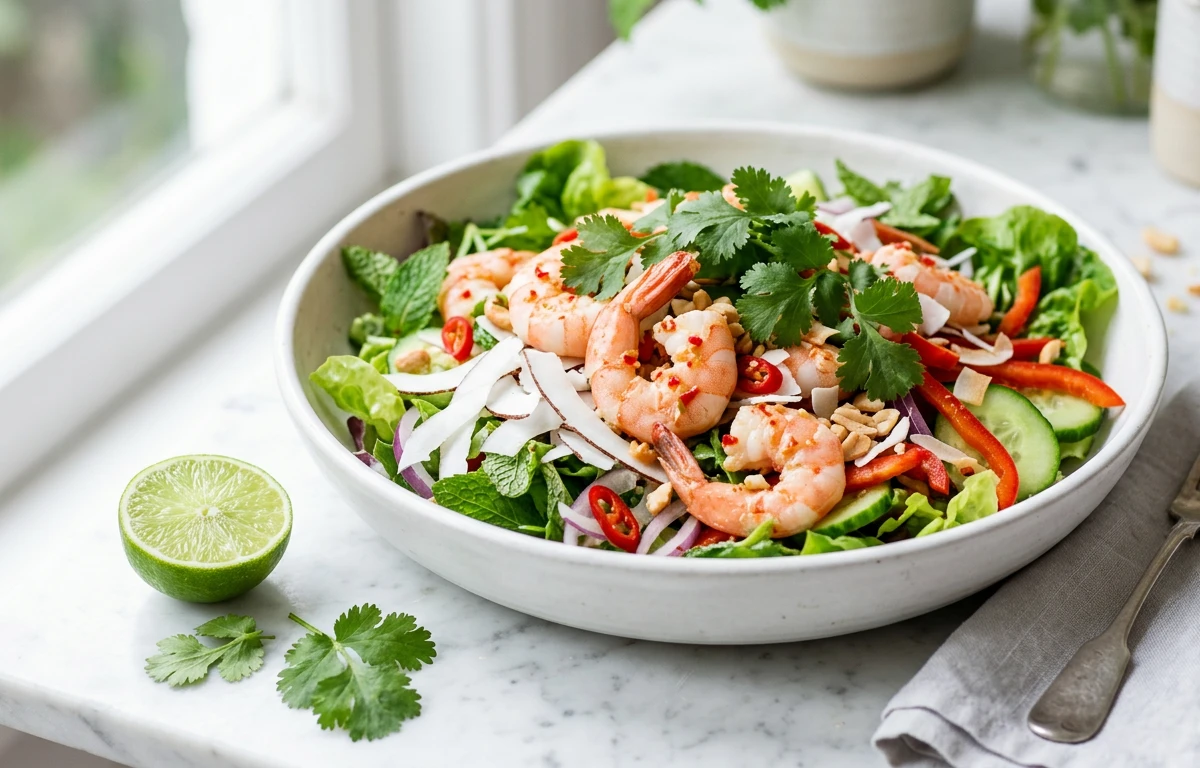
Substitute white fish with peeled, raw shrimp cut into small pieces — cure them in lime juice for 20–25 minutes until pink and firm.
Why this is on our healthy list.
High in Lean Protein
White fish like sea bass or snapper provides a generous amount of high-quality, low-fat protein essential for muscle repair.
Good Source of Vitamin C
Fresh lime juice is rich in vitamin C, which supports immune health and helps your body absorb iron from the meal.
Heart-Healthy Fats
Coconut milk contains medium-chain triglycerides (MCTs) that may support heart health when used in moderation.
Low in Carbohydrates
This dish is naturally low in carbs, making it a great option for those following a keto or low-carb lifestyle.
Frequently asked questions
Yes, as long as you thaw it completely in the refrigerator and pat it very dry before cutting. Use sushi-grade or previously frozen fish for safety.



.webp)
.webp)