.webp)
Comforting Kichari (Khichdi)
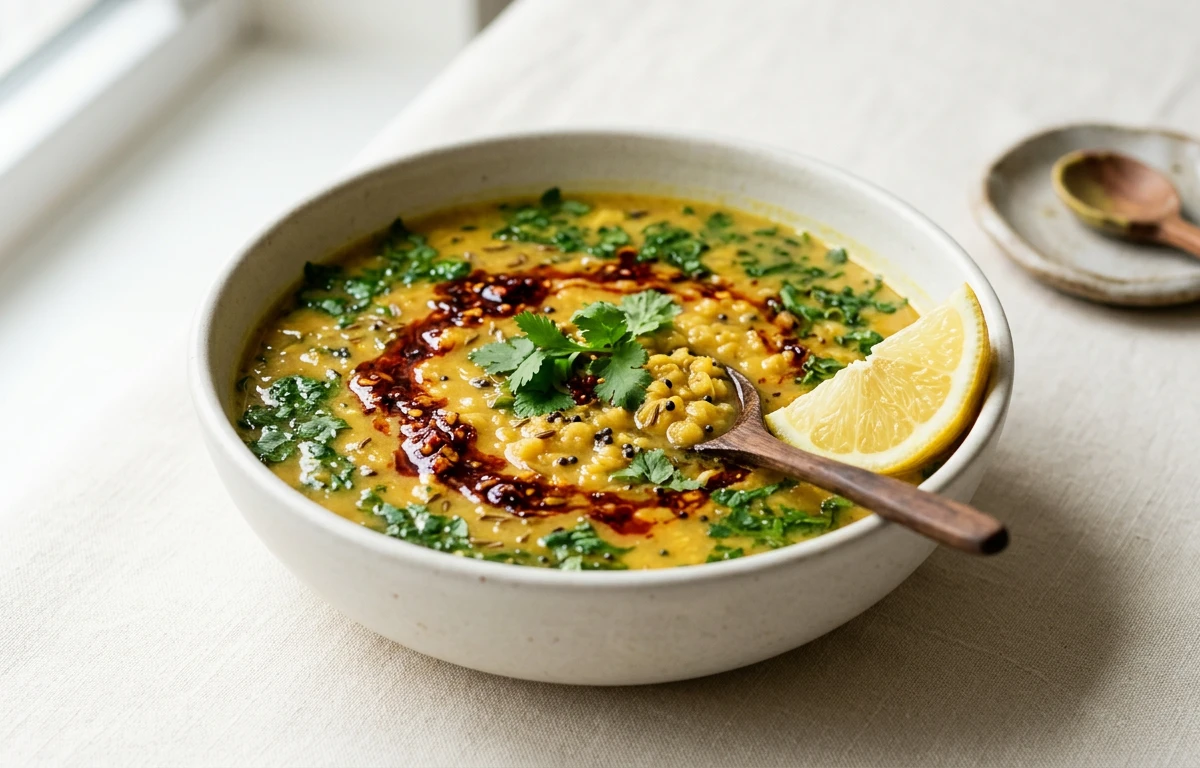
A warm, velvety one-pot meal of rice and moong dal cooked together until soft and creamy. Lightly spiced with cumin and ginger, this gentle dish feels like a hug in a bowl. Perfect for rainy days, upset tummies, or whenever you need a simple, nourishing meal.
For 4 servings
- prep
Wash and soak the rice and dal.
1.Rinse basmati rice and moong dal together in water 2-3 times until water runs clear.2.Soak in fresh water for 30 minutes, then drain completely. - temper · ~2 min
Prepare the tempering in the pressure cooker.
1.Heat ghee in a pressure cooker over medium heat until it melts.2.Add cumin seeds and asafoetida. Let the cumin sizzle and turn golden (20-30 seconds).3.Add chopped ginger and sauté until fragrant (30 seconds).TIPDo not let the cumin burn — it turns bitter quickly. Keep it at a golden sizzle. - mix · ~2 min
Add rice, dal, and spices to the cooker.
1.Add the drained rice and moong dal to the pressure cooker.2.Add turmeric powder and salt.3.Stir gently for 1 minute to coat the grains with ghee and spices.TIPRoasting the grains briefly in ghee adds a subtle nutty depth to the khichdi. - pressure cook · ~12 min
Pressure cook the khichdi.
1.Pour in 3.5 cups of water and stir once.2.Close the pressure cooker lid and cook on medium-high heat.3.After the first whistle, lower the heat and cook for 3-4 more whistles (about 10-12 minutes total).4.Turn off the heat and let the pressure release naturally.TIPMore whistles and natural pressure release give you that soft, mushy, comforting texture. - mix
Mash and adjust consistency.
Open the cooker once the pressure settles. Mash the khichdi well with the back of a ladle until creamy. If it is too thick, stir in a splash of hot water until you get a soft, porridge-like consistency.
TIPKhichdi thickens as it cools — keep it slightly looser than you think when serving. - garnish
Garnish with fresh coriander and serve hot.
Ladle the steaming khichdi into bowls. Sprinkle with chopped coriander leaves and an optional drizzle of raw ghee on top. Serve immediately.
What to keep in mind.
7 tips from the recipe — small details that make a real difference to the final dish.
- 1Soak the rice and dal for at least 30 minutes to ensure even cooking and a creamier texture.
- 2Do not let the cumin seeds burn during tempering — they turn bitter; remove from heat if needed.
- 3For a softer, porridge-like khichdi, let the pressure release naturally and mash thoroughly.
- 4Khichdi thickens as it cools, so keep it slightly looser than desired when you turn off the heat.
- 5To make it more digestible, add a pinch of asafoetida (hing) — it aids digestion and adds depth.
- 6Use a heavy-bottomed or non-stick pressure cooker to prevent sticking and ensure even cooking.
- 7Leftover khichdi can be refrigerated for up to 3 days; add a splash of water while reheating to restore consistency.
Adapt it for your goals.
Vegan
Replace ghee with coconut oil or neutral oil for the tempering. The dish remains creamy and comforting, perfect for those avoiding dairy.
high proteinHigh-protein
Swap half the rice for extra moong dal or add a handful of split chickpeas (chana dal). Increases protein content while maintaining the soft texture.
jain (no onion, no garlic)Jain (no onion, no garlic)
This recipe is already naturally Jain-friendly — no onion or garlic. Double the ginger and add a pinch of black pepper for a gentle kick.
low oilLow-oil
Use only 1 teaspoon of ghee or oil and skip the final drizzle. Roast the cumin seeds dry in the pan before adding water — still aromatic but lighter.
vegetable loadedVegetable-loaded
Add 1/2 cup of chopped carrots, peas, or diced pumpkin in step 3. They cook down with the grains, adding sweetness, color, and fiber.
Why this is on our healthy list.
Easy to Digest
Moong dal is one of the lightest legumes, and pressure-cooking makes the starches and proteins even gentler on the stomach — ideal for recovery or sensitive digestion.
Natural Anti-Inflammatory
Turmeric and ginger both contain potent anti-inflammatory compounds (curcumin and gingerol), which may help reduce joint and gut inflammation.
Good Source of Plant Protein
Moong dal provides around 14 grams of protein per cooked cup, combined with rice for a complete amino acid profile.
Rich in Dietary Fiber
The combination of rice and dal supplies both soluble and insoluble fiber, supporting digestive regularity and sustained energy release.
Low in Saturated Fat
With just 2 teaspoons of ghee for the whole pot, this dish is very low in saturated fat — the main fats are from the ghee's butyrate and healthy monounsaturates.
Frequently asked questions
Yes — use a heavy pot with a tight lid. Simmer the soaked rice and dal in 4.5 cups of water for 30-35 minutes, stirring occasionally, until soft and creamy.