
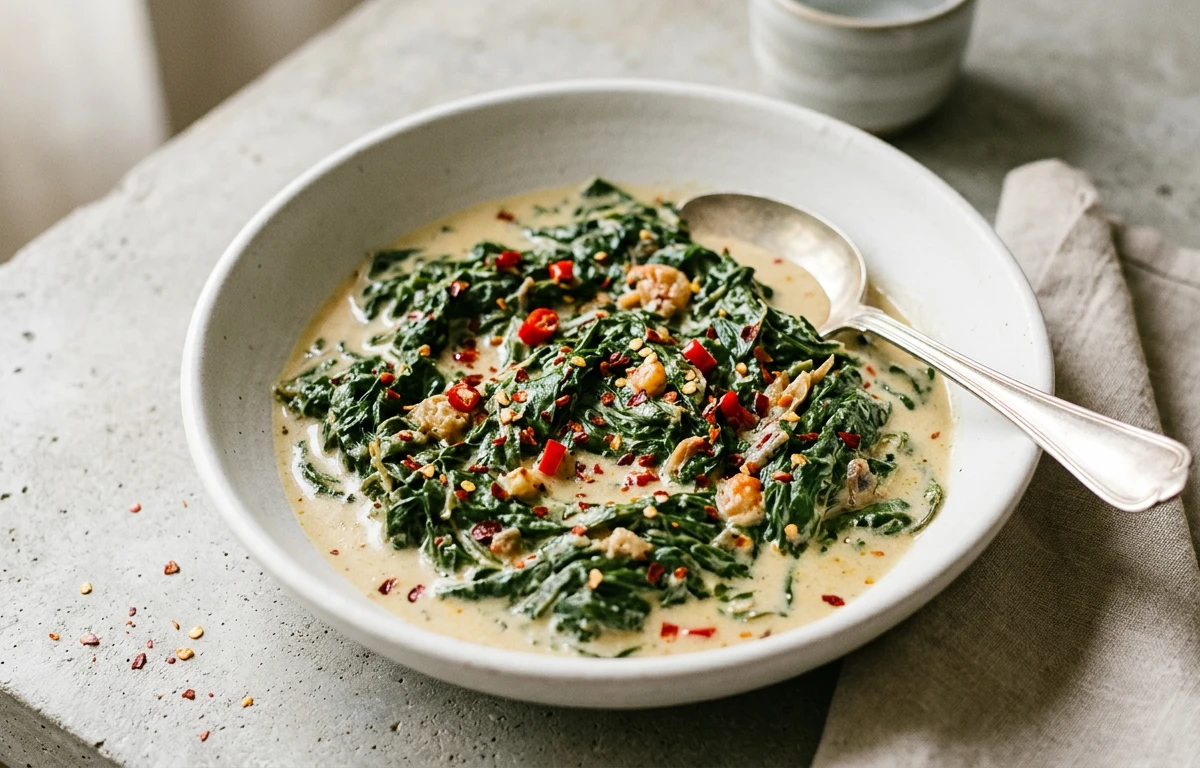
Creamy Coconut Taro Leaves
Tender taro leaves slow-cooked in rich coconut milk until velvety and creamy, with a gentle hum of ginger and chili. This classic Filipino dish is deeply savory, fragrant, and comforting — perfect spooned over steamed rice.
For 4 servings
- prep
Prepare the dried taro leaves.
Rinse dried taro leaves under cold water. Remove any tough stems or fibrous parts. Shake off excess water and set aside.
TIPDo not use fresh taro leaves without proper handling — they contain calcium oxalate crystals that can irritate. Dried leaves are safe and traditional for this dish. - saute · ~10 min
Render the pork and build the base.
1.Heat oil in a large pot over medium heat.2.Add pork belly strips and cook until lightly browned and fat begins to render (4-5 min).3.Add onion, garlic, and ginger. Sauté until fragrant and onion turns translucent (3-4 min).4.Stir in shrimp paste and cook for 1 minute to bloom the flavor.TIPLet the pork develop a light golden color — this caramelization builds deep savoriness for the whole dish. - simmer · ~35 min
Simmer the taro leaves in coconut milk.
1.Pour in the coconut milk and 1 cup water. Stir to combine and bring to a gentle boil.2.Add the prepared taro leaves, pressing them down into the liquid.3.Scatter sliced red chilies over the top. Cover with a lid and reduce heat to low.4.Simmer for 30-35 minutes, stirring occasionally to prevent scorching, until leaves are silky and liquid thickens.TIPAvoid stirring too vigorously — taro leaves are delicate once softened. A gentle fold is enough. - simmer · ~10 min
Finish with coconut cream.
1.Remove the lid and pour coconut cream over the surface. Do not stir yet.2.Let it simmer uncovered for 10 more minutes until the cream reduces and thickens into a rich sauce.3.Fold gently to incorporate the cream, then taste and add a pinch of salt if needed.TIPAdding the cream at the end without stirring initially allows it to reduce into a luscious, oily layer on top — the signature finish of a great Laing. - serve · ~5 min
Rest briefly and serve.
Turn off the heat and let the dish rest for 5 minutes. Serve warm over steamed rice.
What to keep in mind.
6 tips from the recipe — small details that make a real difference to the final dish.
- 1Use full-fat coconut milk for the creamiest texture and richest flavor.
- 2Dry the rehydrated taro leaves gently; excess water dilutes the coconut sauce.
- 3Simmer on low heat and stir occasionally to prevent scorching the coconut milk.
- 4The dish thickens as it cools, so keep it slightly saucier than desired when done.
- 5Refrigerate leftovers for up to 3 days; the flavors meld and deepen overnight.
- 6Slice pork belly thinly and render until golden for a deeper savory base.
Adapt it for your goals.
Seafood
Replace pork belly with small shrimp or flaked smoked fish (tinapa) for a lighter, coastal take. The seafood pairs beautifully with coconut and ginger.
VegetarianVegetarian
Omit pork and shrimp paste; use vegetable oil and add firm tofu or mushrooms (like oyster or shiitake) for hearty texture. Season with salt or light soy sauce instead.
SpicySpicy
Double the red chilies or add a teaspoon of chili flakes during the simmer for those who want a fierier kick without masking the coconut cream.
KetoKeto
Skip the optional water reduction in step 3 to keep sauce thick; serve over cauliflower rice. The high fat from coconut and pork suits low-carb diets.
Why this is on our healthy list.
Rich in Fiber
Taro leaves provide dietary fiber, which supports healthy digestion and helps maintain satiety.
Healthy Fats from Coconut
Coconut milk and cream offer medium-chain triglycerides (MCTs), which can be a quick source of energy.
Source of Iron
Taro leaves contain iron, and pairing them with pork and shrimp paste may enhance absorption.
Frequently asked questions
Fresh leaves contain irritating calcium oxalate crystals and must be boiled in salted water first. Dried leaves are traditional and safer for this recipe.


.webp)
.webp)