Creamy Jerusalem Artichoke & Leek Soup
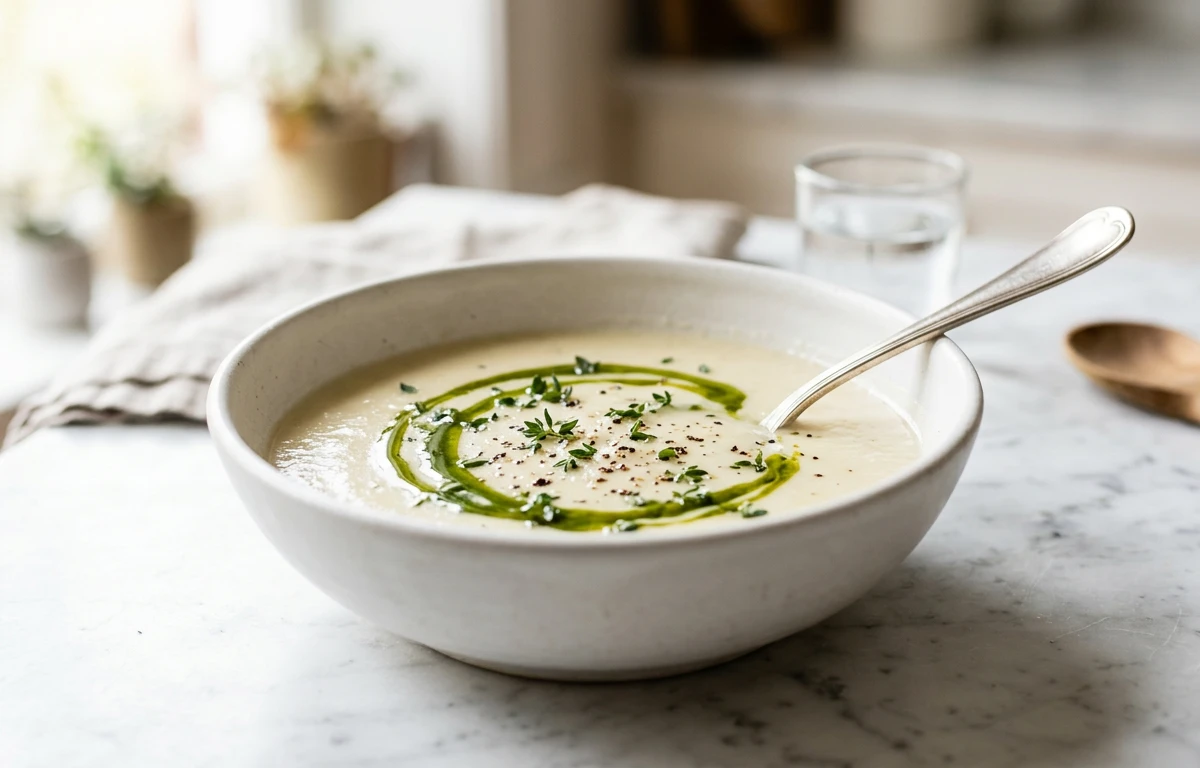
Silky, earthy Jerusalem artichokes meet sweet, melted leeks in this velvety soup. A gentle simmer and a quick blend transforms humble roots into a luxurious bowl that tastes far more decadent than it is. Perfect for chilly evenings with crusty bread on the side.
For 4 servings
- prep · ~10 min
Prep the Jerusalem artichokes and leeks.
1.Scrub the Jerusalem artichokes well under running water to remove any grit. Roughly chop into 1-inch pieces, no need to peel.2.Trim the dark green tops and root ends from the leeks. Slice the white and light green parts in half lengthwise, then thinly slice into half-moons.3.Peel and dice the potato into 1-inch cubes.TIPJerusalem artichokes discolor quickly after cutting. Drop them into a bowl of water with a squeeze of lemon if prepping ahead. - saute · ~10 min
Sweat the leeks and garlic.
1.Heat olive oil in a Dutch oven over medium-low heat.2.Add sliced leeks and a pinch of salt. Cook gently, stirring occasionally, until softened but not browned, about 8 minutes.3.Add minced garlic and cook for 1 minute until fragrant.TIPKeep the heat gentle — leeks should sweat and soften, not fry. Browning them will add bitterness to the finished soup. - simmer · ~20 min
Simmer the soup until tender.
1.Add the Jerusalem artichokes, diced potato, thyme sprigs, remaining salt, and water to the pot.2.Bring to a boil over high heat, then reduce heat to maintain a gentle simmer.3.Cover partially and cook for 20 minutes, or until the Jerusalem artichokes and potato are very tender when pierced with a knife. - mix · ~3 min
Blend the soup until silky smooth.
1.Remove the thyme sprigs from the pot and discard.2.Using an immersion blender, purée the soup directly in the pot until completely smooth and velvety.3.If using a countertop blender, work in batches and vent the lid to allow steam to escape.TIPFor the smoothest texture, blend longer than you think you need — a full 2-3 minutes. If it feels too thick, add a splash of hot water to loosen. - serve · ~1 min
Finish with lemon and pepper, then serve.
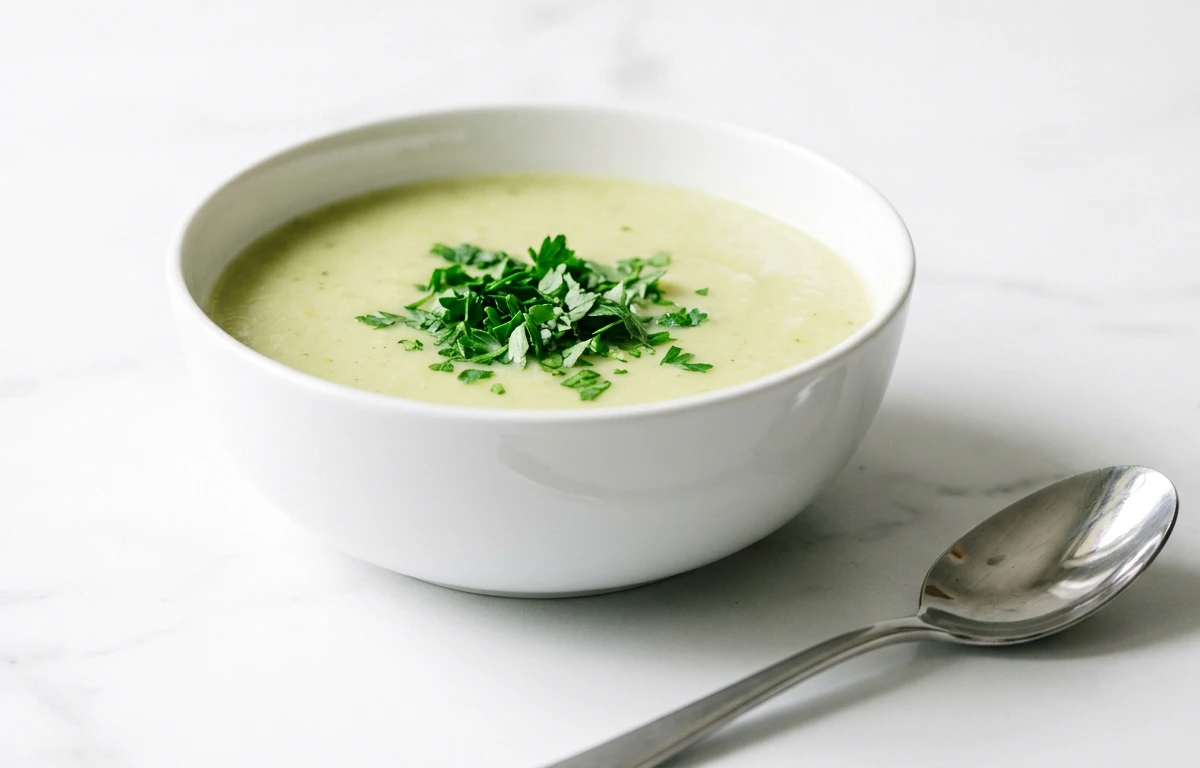
1.Stir in the lemon juice and season with freshly ground black pepper. Taste and adjust salt if needed.2.Ladle into warm bowls and garnish with chopped chives.
What to keep in mind.
7 tips from the recipe — small details that make a real difference to the final dish.
- 1Scrub Jerusalem artichokes well but leave the thin skin on for extra earthy flavor and nutrients.
- 2Add a teaspoon of lemon juice to the soaking water to prevent the sunchokes from browning during prep.
- 3Cook the leeks on medium-low heat until completely soft and translucent — browning will add bitterness.
- 4Pierce the sunchokes and potato with a knife to test doneness; they should offer no resistance before blending.
- 5Blend for a full 2–3 minutes with an immersion blender for a velvety, luscious texture without cream.
- 6This soup thickens as it cools; stir in a little hot water or broth when reheating to restore consistency.
- 7Make ahead and refrigerate for up to 3 days — the flavor deepens overnight as the leeks and herbs meld.
Adapt it for your goals.
Dairy-free creamy
Stir in 2 tablespoons of coconut milk or cashew cream after blending for an extra luxe mouthfeel without dairy.
herbaceousHerbaceous
Swap thyme for 2 fresh bay leaves during simmering, and swap the chive garnish for crispy fried sage leaves for a deeper savory profile.
low carbLow-carb
Omit the potato and add an extra 150g of Jerusalem artichokes and a chopped celery stalk to maintain body without the starch.
roasted nuttyRoasted nutty
Roast the Jerusalem artichokes at 200°C (400°F) for 20 minutes before adding to the pot, for a caramelized, nuttier flavor.
garlicky roastedGarlicky roasted
Roast 4 whole garlic cloves in their skins until soft, then squeeze the paste into the blender — a mellow, sweet garlic twist.
Why this is on our healthy list.
Rich in Prebiotic Fiber
Jerusalem artichokes are one of the best sources of inulin, a prebiotic fiber that feeds beneficial gut bacteria and aids digestion.
Packed with Potassium
Both leeks and sunchokes provide potassium, an essential mineral that supports healthy blood pressure and muscle function.
Naturally Low in Fat
With only a tablespoon of olive oil and no cream, this soup is a light, heart-healthy option that still feels indulgent.
Good Source of B Vitamins
Leeks contribute folate and vitamin B6, which help support energy metabolism and red blood cell formation.
Frequently asked questions
No — just scrub them thoroughly. The thin skin is edible and adds earthy flavor; peeling is unnecessary and tedious.