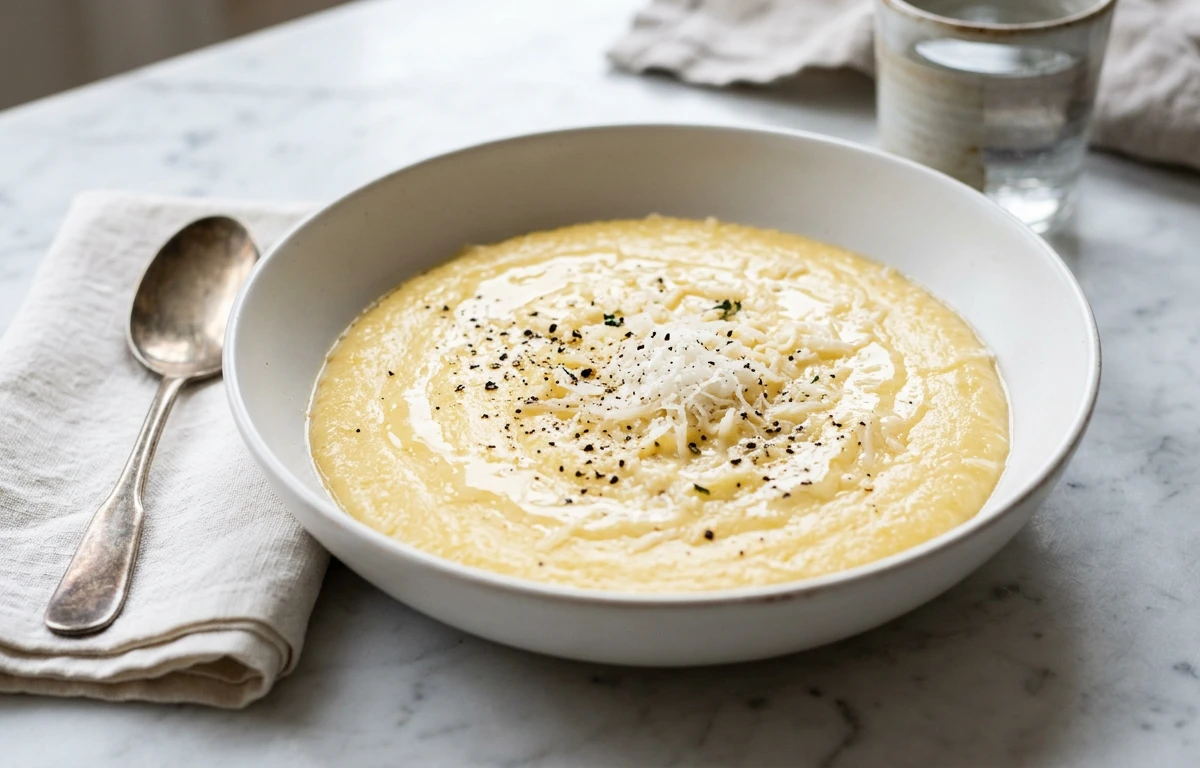
Creamy Parmesan Polenta
Silky, buttery polenta enriched with nutty Parmesan cheese, slowly stirred until perfectly creamy. This Italian comfort food classic takes a humble cornmeal base and transforms it into a luxurious, golden porridge that melts in your mouth. Serve as a warm, cozy side with braised meats or roasted vegetables.
For 4 servings
- boil · ~5 min
Bring salted water to a boil.
1.Pour 4 cups water into a heavy-bottomed saucepan.2.Add 0.5 tsp salt and bring to a rolling boil over high heat. - mix · ~2 min
Whisk in the cornmeal gradually.
1.Reduce heat to medium-low.2.Slowly pour the cornmeal in a steady stream while whisking constantly.3.Keep whisking until fully incorporated and no lumps remain, about 1 minute.TIPPouring the cornmeal slowly while whisking prevents lumps. Never dump it all at once. - simmer · ~35 min
Simmer the polenta until thick and creamy.
1.Switch to a wooden spoon once the mixture thickens.2.Cook on low heat, stirring every 3-4 minutes.3.Simmer for 30-35 minutes until the polenta pulls away from the sides of the pan and is soft and creamy.TIPStirring too frequently traps steam and slows cooking. Every few minutes is enough—just scrape the bottom to prevent sticking. - mix · ~1 min
Fold in butter and Parmesan.
1.Remove the pan from heat.2.Add the butter and freshly grated Parmesan cheese.3.Stir vigorously until the butter and cheese melt completely into the polenta, about 1 minute.TIPOff-heat finishing gives the creamiest texture without overcooking the cheese. - garnish
Season and serve warm.
1.Crack fresh black pepper over the top.2.Drizzle with a teaspoon of extra virgin olive oil.3.Spoon into bowls and serve immediately while soft and creamy.
What to keep in mind.
6 tips from the recipe — small details that make a real difference to the final dish.
- 1Use stone-ground cornmeal for superior texture and corn flavor.
- 2Whisk cornmeal in a steady stream to avoid lumps from forming.
- 3Stir with a wooden spoon only every 3-4 minutes to allow starches to swell.
- 4Test doneness when polenta pulls cleanly from the pan sides.
- 5Grate Parmesan fresh from a block; pre-shredded won't melt smoothly.
- 6For make-ahead, spread in a greased dish, chill, then slice and sear.
Adapt it for your goals.
Herb-infused
Stir in 1 tablespoon of chopped fresh rosemary or thyme with the butter for an aromatic Italian twist.
veganVegan
Replace butter with vegan butter or olive oil, and use nutritional yeast instead of Parmesan for a dairy-free version.
mushroom polentaMushroom polenta
Top the finished polenta with sautéed wild mushrooms and garlic for a hearty, earthy main dish.
Why this is on our healthy list.
Gluten-Free Comfort
Cornmeal is naturally gluten-free, making this a safe and satisfying side for gluten-sensitive diets.
Rich in Calcium
Parmesan cheese provides a concentrated source of calcium, essential for bone health.
Whole Grain Goodness
Stone-ground cornmeal retains more of the corn kernel's fiber and nutrients than refined grits.
Frequently asked questions
Yes, but cooking time drops to about 5 minutes and the texture will be less creamy and slightly gummy.