
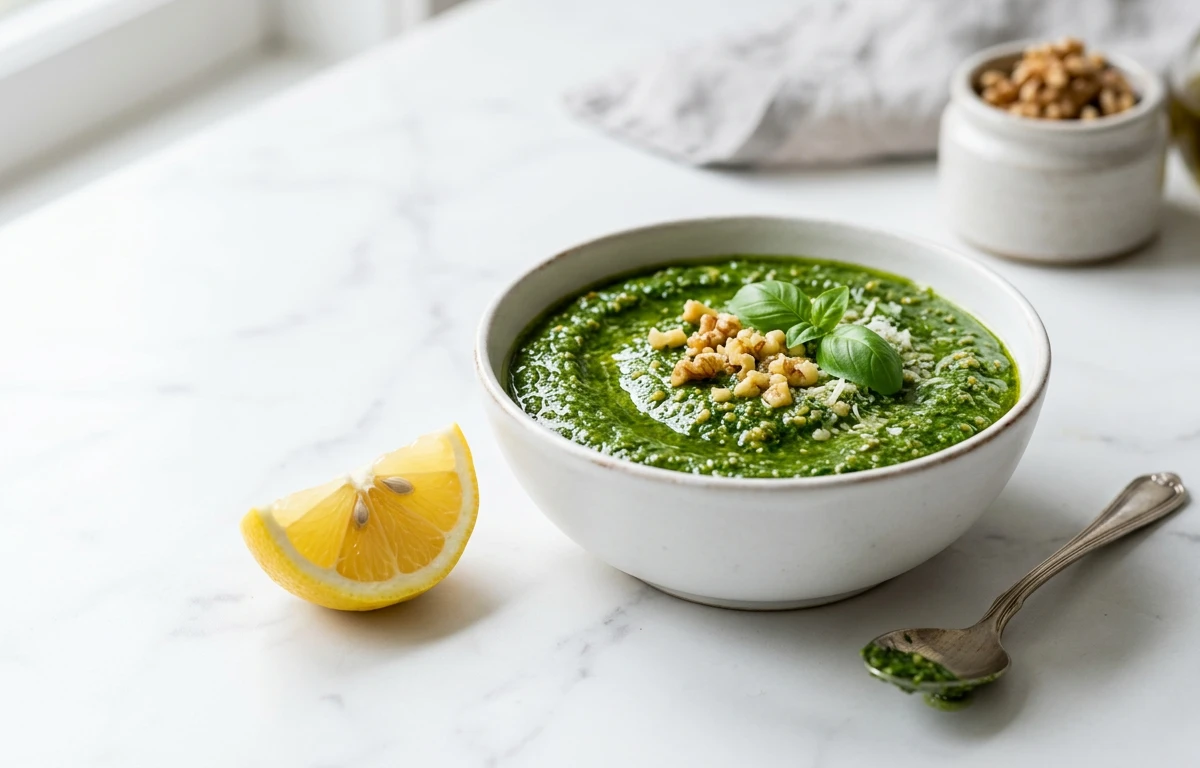
Creamy Walnut & Basil Pesto
A luxuriously smooth twist on classic pesto, swapping pine nuts for buttery walnuts and adding a touch of creamy richness. This vibrant green sauce comes together in minutes and transforms pasta, grilled vegetables, or crusty bread into something special.
For 4 servings
- prep
Prep the ingredients.
1.Wash 2 cups fresh basil leaves and pat completely dry with a kitchen towel.2.Peel 2 garlic cloves and set aside.3.Grate 0.5 cup Parmesan cheese finely.4.Juice half a lemon to yield 2 tbsp fresh lemon juice. - mix · ~1 min
Blitz the walnuts and garlic.
1.Add 0.5 cup walnuts and peeled garlic cloves to the food processor.2.Pulse 8–10 times until coarsely chopped and crumbly, scraping down sides once.TIPDon't over-blitz here — stopping at a coarse crumb prevents the nuts from turning into butter. - mix
Add basil, cheese, and lemon juice.
1.Add all the basil leaves, grated Parmesan, and 2 tbsp lemon juice to the processor.2.Pulse 5–6 times until the basil is roughly chopped and incorporated. - mix · ~1 min
Stream in the olive oil.
1.With the food processor running on low, slowly drizzle 6 tbsp olive oil through the feed tube.2.Stop once the sauce looks smooth and emulsified, about 30 seconds.3.Scrape down the sides with a rubber spatula. - mix
Season and adjust consistency.
1.Add a pinch of salt and a pinch of black pepper.2.Pulse 2–3 times, then taste and adjust seasoning.3.For a creamier, looser pesto, add 2 tbsp ice-cold water and pulse to combine.TIPCold water keeps the pesto vibrant green instead of dull brown — warm blending oxidizes the basil. - serve
Serve or store the pesto.
Toss immediately with hot pasta, spread on crusty bread, or drizzle over grilled vegetables. To store, transfer to an airtight jar, smooth the top, and cover with a thin layer of olive oil to prevent browning.
What to keep in mind.
5 tips from the recipe — small details that make a real difference to the final dish.
- 1Pat basil leaves bone-dry before blending to avoid a watery, grey pesto.
- 2Toast walnuts in a dry pan for 2–3 minutes to deepen their nutty flavor.
- 3Always add oil in a slow stream while the processor runs for a stable emulsion.
- 4Use high-quality extra-virgin olive oil — its flavor is front and center here.
- 5If freezing pesto, omit the Parmesan and stir it in after thawing for better texture.
Adapt it for your goals.
Vegan & dairy-free
Swap Parmesan for 2 tablespoons of nutritional yeast or a vegan hard cheese. The savoury, umami note is preserved without any dairy.
nut freeNut-free
Replace walnuts with ½ cup of shelled hemp seeds or pumpkin seeds. Both deliver a creamy, mild nuttiness that works beautifully with basil.
extra herbyExtra-herby
Reduce basil to 1½ cups and add ½ cup flat-leaf parsley or arugula. This stretches the basil and adds a peppery, fresh dimension.
red pesto twistRed pesto twist
Add ¼ cup oil-packed sun-dried tomatoes (drained) when you add the basil. The sweet-tangy tomato balances the rich walnuts.
Why this is on our healthy list.
Rich in Omega-3s
Walnuts are among the best plant sources of alpha-linolenic acid, an omega-3 fat that supports heart and brain health.
Antioxidant Boost
Fresh basil is loaded with flavonoids and volatile oils that help combat oxidative stress and inflammation.
Bone-Supporting Calcium
Parmesan cheese provides a concentrated source of calcium, essential for maintaining strong bones and teeth.
Vitamin E from Walnuts & Oil
Both walnuts and extra-virgin olive oil supply vitamin E, a fat-soluble antioxidant that protects cell membranes.
Frequently asked questions
Yes — use a mortar and pestle. Grind the walnuts and garlic to a paste, then add basil leaves a handful at a time, pounding and folding until a coarse paste forms. Stir in cheese, lemon juice, and oil by hand.


