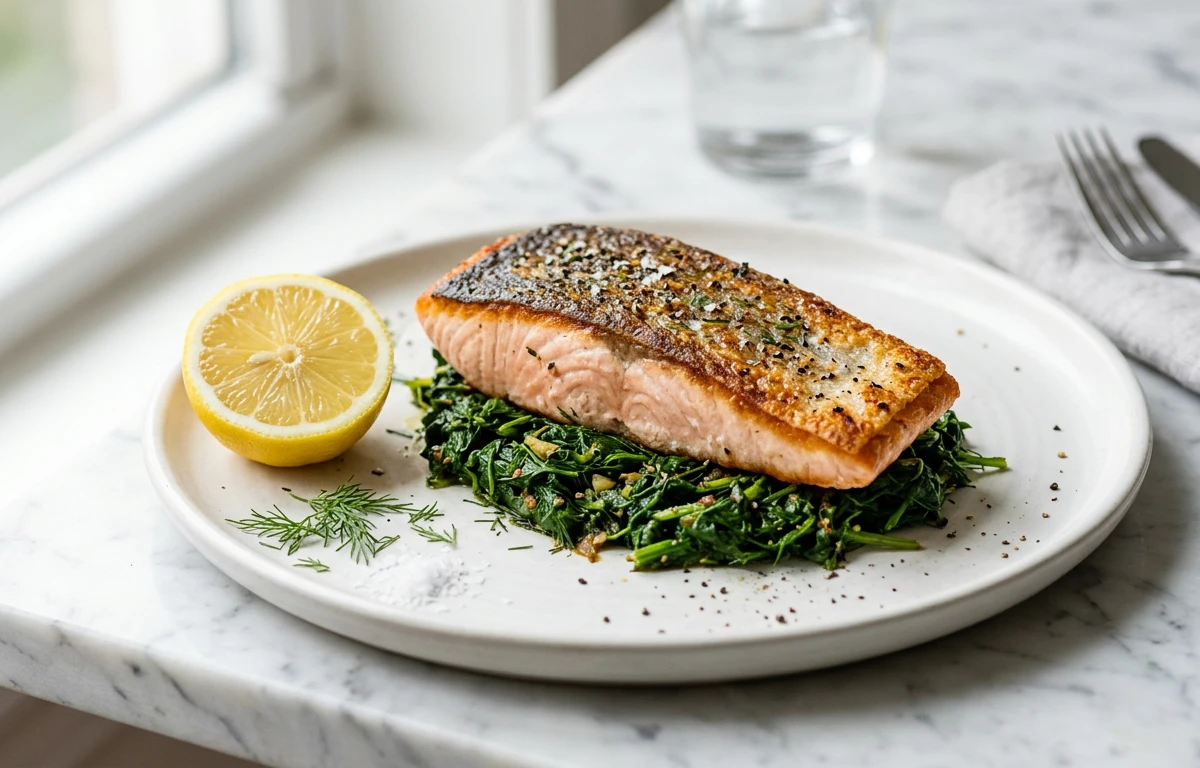
Crispy-Skin Salmon with Avocado Oil
Perfectly seared salmon fillets with irresistibly crispy skin — the way restaurant chefs do it. A hot pan, a light coat of avocado oil, and a few minutes of patience deliver crackling, golden skin and tender, flaky flesh beneath. Served simply with lemon for a quick weeknight dinner that feels special.
For 4 servings
- prep
Pat the salmon fillets completely dry.
1.Remove salmon from fridge 10 minutes before cooking.2.Press paper towels firmly against skin side until no moisture remains.3.Season flesh side with salt and black pepper.TIPDry skin is the difference between crispy and soggy. Don't skip this. - fry
Heat the skillet and sear the salmon skin-side down.
1.Set a heavy skillet over medium-high heat. Add avocado oil and swirl to coat.2.Wait until oil shimmers and just starts to smoke lightly.3.Lay fillets in, skin side down. Press gently on each with the back of the spatula for 10 seconds.TIPPress the fillets flat — it stops the skin from curling and ensures even contact. - fry · ~6 min
Cook skin-side down until crispy and golden.
Reduce heat to medium. Leave the fillets untouched for 5 to 6 minutes. Watch the sides — when the flesh turns opaque about two-thirds of the way up, it's ready to flip.
TIPDon't move the fish around. Crispy skin needs uninterrupted contact with the hot pan. - fry · ~2 min
Flip and finish cooking flesh side.
Slide the spatula under each fillet gently to release the skin. Flip away from you. Cook flesh side for 1 to 2 minutes for medium doneness.
TIPThe salmon should reach an internal temperature of 130-135°F for medium. It will carry over to 140°F. - serve
Rest briefly and serve with lemon wedges.
Transfer fillets to a plate skin-side up. Let them rest for 1 minute so the juices settle. Squeeze fresh lemon over the top and serve immediately.
What to keep in mind.
7 tips from the recipe — small details that make a real difference to the final dish.
- 1Pat the salmon skin completely dry with paper towels just before cooking — any moisture will steam the skin instead of crisping it.
- 2Let the salmon sit at room temperature for 10 minutes before searing to ensure even cooking from edge to center.
- 3Use a heavy stainless steel or cast-iron skillet for the best heat retention and an even, golden crust.
- 4Press each fillet gently with a spatula for the first 10 seconds to keep the skin from curling and to maximize contact with the pan.
- 5Resist the urge to move or peek at the salmon while it sears — undisturbed contact is what creates the crackling skin.
- 6Test doneness by pressing the thickest part of the fillet: it should feel just firm with a slight give for medium (130–135°F internal).
- 7Let the cooked salmon rest for 1 minute off the heat so the juices redistribute, keeping the flesh moist and tender.
Adapt it for your goals.
Herb-Butter Basted
After flipping the salmon to the flesh side, add 2 tablespoons of butter, a sprig of thyme, and a crushed garlic clove to the pan. Spoon the foaming butter over the fillets for a nutty, aromatic finish that enriches the lean fish.
Spice CrustedSpice-Crusted
Mix ½ teaspoon each of smoked paprika, ground cumin, and garlic powder, then rub onto the flesh side before searing. The warm spices create a savory crust that complements the crispy skin and works beautifully with a squeeze of lime.
Asian GlazedAsian Glazed
After cooking, brush the rested fillets with a mixture of 1 tablespoon soy sauce, 1 teaspoon honey, and a dash of toasted sesame oil. Finish with sesame seeds and sliced green onions for a quick umami upgrade.
Why this is on our healthy list.
Rich in Omega-3 Fatty Acids
Salmon is one of the best natural sources of long-chain omega-3s (EPA and DHA), which support heart health, brain function, and reduce inflammation.
High-Quality Complete Protein
Each fillet delivers around 30–40 grams of protein with all essential amino acids, making it an excellent choice for muscle repair and satiety.
Avocado Oil for Heart Health
Avocado oil is high in monounsaturated fats (oleic acid) and vitamin E, which can help maintain healthy cholesterol levels and provide antioxidant protection.
Natural Source of Vitamin D
Salmon is one of the few food sources rich in vitamin D, important for bone health, immune function, and mood regulation.
Frequently asked questions
Ensure the skin is patted bone-dry, the pan is hot enough (oil shimmers), and you don't try to flip too early. A metal spatula helps release the skin cleanly without tearing.