Curry Leaf Chutney
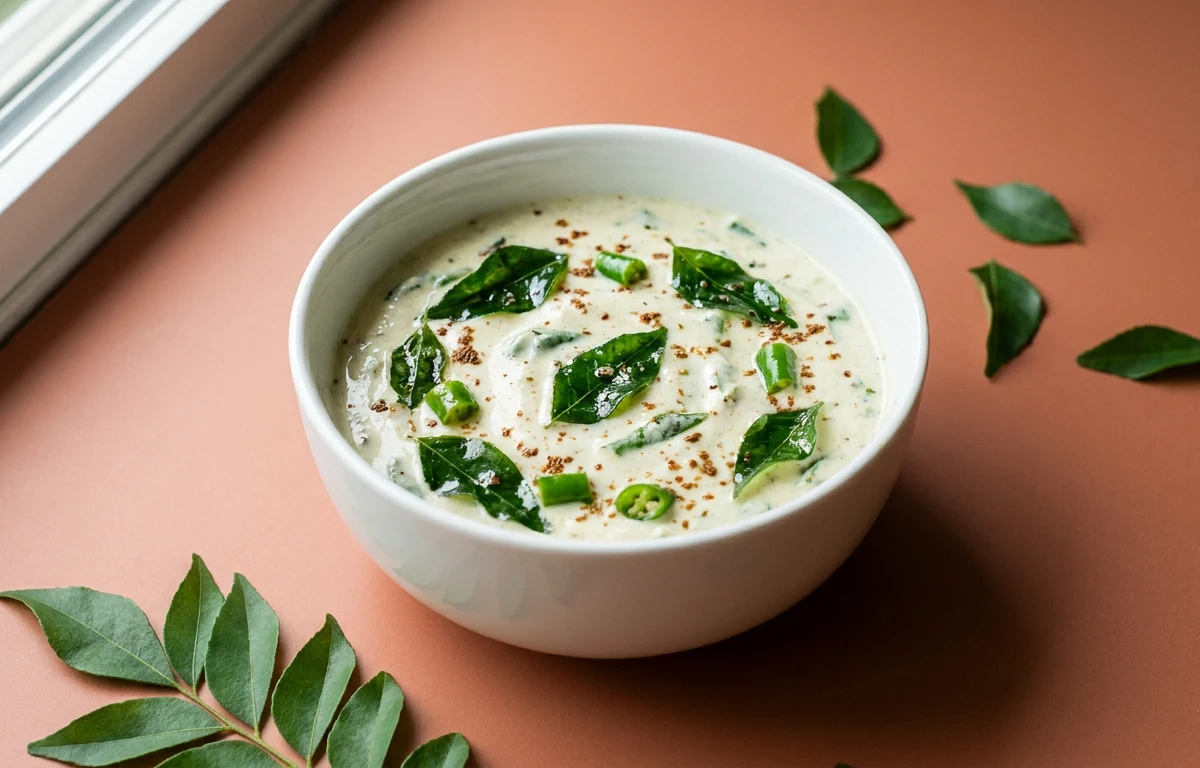
A vibrant, aromatic South Indian chutney made with fresh curry leaves, roasted lentils, and a touch of tangy tamarind. Quick to whip up, it pairs wonderfully with idli, dosa, or steamed rice. A delicious way to get the goodness of iron-rich curry leaves into your meal.
For 4 servings
- prep · ~2 min
Prep the curry leaves.
Wash the curry leaves thoroughly and pat them completely dry with a kitchen towel. Remove the leaves from the stems.
- fry · ~4 min
Roast the dals and chilies.
1.Heat 1 tsp oil in a pan over medium heat.2.Add urad dal and chana dal, roast until golden brown and aromatic (2-3 min).3.Add dried red chilies and sauté for 30 seconds until they puff up.4.Transfer to a plate to cool.TIPStir continuously to prevent the dals from burning. Golden is perfect, brown is bitter. - fry · ~4 min
Sauté the curry leaves and garlic.
1.In the same pan, add the remaining 1 tsp oil.2.Add garlic cloves and sauté until lightly golden (1 min).3.Add the curry leaves and sauté until they wilt and turn slightly crisp (2-3 min).4.Remove from heat and let cool completely.TIPDon't overcrowd the pan; the leaves should fry, not steam. - mix · ~2 min
Grind the chutney.
1.Transfer the cooled dal-chili mixture and curry leaf mixture to a blender.2.Add tamarind paste, salt, and 2 tbsp water.3.Grind to a smooth, thick paste, scraping down the sides as needed.4.Add more water a teaspoon at a time only if too thick to blend.TIPLet everything cool before grinding for the best texture and vibrant green color. - temper · ~2 min
Make the tempering.
1.Heat 1 tsp oil in a small tadka pan over medium heat until shimmering.2.Add mustard seeds and let them splutter (30 sec).3.Add asafoetida and swirl for 10 seconds until fragrant.4.Pour the tempering over the ground chutney and mix well.TIPThe sizzle of mustard seeds in hot oil is the signature finish. Don't skip it. - serve
Serve the chutney.
Transfer the Curry Leaf Chutney to a serving bowl. Enjoy with hot idli, crispy dosa, or steamed rice with a drizzle of ghee.
What to keep in mind.
6 tips from the recipe — small details that make a real difference to the final dish.
- 1Pat curry leaves bone-dry after washing to prevent oily splatter during frying.
- 2Roast urad dal and chana dal until just golden; over-roasting makes the chutney bitter.
- 3Cool the roasted ingredients completely before grinding to preserve the chutney's vibrant green color.
- 4Add water sparingly while grinding — a thick, spoon-coating paste gives the best texture.
- 5Temper with mustard seeds and asafoetida just before serving for maximum aroma and shelf life.
- 6This chutney keeps well in an airtight container in the fridge for up to 5 days.
Adapt it for your goals.
Coconut curry leaf chutney
Add 1/4 cup fresh grated coconut along with the tamarind before grinding for a creamier, milder version that pairs beautifully with rice or roti.
spicy kashmiri chili variationSpicy kashmiri chili variation
Replace the regular dried red chilies with 2 Kashmiri chilies for a deeper red color and a milder, smoky heat — ideal for those who prefer less spice.
tomato twistTomato twist
Add 1 small roasted tomato to the blender for a tangy, slightly sweet chutney that complements spicy tiffin items like rava dosa.
peanut crunchPeanut crunch
Throw in 2 tablespoons of roasted peanuts while grinding for a protein-rich, crunchy variation with a nutty undertone.
Why this is on our healthy list.
Packed with Iron and Folate
Curry leaves are rich in iron and folate; pairing them with lentils boosts absorption and supports healthy blood circulation.
Good Source of Plant Protein
Urad dal and chana dal add a substantial amount of plant-based protein, making this chutney more satiating than herb-only blends.
Supports Digestion
Asafoetida and mustard seeds in the tempering stimulate digestive enzymes, while the fiber in lentils promotes gut regularity.
Low in Calories and Fat
With just 2 teaspoons of oil in the final dish and no added cream or nuts, this chutney is a light, guilt-free condiment.
Frequently asked questions
Fresh curry leaves are best for their bright flavor and color, but frozen leaves can work — just thaw and pat dry. Dried leaves will give a less aromatic result.