
.webp)
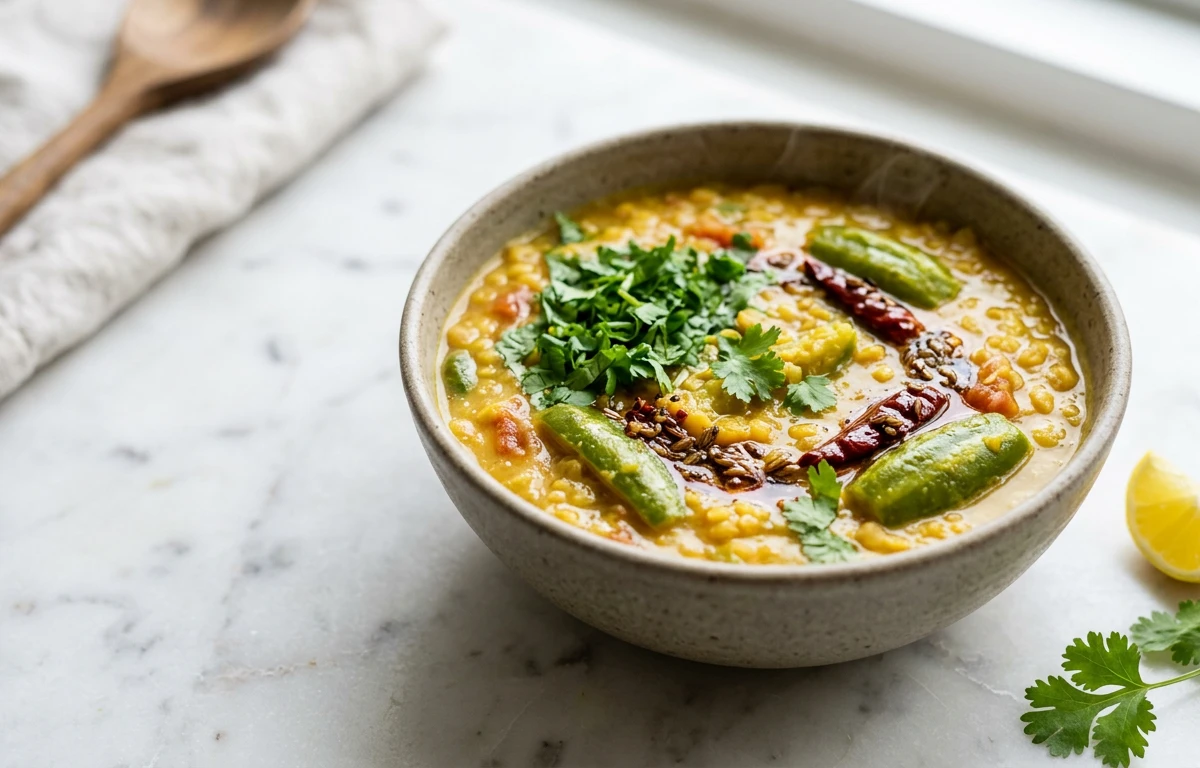
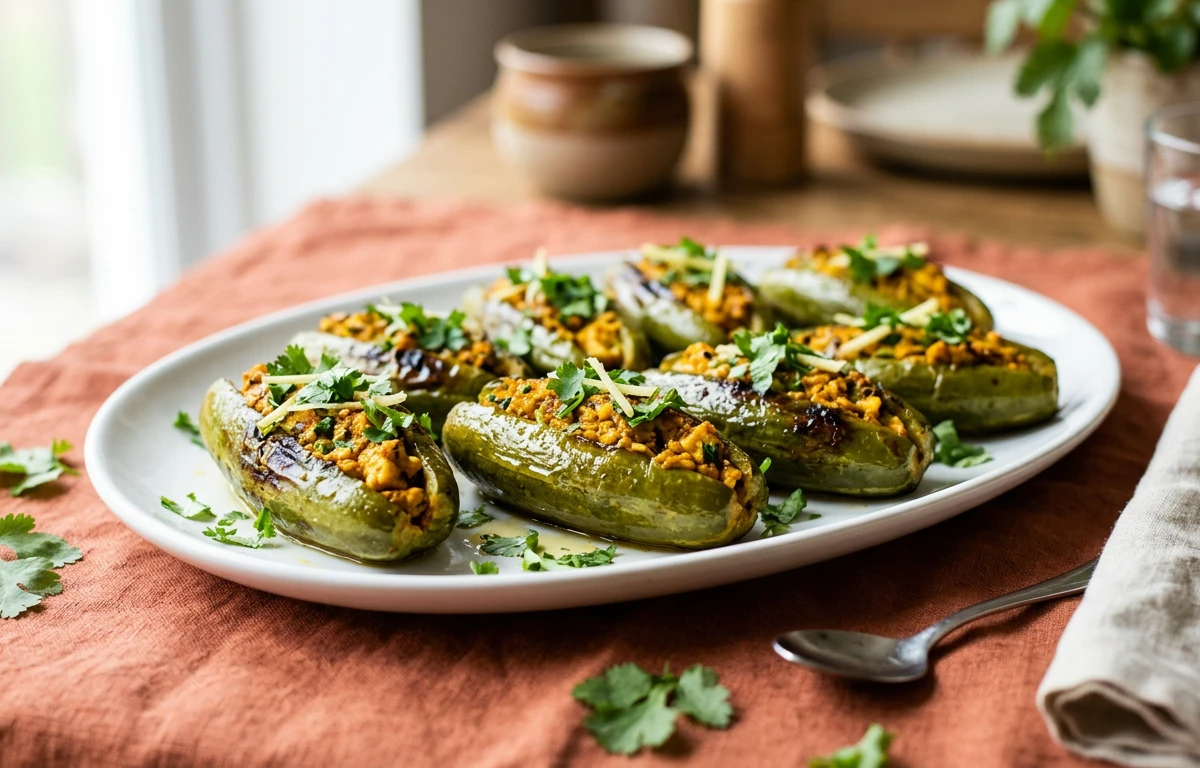
Doi Potol (Parwal in Yogurt Gravy)
Tender parwal (pointed gourds) gently simmered in a creamy, mildly spiced yogurt gravy. This classic Bengali dish balances the subtle bitterness of parwal with the tang of yogurt and a hint of sugar, finished with a warm ghee tempering of whole spices.
For 4 servings
- prep
Prepare the parwal.
1.Peel the parwal in alternating stripes, leaving some skin on for texture.2.Trim both ends and slit each parwal lengthwise halfway through, keeping it intact.3.Lightly sprinkle a pinch of salt and turmeric (taken from the measured quantities) over the parwal. - fry · ~7 min
Fry the parwal until golden.
1.Heat 2 tbsp mustard oil in a kadai over medium heat until it reaches its smoking point, then cool slightly.2.Add the parwal in a single layer and fry for 5-7 minutes, turning occasionally, until lightly browned.3.Remove with a slotted spoon and set aside on a plate. - mix
Whisk the yogurt with spices.
1.In a mixing bowl, whisk the yogurt until completely smooth and lump-free.2.Add turmeric powder, red chili powder, cumin powder, salt, and sugar. Whisk again.3.Gradually whisk in ½ cup water to create a smooth, pourable gravy base. - temper · ~1 min
Temper the whole spices.
1.In the same kadai, add the remaining 1 tbsp mustard oil and 1 tsp ghee over low heat.2.Add the bay leaf, crushed cardamom, cinnamon stick, and cloves. Sauté for 30 seconds until fragrant.3.Add cumin seeds and let them splutter for 15 seconds. - saute · ~6 min
Cook the onion and aromatics.
1.Add the chopped onion to the tempered spices and sauté on medium heat until translucent (4-5 minutes).2.Add ginger paste and slit green chilies. Sauté for 1 minute until the raw smell disappears. - simmer · ~12 min
Simmer the yogurt gravy.
1.Lower the heat to the lowest setting — this is crucial to prevent curdling.2.Pour the yogurt-spice mixture into the pan and stir continuously for 2 minutes.3.Once the gravy starts to warm through, add the fried parwal and gently coat them in the gravy.4.Simmer uncovered on low heat for 10-12 minutes, stirring occasionally, until the parwal is tender and the gravy thickens slightly.TIPKeep the heat low when adding yogurt — high heat causes the gravy to split. Stir gently to avoid breaking the parwal. - rest · ~5 min
Rest the dish before serving.
1.Turn off the heat and let the doi potol rest for 5 minutes to allow the flavors to meld.2.Garnish with chopped coriander leaves and serve hot with steamed rice.
What to keep in mind.
7 tips from the recipe — small details that make a real difference to the final dish.
- 1Peel the parwal in alternating stripes to retain some skin for texture and prevent it from turning mushy.
- 2Always bring the yogurt to room temperature and whisk it smooth before adding to the pan to avoid curdling.
- 3Let the mustard oil reach its smoking point, then cool slightly before frying — this tames its pungency and adds depth.
- 4Fry the parwal just until golden; overcooking at this stage will make them fall apart during simmering.
- 5Keep the heat on the lowest setting when adding the yogurt-spice mixture and stir continuously for a stable, creamy gravy.
- 6Rest the finished dish for 5 minutes before serving so the parwal absorbs the tangy gravy and flavors meld.
- 7Use a heavy-bottomed pan or kadai to distribute heat evenly and prevent the yogurt gravy from catching or splitting.
Adapt it for your goals.
Vegan
Replace the full-fat yogurt with a thick coconut or cashew yogurt, and use a neutral oil instead of ghee for the tempering. This version is completely plant-based while retaining the creamy, tangy profile.
Lower FatLower-Fat
Skip the initial frying step: blanch the parwal in salted water for 4 minutes, then proceed directly to simmering in the gravy. This reduces oil without sacrificing tenderness.
SpicierSpicier
Add ½ teaspoon of Kashmiri red chili powder along with the spice powders, and use 3-4 green chilies. The extra heat pairs beautifully with the cooling yogurt base.
JainJain
Omit the onion, ginger paste, and garlic. Use asafoetida (hing) in the tempering and a pinch of dry mango powder (amchur) for tang. This keeps the dish Jain-friendly while still flavorful.
Why this is on our healthy list.
Rich in Dietary Fiber
Parwal (pointed gourd) is low in calories and high in fiber, which supports healthy digestion and helps maintain steady blood sugar levels.
Good Source of Probiotics
Full-fat yogurt naturally contains live probiotics that aid gut health and improve nutrient absorption, especially when the dish is served fresh.
Anti-Inflammatory Spices
Turmeric, ginger, and cinnamon are known for their anti-inflammatory properties, contributing to joint and overall wellness.
Low in Saturated Fat
Mustard oil and ghee are used in modest quantities, providing heart-friendly fats when consumed as part of a balanced diet.
Frequently asked questions
Yes, but the dish will be softer. Striped peeling gives a better texture and helps the parwal hold its shape during simmering.



-curry.webp)
.webp)