
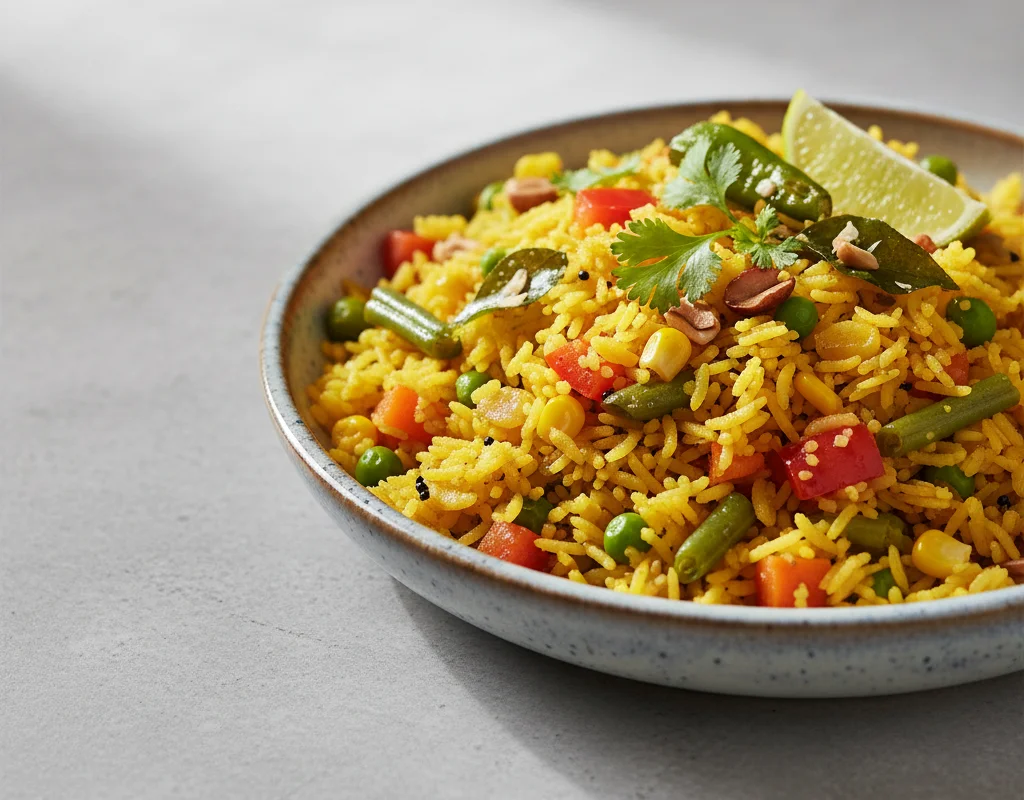
Mixed Vegetable Poha
A classic Indian breakfast, this poha is packed with colorful vegetables and a light, fluffy texture. It's a quick, nutritious, and satisfying meal to start your day, ready in under 30 minutes.
For 4 servings
Prepare the poha.
Place the thick poha in a sieve and rinse it under cold running water for about 30 seconds. Drain all the water completely and let it sit in the sieve for 10 minutes. This will soften it perfectly without making it mushy.
TIPDo not soak the poha in water, as it will become lumpy and break while cooking.Sauté peanuts and make the tempering.
- Heat oil in a wide pan or kadai over medium heat. Add the peanuts and sauté for 2-3 minutes until they are golden and crisp. Remove them with a slotted spoon and set aside.
- In the same oil, add mustard seeds. Once they start to splutter, add the cumin seeds, asafoetida, and curry leaves. Sauté for 30 seconds until fragrant.
Cook the vegetables.
- Add the chopped onion and slit green chilies. Sauté for 2 minutes until the onions turn translucent.
- Add the diced potato and carrot. Mix well, cover the pan, and cook for 4-5 minutes on low heat until the potatoes are almost tender. You can sprinkle a tablespoon of water to help them cook faster.
- Add the green peas, mix, and cook for another 2 minutes.
TIPCutting the potato and carrot into very small, uniform dice ensures they cook quickly and evenly.Combine everything and steam.
- Add the turmeric powder and salt to the vegetables and mix well.
- Add the softened poha, sugar, and the fried peanuts to the pan.
- Gently mix everything together with a light hand until the poha is evenly coated with the spices and turns yellow. Be careful not to mash the poha.
- Cover the pan and let it steam on low heat for 2-3 minutes. This makes the poha soft and helps it absorb all the flavors.
Garnish and serve.
Turn off the heat. Add the fresh lemon juice and chopped coriander leaves. Give it a final gentle mix. Serve the vegetable poha hot.
What to keep in mind.
6 tips from the recipe — small details that make a real difference to the final dish.
- 1Always use thick poha for this recipe. Thin poha will turn mushy when rinsed.
- 2Fluff the rinsed poha with a fork before adding it to the pan to ensure the grains are separate.
- 3For a softer texture, you can sprinkle a little water over the poha while it's steaming.
- 4Don't overcook the poha after adding it to the pan, as it can become dry.
- 5You can add other vegetables like corn, French beans, or cauliflower for more fiber and nutrients.
- 6A sprinkle of grated fresh coconut at the end adds a lovely flavor and texture.
Adapt it for your goals.
Jain
To make a Jain version, simply omit the onion and potato from the recipe. You can add raw banana or cabbage instead.
high proteinHigh protein
For a protein boost, add 1/2 cup of crumbled paneer or tofu along with the vegetables.
quickQuick
If you're short on time, use pre-cut frozen mixed vegetables to speed up the preparation.
kid friendlyKid friendly
Reduce or omit the green chilies. You can also add a teaspoon of tomato ketchup while mixing to give it a slightly sweet and tangy taste that kids love.
Why this is on our healthy list.
Rich in Fiber
The addition of multiple vegetables like carrots, peas, and potatoes makes this dish high in dietary fiber, which aids digestion and promotes a feeling of fullness.
Good Source of Energy
Poha is made from flattened rice, which is a good source of complex carbohydrates that provide sustained energy to keep you active throughout the morning.
Packed with Vitamins and Minerals
The colorful vegetables contribute essential vitamins like Vitamin A and C, and minerals like potassium, which are vital for overall health.
Gluten-Free
Poha is naturally gluten-free, making it an excellent breakfast choice for individuals with gluten intolerance or celiac disease.
Frequently asked questions
Yes, it is a very healthy breakfast option. It's light on the stomach, rich in carbohydrates for energy, and packed with fiber and vitamins from the various vegetables. Using minimal oil makes it low in fat.


