Garlic-Roasted Cabbage Wedges
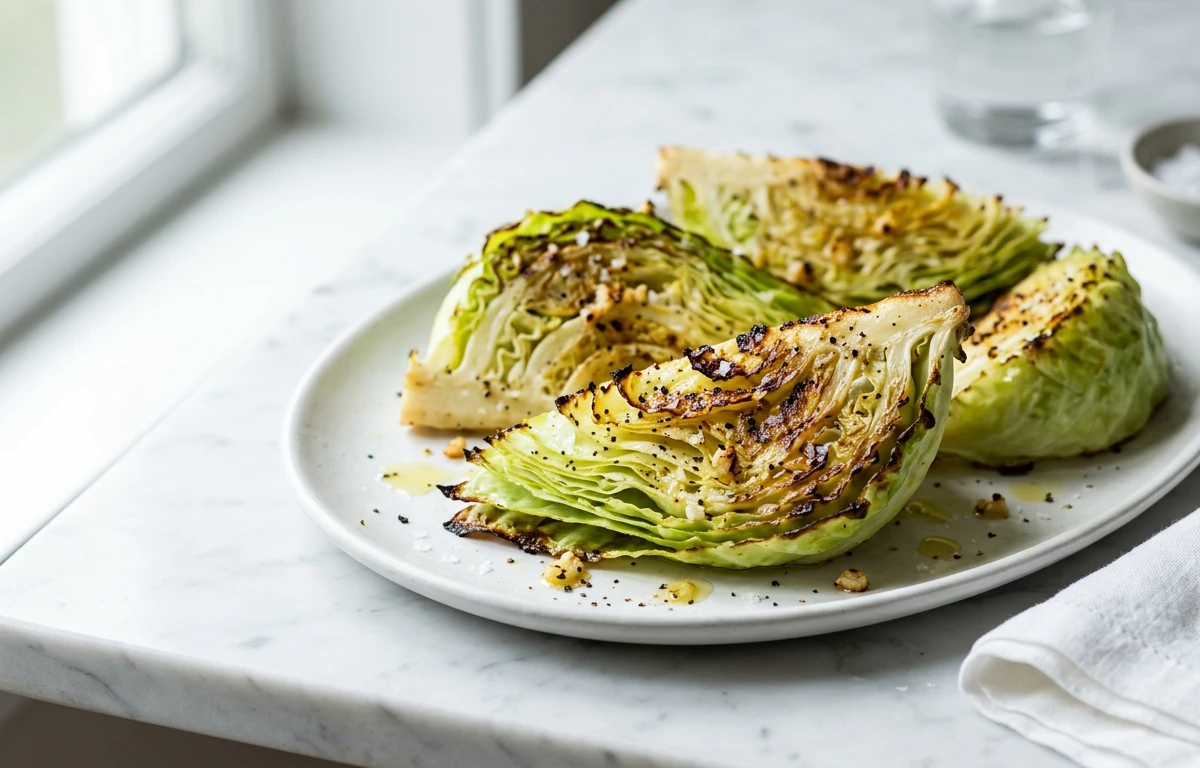
Thick cabbage wedges roasted until the edges turn crispy and caramelized, while the centers stay tender and juicy. Infused with garlic and a hint of lemon, this simple side dish transforms humble cabbage into something you'll crave.
For 4 servings
- prep
Preheat the oven and prep the cabbage.
1.Preheat oven to 200°C (400°F). Line a large baking sheet with parchment paper.2.Slice the cabbage in half through the core, then cut each half into 4 equal wedges, keeping a bit of core in each so the leaves hold together.3.You should have 8 wedges total. Arrange them on the baking sheet without overlapping.TIPKeep the core attached — it holds the wedge together during roasting and becomes tender and sweet. - mix
Make the garlic oil and season the wedges.
1.In a small bowl, combine olive oil and minced garlic.2.Brush or drizzle the garlic oil evenly over both sides of each cabbage wedge.3.Sprinkle with salt and black pepper on all sides. - roast · ~30 min
Roast until golden and crispy.
1.Place the baking sheet in the preheated oven on the middle rack.2.Roast for 15 minutes, then carefully flip each wedge with a spatula.3.Continue roasting another 12 to 15 minutes, until the edges are deeply browned and crispy and a fork slides easily into the thickest part of the core.TIPDon't crowd the pan — give each wedge breathing room so the edges crisp instead of steam. - garnish
Finish with lemon juice and serve warm.
Transfer the roasted wedges to a serving platter. Drizzle with fresh lemon juice while still hot and serve immediately.
TIPA pinch of red pepper flakes or a shower of grated parmesan takes this to the next level.
What to keep in mind.
5 tips from the recipe — small details that make a real difference to the final dish.
- 1Cut wedges of even thickness so they cook uniformly and all edges caramelize at the same rate.
- 2Use a heavy-duty rimmed baking sheet to prevent warping under high heat and ensure even browning.
- 3Flip the wedges gently with a thin metal spatula to avoid breaking the tender leaves apart.
- 4For extra-crispy edges, pat the cabbage wedges dry with a paper towel before brushing with oil.
- 5Leftover wedges reheat beautifully in a 200°C oven for 5 minutes to restore crispness.
Adapt it for your goals.
Spicy
Add 1/2 teaspoon red pepper flakes with the salt and pepper before roasting, then finish with a drizzle of sriracha or chili oil for heat lovers.
Vegan CheesyVegan Cheesy
Sprinkle 3 tablespoons nutritional yeast over the wedges halfway through roasting to create a dairy-free, umami-rich crust that mimics parmesan.
HerbyHerby
Toss 2 tablespoons of fresh thyme or rosemary leaves with the garlic oil before brushing, lending a fragrant, woodsy note that pairs beautifully with roasted cabbage.
Bacon ToppedBacon-Topped
Lay 4 strips of thinly sliced bacon across the wedges before roasting; as the bacon renders, it seasons the cabbage with smoky fat and creates a crispy, salty garnish.
Balsamic GlazedBalsamic Glazed
After flipping the wedges, brush with 1 tablespoon balsamic vinegar mixed with 1 teaspoon honey, then roast until the glaze reduces into a tangy-sweet sheen.
Why this is on our healthy list.
Rich in Fiber
Cabbage is an excellent source of dietary fiber, which promotes healthy digestion and helps you feel full longer.
Low in Calories
With no added fats beyond a moderate amount of olive oil, these wedges are a light, nutrient-dense side that fits into low-calorie eating plans.
Packed with Vitamin C
Cabbage is naturally high in vitamin C, an antioxidant that supports immune function and skin health.
Heart-Healthy Fats
Olive oil provides monounsaturated fats, which are linked to reduced inflammation and better cardiovascular health.
Frequently asked questions
Yes, but adjust roasting time: savoy or napa cabbage cooks faster (check after 20 minutes), while red cabbage may need 5 extra minutes and turns slightly sweeter.