Gentle Brown Rice Congee
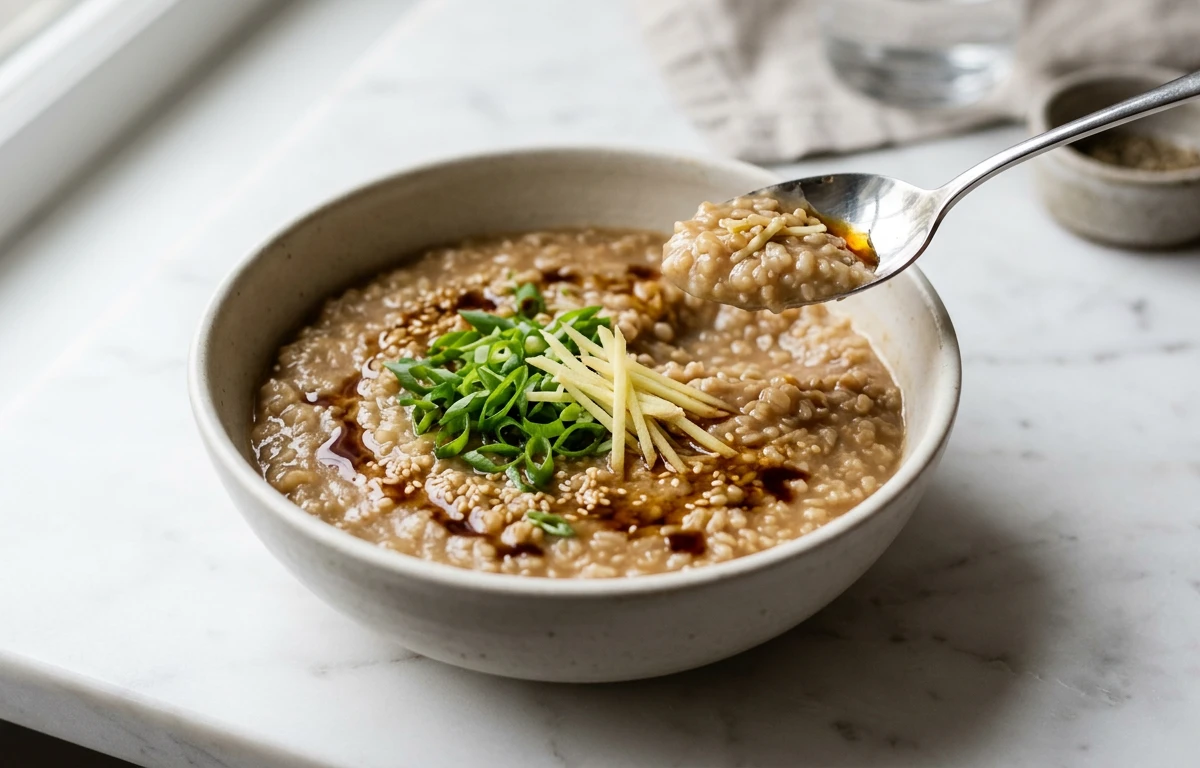
A warm, soothing bowl of slow-cooked brown rice porridge. The gentle simmer breaks the grains down into a velvety, comforting texture that's easy on the stomach. Perfect for chilly mornings, under-the-weather days, or anytime you need a bowl of pure comfort.
For 4 servings
- prep
Rinse the brown rice.
Place the brown rice in a fine-mesh strainer and rinse under cold running water until the water runs clear. Drain well.
- boil
Bring rice and water to a boil.
In a heavy-bottomed pot, combine the rinsed rice and 7 cups of water. Place over high heat and bring to a rolling boil.
- simmer
Add aromatics and simmer gently.
1.Once boiling, stir in the sliced ginger and minced garlic.2.Reduce heat to the lowest possible setting. Cover the pot with a lid, leaving it slightly cracked to prevent boiling over.3.Simmer gently for 80 to 90 minutes, stirring occasionally from the bottom to prevent sticking. The congee is ready when the rice has broken down completely and the porridge is thick and creamy.TIPThe longer and slower you simmer, the creamier the congee becomes. Don't rush this step. - simmer
Season the congee.
1.Stir in the salt and white pepper.2.Taste and adjust seasoning if needed. If the congee is too thick, stir in a splash of hot water until you reach your desired porridge consistency. - serve
Serve in bowls with garnishes.
1.Ladle the hot congee into serving bowls.2.Drizzle a few drops of sesame oil over each bowl.3.Top generously with sliced green onions and fresh cilantro.4.Serve immediately.
What to keep in mind.
6 tips from the recipe — small details that make a real difference to the final dish.
- 1Use short-grain brown rice for the creamiest, most porridge-like texture.
- 2Stir occasionally from the bottom to prevent the rice from sticking and scorching.
- 3Crack the lid slightly during simmering to keep the congee from boiling over.
- 4For an even silkier consistency, whisk the congee vigorously in the last 10 minutes.
- 5Make ahead and store in the fridge for up to 5 days; thin with hot water when reheating.
- 6Freeze leftovers in single portions for a quick, soothing meal anytime.
Adapt it for your goals.
High-protein
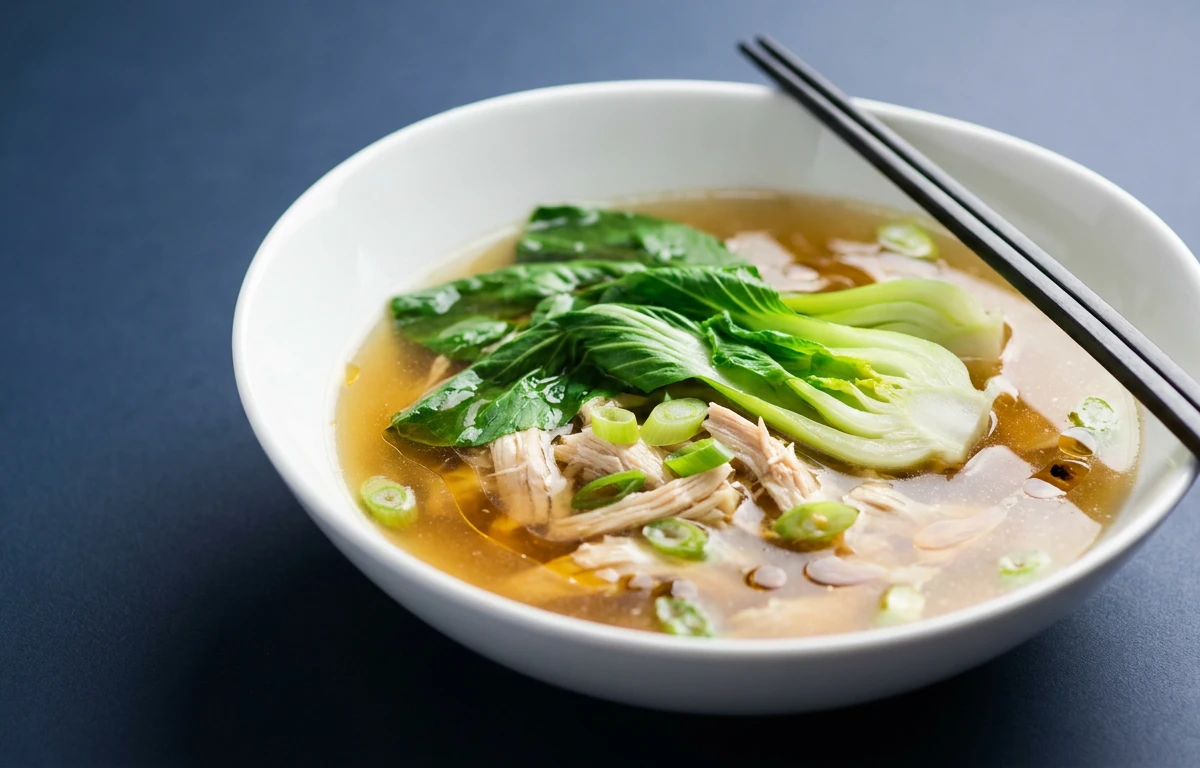
Add shredded cooked chicken or a soft-boiled egg on top for a more substantial meal. The mild congee base pairs beautifully with savory protein.
vegetable loadedVegetable-loaded
Stir in finely diced carrots, celery, or mushrooms during the last 20 minutes of simmering for added nutrients and texture.
vegan umamiVegan-umami
Swap water for a kombu and shiitake dashi broth, and top with roasted sesame seeds and nori strips to deepen the savory flavor.
Why this is on our healthy list.
Easy to Digest
The long simmer breaks down the rice, making it gentle on the stomach and perfect for recovery from illness or digestive discomfort.
Rich in Fiber
Brown rice retains its bran layer, providing dietary fiber that supports healthy digestion and sustained energy release.
Anti-Inflammatory Support
Fresh ginger and garlic in the congee offer natural anti-inflammatory properties, helping soothe the body when you're feeling under the weather.
Frequently asked questions
Yes. For an Instant Pot, use a 1:6 rice-to-water ratio and pressure cook on high for 40 minutes with natural release. In a slow cooker, cook on low for 6–8 hours.