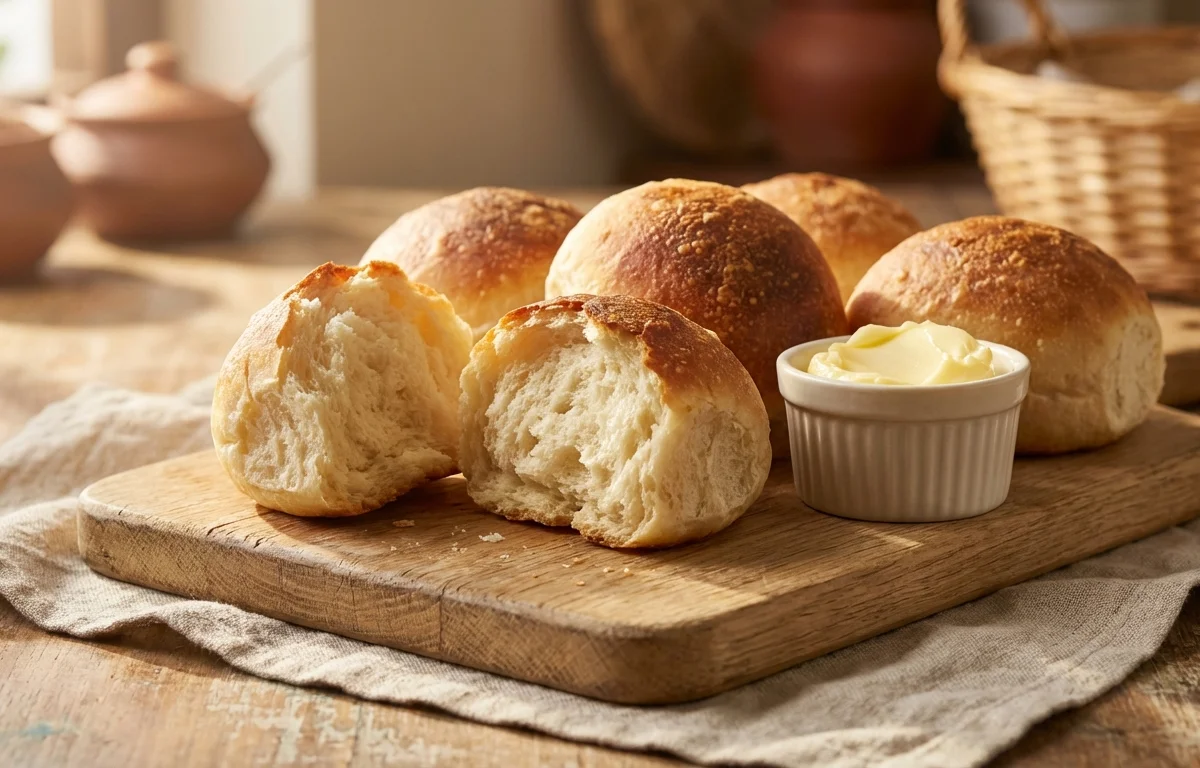
Goan Pau Ruti
Soft, fluffy bread rolls with a delicate, slightly sweet crumb and a light brown crust. A Goan staple inspired by Portuguese baking traditions, these pull-apart rolls are perfect for mopping up curries, sopping up gravies, or simply slathered with butter and enjoyed with chai.
For 8 servings
- prep · ~10 min
Activate the yeast.
1.In a small bowl, combine 1 cup lukewarm water (not hot) with 2 tbsp sugar and 2 tsp active dry yeast.2.Stir gently and let it sit for 5-10 minutes until the mixture becomes frothy and bubbly on top.TIPWater temperature should feel like warm bath water — too hot will kill the yeast, too cold won't activate it. - mix · ~2 min
Combine the dry ingredients.
In a large mixing bowl (or the bowl of a stand mixer), whisk together the maida (3 cups), milk powder (2 tbsp), and salt (1 tsp) until evenly distributed.
- knead · ~12 min
Knead the dough until soft and smooth.
1.Add the frothy yeast mixture and 2 tbsp softened butter to the flour.2.Knead the mixture for 10-12 minutes by hand on a lightly floured surface, or 7-8 minutes in a stand mixer with a dough hook.3.Add an extra splash of water only if the dough feels dry — the final dough should be tacky but not sticky, pulling away cleanly from the sides of the bowl.4.Windowpane check: stretch a small piece of dough thin enough to see light through without tearing.TIPResist adding too much extra flour. A slightly sticky dough yields softer buns. Use a bench scraper for easy handling. - rest · ~65 min
Let the dough proof until doubled in size.
Shape the dough into a ball, place it in a lightly greased bowl, and cover with a damp kitchen towel. Let it rise in a warm, draft-free place for 60-75 minutes, or until doubled in volume.
- prep · ~10 min
Punch down and shape the rolls.
1.Gently punch down the risen dough to release the gas bubbles.2.Transfer to a clean, floured surface and divide the dough into 8 equal pieces (about 75-80g each).3.Shape each piece into a smooth, tight ball by pulling the edges under and pinching the seam at the bottom.4.Place the dough balls seam-side down on a parchment-lined baking tray, spacing them about 2 inches apart to allow for rising.TIPFor traditional pull-apart pau, arrange the balls closer together on the tray so they bake touching each other. - rest · ~25 min
Proof the shaped rolls a second time.
Cover the tray loosely with a kitchen towel and let the rolls proof for another 20-30 minutes. They should puff up and look noticeably fuller.
- bake · ~25 min
Bake until golden brown.
1.Preheat the oven to 190°C (375°F).2.Place the tray on the middle rack and bake for 20-25 minutes, until the tops are a deep golden brown and the rolls sound hollow when tapped on the bottom.TIPFor a glossy top, brush the rolls with milk or melted butter just before baking. - garnish · ~10 min
Brush with butter and cool slightly.
As soon as the rolls come out of the oven, brush the tops with a little extra softened butter or melted butter for a soft, flavorful crust. Transfer to a wire rack to cool for at least 10 minutes before pulling apart.
What to keep in mind.
6 tips from the recipe — small details that make a real difference to the final dish.
- 1Use a kitchen scale to portion the dough into 75-80g balls for even baking.
- 2For extra soft crust, brush the baked rolls with salted butter instead of unsalted.
- 3Place the shaped rolls close together on the tray so they rise into pull-apart buns.
- 4Let the rolls cool on a wire rack for at least 10 minutes before serving to set the crumb.
- 5Store leftover pau in an airtight container at room temperature for up to 2 days; reheat briefly in the oven.
- 6If the dough feels too dry during kneading, add warm water one teaspoon at a time.
Adapt it for your goals.
Whole-wheat
Replace 1 cup of all-purpose flour with whole-wheat flour. The rolls will be slightly denser but more nutritious with added fiber.
Garlic butterGarlic butter
Mix minced garlic and chopped coriander into the softened butter before brushing on the hot rolls for a savory Goan-inspired twist.
Dairy freeDairy-free
Substitute butter with coconut oil and use plant-based milk powder or omit milk powder. The rolls will have a mild coconut aroma.
Why this is on our healthy list.
Moderate sugar content
With only 2 tablespoons of sugar for 8 rolls, these pau have less sweetness than many commercial breads, making them suitable for everyday meals.
Quick energy source
The refined flour provides easily digestible carbohydrates, ideal for a quick energy boost, especially when eaten with a protein-rich curry.
Frequently asked questions
The water was likely too hot (above 50°C) and killed the yeast, or too cold (below 35°C) and failed to activate it. Use water that feels like warm bath water (about 40°C) and ensure the yeast is fresh.