
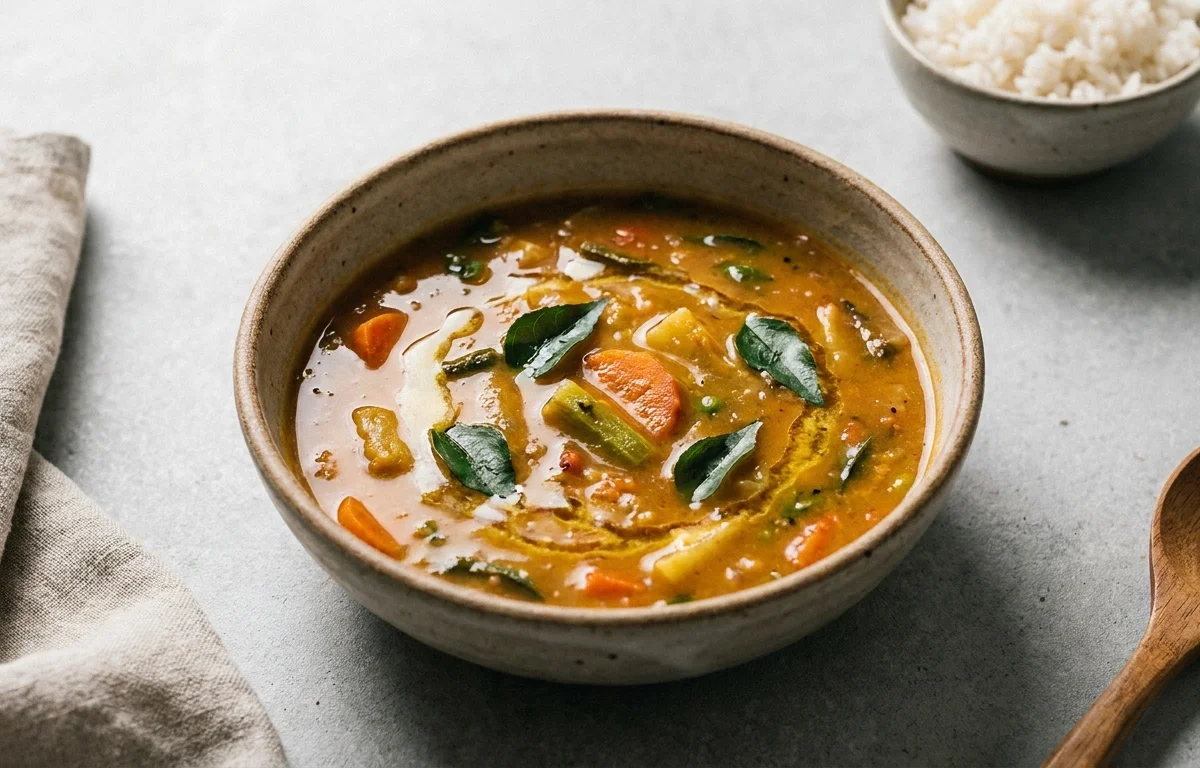
Gut-Friendly Sambar
A gentle, aromatic lentil stew from South India, thoughtfully made without onion and garlic for easy digestion. Toor dal is cooked until creamy, then simmered with tamarind, pumpkin, and drumsticks in a tempering of cumin, mustard seeds, and fresh curry leaves. Light, tangy, and deeply comforting — perfect with steamed rice or idli.
For 4 servings
- prep · ~15 min
Soak tamarind and prep vegetables.
1.Soak the tamarind in 0.25 cup warm water for 15 minutes, then squeeze and strain the pulp. Discard solids.2.Wash toor dal, peel and cube pumpkin, dice carrot, chop tomato, and cut drumsticks into batons. - pressure cook · ~15 min
Pressure cook the dal.
1.Add washed toor dal, turmeric powder, and 2 cups water to the pressure cooker.2.Close the lid and cook on medium heat for 4-5 whistles or until the dal is completely soft.3.Let the pressure release naturally. Once open, mash the dal well with a whisk or ladle.TIPMash the dal while it is still hot — it blends more smoothly into the sambar. - simmer · ~15 min
Simmer vegetables with tamarind and spices.
1.Transfer the mashed dal to a heavy-bottomed pot. Add pumpkin, drumsticks, carrot, tomato, and 1.5 cups water.2.Stir in sambar powder and salt. Bring to a gentle boil, then reduce heat to medium-low.3.Simmer uncovered until the vegetables are fork-tender, about 12-15 minutes.TIPDrumsticks are done when the skin easily peels away — scoop out the soft pulp while eating. - simmer · ~5 min
Add tamarind and finish the sambar.
1.Pour the strained tamarind pulp into the simmering sambar.2.Let it bubble gently for 5 more minutes to blend the tangy flavor. Adjust water if needed for a flowing consistency.3.Turn off the heat and let it rest while you make the tempering.TIPDon't boil hard after adding tamarind — a gentle simmer preserves its bright tang. - temper · ~2 min
Make the tempering.
1.Heat ghee in a small pan over medium heat until it shimmers.2.Add mustard seeds and let them splutter for 20 seconds.3.Immediately add cumin seeds, dried red chili, curry leaves, and asafoetida. Swirl the pan until fragrant, about 15 seconds.TIPWork fast once the mustard splutters — curry leaves burn quickly and turn bitter. - mix · ~1 min
Pour tempering over the sambar and mix well.
Pour the hot tempering directly over the sambar. It will sizzle and release a wonderful aroma. Stir gently to combine.
- garnish
Garnish with coriander leaves and serve hot.
Sprinkle chopped coriander leaves on top. Serve warm with steamed rice, idli, or dosa.
What to keep in mind.
7 tips from the recipe — small details that make a real difference to the final dish.
- 1Mash the cooked dal while it's still hot for a smoother, creamier texture.
- 2Cut drumsticks into 2-inch batons so the pulp is easy to scoop out.
- 3Add tamarind only after vegetables are tender to preserve its bright sourness.
- 4Do not overboil after adding tamarind—a gentle simmer keeps the tang fresh.
- 5Work quickly when tempering: curry leaves burn in seconds and turn bitter.
- 6Let sambar rest for 10 minutes after tempering so flavors meld beautifully.
- 7Adjust water to your liking—thicker for rice, thinner for idli or dosa.
Adapt it for your goals.
No-tamarind
Replace tamarind with 1 teaspoon of amchur (dry mango powder) or 1 tablespoon of lemon juice added at the end. This gives a milder, fruitier sourness and is perfect for those who find tamarind too sharp.
extra vegetablesExtra-vegetables
Add 50g of diced bottle gourd (lauki) or 4-5 chopped french beans along with the pumpkin. These mild vegetables absorb the dal and spices beautifully, making the sambar more filling without overpowering its character.
coconut milkCoconut-milk
Stir in 3 tablespoons of thick coconut milk after turning off the heat for a luscious, creamy sambar. This variation is popular in Kerala-style sambar and adds a subtle sweetness that balances the tangy tamarind.
Why this is on our healthy list.
High in Plant Protein
Toor dal provides a substantial source of plant-based protein, essential for muscle repair and satiety, making this stew a hearty meat-free meal.
Rich in Dietary Fiber
Pumpkin, carrots, and drumsticks add soluble and insoluble fiber, aiding digestion and helping maintain stable blood sugar levels.
Packed with Antioxidants
Turmeric, curry leaves, and asafoetida deliver curcumin and other anti-inflammatory compounds that support overall immunity and gut health.
Good Source of Vitamin A
Pumpkin and carrots are naturally rich in beta-carotene, which the body converts to vitamin A for healthy vision and skin.
Frequently asked questions
Yes, you can substitute toor dal with masoor dal (red lentils) or moong dal (split yellow gram). Masoor dal cooks faster and yields a thinner sambar, while moong dal gives a milder, creamier result.


