
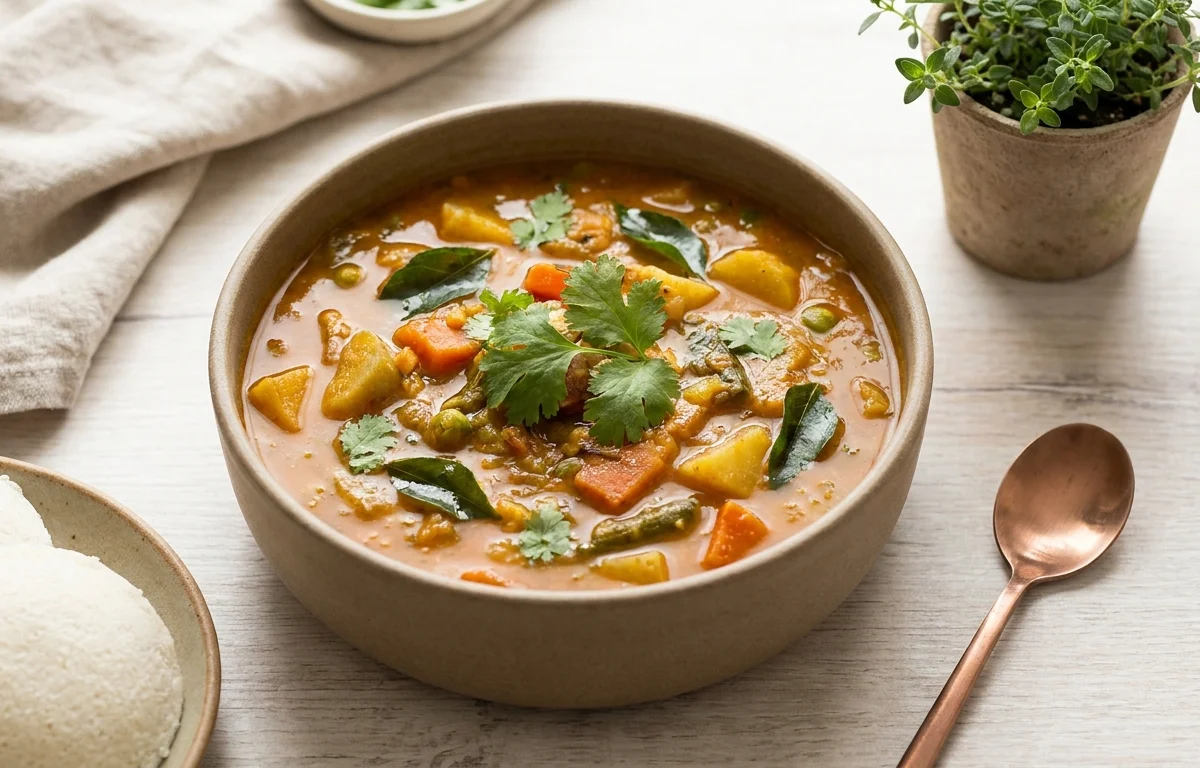
Vegetable Sambar
A hearty, tangy lentil stew loaded with colorful vegetables and finished with a fragrant tempering of mustard seeds, curry leaves, and dried red chilies. This South Indian staple is the soul of every meal, perfect with idli, dosa, or steamed rice.
For 4 servings
- prep · ~10 min
Soak tamarind and prep vegetables.
1.Soak tamarind paste in 1 cup hot water for 10 minutes. Squeeze and strain to extract tamarind water.2.Wash toor dal thoroughly in 2-3 changes of water.3.Peel and dice carrot and pumpkin into small cubes.4.Cut drumstick into 3-inch pieces, cube eggplant, quarter tomato, and roughly chop onion.TIPSoaking tamarind in hot water helps extract the pulp faster. - pressure cook · ~15 min
Pressure cook the dal with turmeric.
1.Add washed toor dal to pressure cooker with turmeric powder and 2.5 cups water.2.Close the lid and cook on medium-high heat until the first whistle.3.Reduce heat to low and cook for 3 more whistles (about 12-15 minutes).4.Let the pressure release naturally. Open lid and mash the dal with a ladle until smooth.TIPLetting the pressure release naturally ensures the dal is cooked through and creamy. - boil · ~20 min
Cook vegetables with sambar powder.
1.Transfer the mashed dal to a heavy-bottomed pot.2.Add tamarind extract, sambar powder, salt, and all chopped vegetables (drumstick, carrot, eggplant, pumpkin, tomato, onion).3.Add the slit green chilies.4.Bring to a boil, then reduce heat and simmer for 15-20 minutes until vegetables are tender.TIPCook drumstick first if your other vegetables are very soft — it takes the longest to become tender. - temper · ~2 min
Make the tempering.
1.Heat oil in a small tadka pan over medium heat.2.Add mustard seeds and let them splutter completely (about 30 seconds).3.Add cumin seeds and fenugreek seeds, sauté for 10 seconds.4.Add asafoetida, dried red chilies, and curry leaves. Fry until leaves turn crisp and fragrant (15-20 seconds).TIPPour the tempering immediately while it is still sizzling — this releases maximum aroma into the sambar. - simmer · ~4 min
Add tempering and finish sambar.
1.Pour the hot tempering directly over the simmering sambar.2.Stir well to combine.3.Let it bubble gently for 3-4 minutes so the flavors meld together.4.Taste and adjust salt if needed. - garnish
Garnish with fresh coriander and serve hot.
Ladle the sambar into bowls or a serving dish. Scatter chopped coriander leaves on top. Serve piping hot with steamed rice, idli, or dosa.
TIPA drizzle of ghee on top just before serving makes it extra aromatic.
What to keep in mind.
6 tips from the recipe — small details that make a real difference to the final dish.
- 1Always use freshly extracted tamarind paste for the most authentic tangy flavor.
- 2Mash the cooked dal thoroughly for a creamy, cohesive texture.
- 3Cook drumstick pieces first if they are thicker, as they take longer to soften.
- 4Never skip the tempering step—it is the flavor backbone of the dish.
- 5Let the sambar sit for 5-10 minutes after cooking to let the spices meld.
- 6Refrigerate leftover sambar in an airtight container for up to 3 days.
Adapt it for your goals.
High-protein
Add cubed paneer or cooked chicken to the simmering sambar for extra protein without altering the core flavor profile.
low oilLow-oil
Skip the tadka tempering and instead stir in a pinch of asafoetida and roasted mustard-cumin powder at the end for a lighter, oil-free version.
veganVegan
The recipe is naturally vegan if you omit any optional ghee drizzle; it already uses only plant-based ingredients.
seasonal vegetableSeasonal vegetable
Swap pumpkin with sweet potato, carrot with beetroot, or add green beans and peas for a colorful twist based on what is fresh.
Why this is on our healthy list.
High in Plant Protein
Toor dal (split pigeon peas) provides a solid dose of plant-based protein, making this a filling and muscle-friendly meal.
Rich in Dietary Fiber
The combination of lentils and vegetables like drumstick, carrot, and pumpkin delivers a hearty fiber boost that supports digestion.
Packed with Antioxidants
Turmeric, curry leaves, and asafoetida are known for their anti-inflammatory and antioxidant properties.
Frequently asked questions
Yes, you can use 2 tablespoons of store-bought tamarind paste, but dissolve it in hot water and strain to remove fibers for the best texture.


