
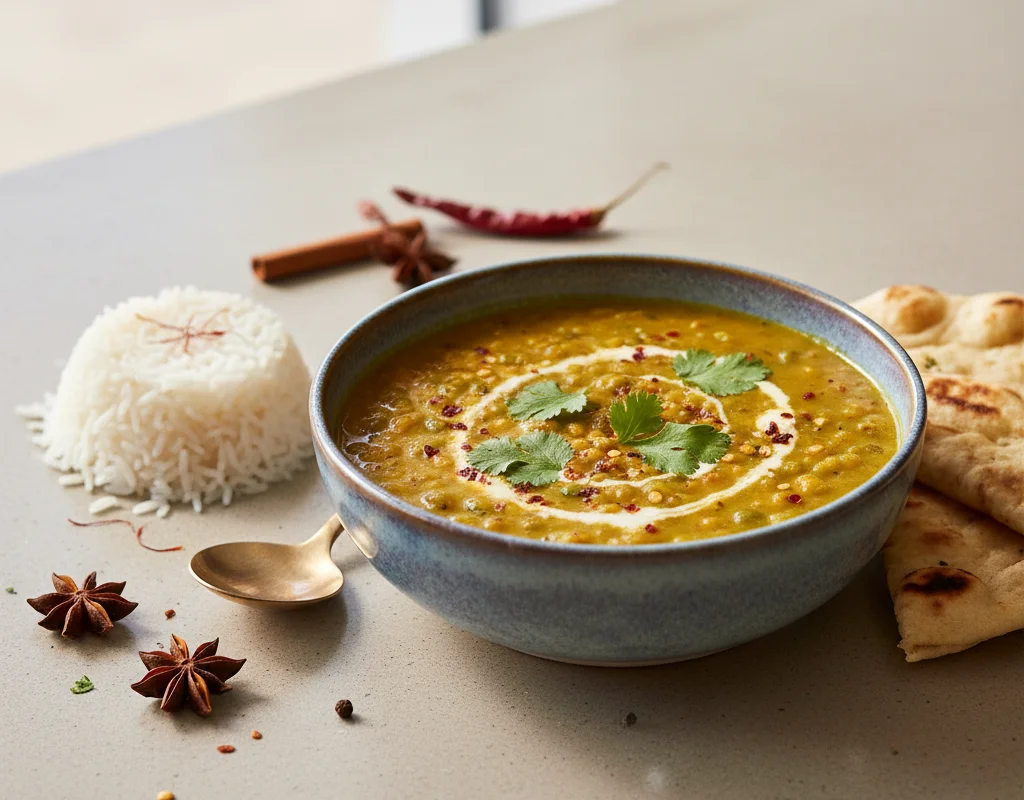
Half Cup Dal
A humble, soul-warming dal that became a cult favorite. Made with just half a cup of mixed yellow lentils per person, slow-simmered with turmeric and ginger, then finished with a crackling cumin-and-garlic tadka. Light on spices but deep in comfort, it tastes like a hug from an old friend.
For 4 servings
- prep
Wash and soak the lentils.
Rinse toor dal and moong dal together until water runs clear. Soak in fresh water for 30 minutes, then drain.
TIPSoaking shortens cooking time and makes the dal easier to digest. - pressure cook · ~15 min
Pressure cook the dal until soft.
1.Transfer drained lentils to the pressure cooker.2.Add 2 cups water, turmeric powder, and grated ginger.3.Close the lid and cook on medium heat for 4-5 whistles.4.Let the pressure release naturally, then open the lid. - mix · ~3 min
Whisk the dal and adjust consistency.
Whisk the cooked dal vigorously with a ladle until smooth and creamy. Add salt and 0.5 cup warm water if it looks too thick — it should be pourable like a light gravy, not pasty. Bring to a gentle simmer for 2 minutes.
TIPWhisking is the secret to a velvety dal texture. Don't skip this step. - temper · ~2 min
Make the cumin-garlic tadka.
1.Heat ghee in a small tadka pan over medium heat until shimmering.2.Add cumin seeds and let them crackle and turn golden (20 seconds).3.Add dried red chilies and sliced garlic, sauté until garlic is golden brown (30-40 seconds).4.Switch off the heat, add asafoetida, and let it sizzle in the residual heat.TIPDon't let the garlic burn — golden is perfect, brown tastes bitter. - mix · ~1 min
Pour the tadka over the dal.
Immediately pour the hot tadka over the simmering dal. It will sizzle dramatically — stir it in gently. Let it bubble together for 1 minute so the flavors marry.
- garnish
Garnish with fresh coriander and serve hot.
Ladle into katoris, sprinkle with chopped coriander leaves, and serve immediately with steamed rice or roti.
What to keep in mind.
7 tips from the recipe — small details that make a real difference to the final dish.
- 1Soaking the lentils for 30 minutes reduces cooking time and improves digestibility.
- 2Whisk the cooked dal vigorously until smooth for a creamy, velvety texture.
- 3Adjust the dal's consistency with warm water until it is pourable like a light gravy.
- 4Watch the garlic closely in the tadka; golden is perfect, burnt tastes bitter.
- 5Pour the hot tadka over the dal immediately so it sizzles and infuses the flavor.
- 6Let the dal bubble with the tadka for a minute so the spices marry fully.
- 7This dal thickens as it cools; add a splash of hot water when reheating.
Adapt it for your goals.
Low-oil
Skip the tadka and instead stir in a simple tempering of cumin seeds and asafoetida dry-roasted in a non-stick pan for a minute. This reduces fat while keeping the essential flavor.
high proteinHigh-protein
Add a cup of finely chopped spinach and a tablespoon of crushed peanuts along with the water before pressure cooking. This boosts protein and adds iron without altering the dal's comforting character.
jainJain
Omit garlic and asafoetida, and use a tadka of cumin seeds and dried red chilies in oil (or ghee if permitted). This keeps the dish compliant with Jain dietary restrictions while retaining the quintessential crackle.
veganVegan
Replace the ghee in the tadka with coconut oil or a neutral vegetable oil. The result is a fully plant-based dal that stays true to the original's soulful warmth.
Why this is on our healthy list.
Rich in Plant Protein
The blend of toor and moong dal offers a complete amino acid profile when paired with rice, making this dish a powerful source of vegetarian protein.
High in Dietary Fiber
Lentils are naturally packed with soluble fiber, which aids digestion, stabilizes blood sugar, and promotes a feeling of fullness.
Anti-Inflammatory Properties
Turmeric and ginger both contain bioactive compounds that help reduce inflammation and support joint health.
Gut-Friendly and Easy to Digest
Soaking and pressure-cooking the lentils, along with the addition of asafoetida, makes this dal gentle on the stomach and reduces bloating.
Frequently asked questions
Yes, you can use all toor dal or all moong dal. Toor dal will give a thicker, creamier texture, while moong dal makes it lighter and quicker to cook.




