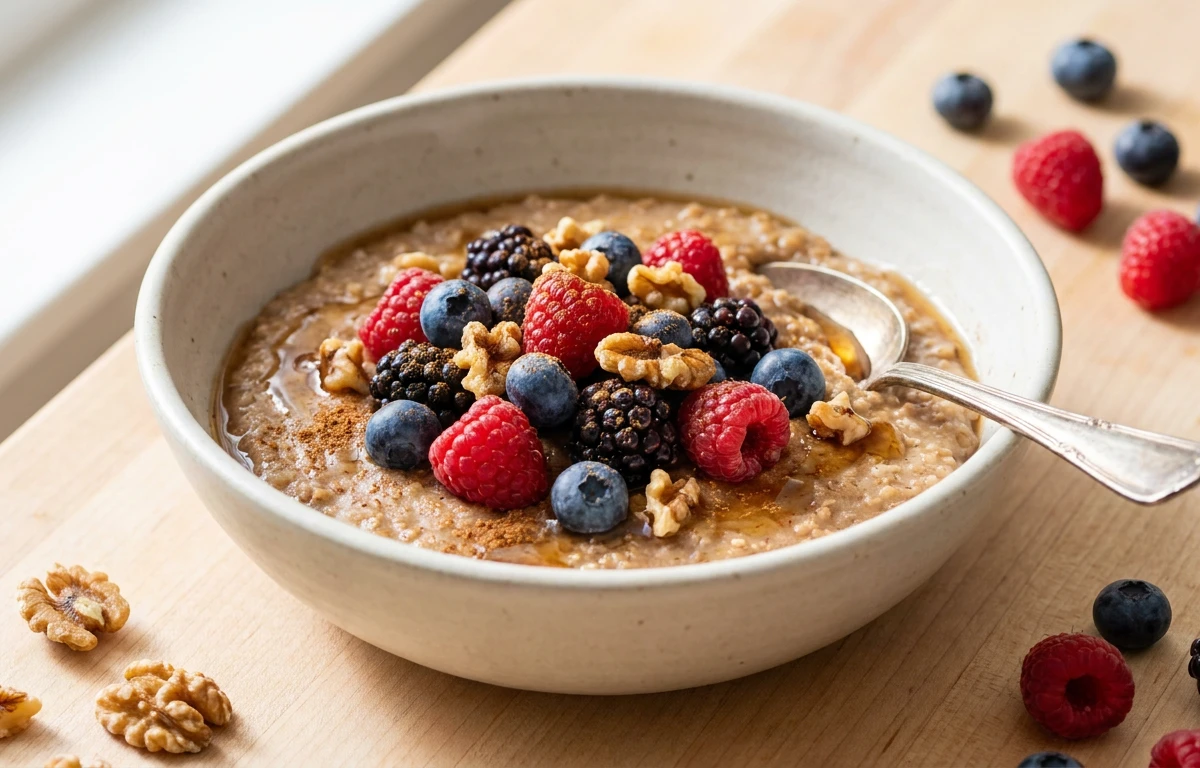
Hearty Kasha Breakfast Porridge
Warm, nutty, and deeply satisfying toasted buckwheat groats simmered into a creamy breakfast porridge. This Eastern European classic has an earthy richness that pairs beautifully with a pat of butter, a drizzle of honey, and a splash of milk. Ready in under 30 minutes and naturally gluten-free.
For 4 servings
- prep · ~1 min
Rinse the buckwheat groats.
Place the buckwheat groats in a fine-mesh strainer and rinse under cold running water until the water runs clear. Shake off the excess water.
- boil · ~3 min
Bring water and salt to a boil.
In a medium saucepan, combine 480 ml water and the salt. Bring to a rolling boil over high heat.
- simmer · ~18 min
Cook the kasha until tender.
Stir the rinsed groats into the boiling water. Return to a boil, then reduce the heat to low, cover, and simmer gently until the water is absorbed and the groats are tender but still have a slight chew, about 15 to 18 minutes.
TIPResist the urge to stir while it simmers; stirring can make the porridge gluey. - rest · ~5 min
Rest the porridge off the heat.
Remove the saucepan from the heat and let it stand, covered, for 5 minutes. This allows the grains to finish steaming and become fluffy.
- mix · ~1 min
Fluff and finish with butter.
Uncover and fluff the kasha gently with a fork. Add the butter and stir through until melted and creamy.
- assemble
Serve the porridge warm.
1.Spoon the porridge into four bowls.2.Pour warm milk over each serving.3.Drizzle with honey just before eating.
What to keep in mind.
6 tips from the recipe — small details that make a real difference to the final dish.
- 1Use whole, untoasted buckwheat groats if you prefer a milder, less nutty flavor in your porridge.
- 2Toasting the dry groats in the saucepan for 2-3 minutes before adding water deepens their earthy, nutty aroma.
- 3For a creamier texture, swap half the water for milk or a plant-based alternative and simmer gently.
- 4Let the porridge rest covered for a full 5 minutes after cooking to ensure fluffy, separate grains.
- 5Leftover porridge can be refrigerated for up to 3 days; reheat with a splash of milk to restore creaminess.
- 6Avoid stirring the groats while they simmer to prevent the starch from making the porridge gluey.
Adapt it for your goals.
Vegan
Replace butter with coconut oil or a vegan butter substitute, and use almond, oat, or soy milk instead of dairy milk for a fully plant-based breakfast.
high proteinHigh-protein
Stir in a scoop of vanilla or unflavored protein powder after cooking, or top with a dollop of Greek yogurt and a handful of chopped walnuts for extra protein.
jainJain
Omit the onion and garlic (if any), use ghee instead of butter, and serve with a drizzle of date syrup or jaggery instead of honey to align with Jain dietary restrictions.
low oilLow-oil
Skip the butter entirely and replace with a splash of unsweetened applesauce or mashed banana to keep the porridge creamy without added oil.
savorySavory
Omit the honey and milk, and instead top the porridge with sautéed mushrooms, a fried egg, fresh herbs, and a sprinkle of flaky sea salt for a hearty savory bowl.
Why this is on our healthy list.
Rich in Rutin
Buckwheat is a top source of rutin, a flavonoid that supports healthy blood vessels and circulation.
Gluten-Free Grain
This porridge is naturally free from gluten, making it a safe and satisfying option for those with celiac disease or gluten sensitivity.
Good Source of Magnesium
Buckwheat provides magnesium, a mineral essential for muscle function, nerve regulation, and steady energy levels.
High in Fiber
The whole groats retain their fiber, promoting healthy digestion and helping you feel full longer into the morning.
Frequently asked questions
Yes, but the flavor will be much milder and less nutty. Toast them yourself in a dry pan over medium heat for 3-4 minutes until fragrant and golden before cooking.