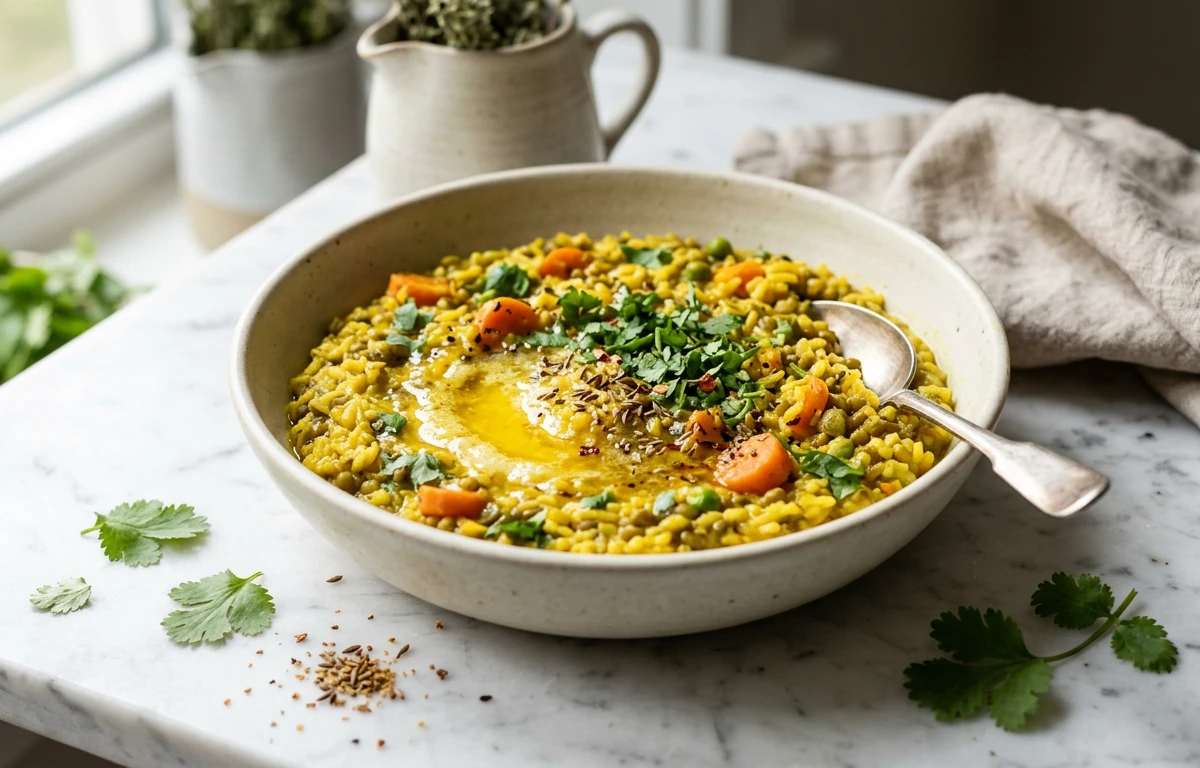
Hearty Kitchari Bowl
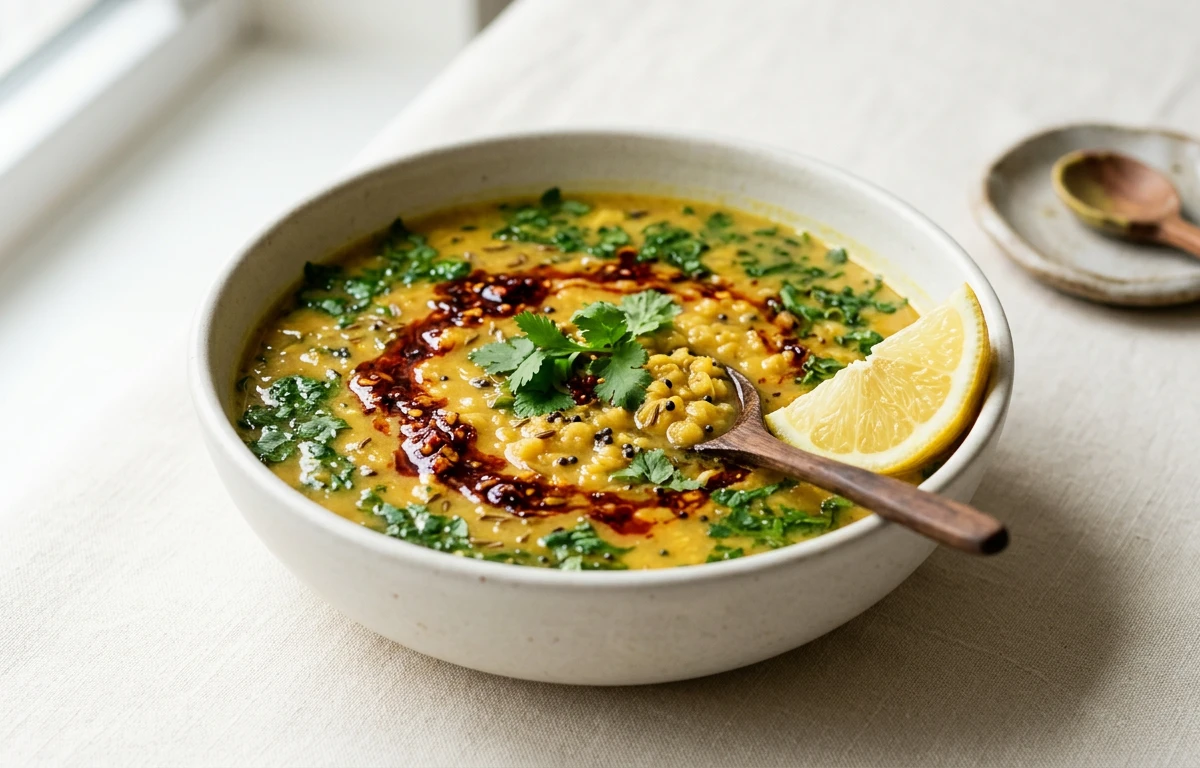
A warm, comforting one-pot meal of rice and moong dal cooked together until soft and porridge-like. Gently spiced with cumin, turmeric, and ginger, this nourishing bowl is easy to digest and deeply satisfying, finished with a fragrant ghee tempering.
For 4 servings
- prep · ~30 min
Wash and soak the rice and dal.
1.Combine basmati rice and moong dal in a bowl.2.Wash under running water 2-3 times until water runs clear.3.Soak in fresh water for 30 minutes, then drain.TIPSoaking softens the dal and helps it cook evenly with the rice. - saute · ~2 min
Sauté the aromatics in the pressure cooker.
1.Heat 2 tsp ghee in a pressure cooker over medium heat.2.Add 1 tsp cumin seeds and let them sizzle for 30 seconds.3.Add grated ginger and sauté until fragrant, about 30 seconds.TIPDon't let the ginger burn — keep the heat at medium. - pressure cook · ~15 min
Pressure cook the kitchari.
1.Add the drained rice and dal to the cooker.2.Stir in turmeric powder, salt, and 3 cups of water.3.Close the lid and pressure cook on medium heat for 3 whistles.4.Let the pressure release naturally, then open the lid and stir well.TIPFor a thinner consistency, add 0.5 cup hot water after cooking and stir. - temper · ~2 min
Make the final tempering.
1.Heat 2 tsp ghee in a small tadka pan over medium heat.2.Add 0.5 tsp cumin seeds and let them crackle.3.Add asafoetida and dried red chili, fry for 10 seconds until fragrant.4.Pour the hot tempering over the kitchari and mix gently.TIPThe asafoetida sizzles instantly — have the kitchari ready to pour over immediately. - garnish
Garnish with fresh coriander leaves and serve hot.
Ladle into bowls and scatter chopped coriander leaves on top. Serve immediately while warm and comforting.
TIPKitchari thickens as it cools — stir in a splash of warm water to loosen it if needed.
What to keep in mind.
6 tips from the recipe — small details that make a real difference to the final dish.
- 1Soak the rice and moong dal for 30 minutes to ensure even cooking and a soft, porridge-like texture.
- 2Use a pressure cooker for best results; 3 whistles yield a perfectly mushy consistency without overcooking.
- 3Let the pressure release naturally so the grains and dal absorb remaining steam and stay tender.
- 4If you prefer a thinner kitchari, stir in ½ cup hot water after cooking and mix well.
- 5Prepare the tadka just before serving so the cumin and asafoetida stay fragrant and crisp.
- 6Leftover kitchari thickens upon cooling – loosen it with a splash of warm water when reheating.
Adapt it for your goals.
Vegan
Replace ghee with coconut oil or a neutral vegetable oil in both the sauté and tempering steps. Perfect for a dairy-free or vegan diet without losing the comforting texture.
high proteinHigh-protein
Add ¼ cup of split chickpeas (chana dal) or a handful of chopped vegetables like carrots and spinach to boost protein and fiber. Cook for an extra whistle to ensure everything softens.
low oilLow-oil
Skip the final tempering entirely and simply stir in a pinch of asafoetida powder and roasted cumin powder after cooking. Reduces fat significantly while retaining core flavours.
jainJain
Omit asafoetida (which may contain wheat starch) and use rock salt instead of regular salt. Ensure all ingredients are root-vegetable friendly for a Jain-compliant version.
Why this is on our healthy list.
Easy to Digest
The combination of split moong dal and basmati rice, cooked until soft, makes this meal gentle on the stomach and suitable for detox or recovery days.
Rich in Plant Protein
Moong dal provides a good source of plant-based protein, supporting muscle repair and satiety without heaviness.
Anti-Inflammatory Spices
Turmeric and ginger contain curcumin and gingerol, compounds known for their anti-inflammatory and digestive-aiding properties.
Nourishing Fats
Ghee offers healthy saturated fats that help absorb fat-soluble vitamins from the spices and promotes gut health.
Frequently asked questions
Yes, use a heavy-bottomed pot. Cook the soaked rice and dal in 4 cups of water over low heat, stirring occasionally, for 35-40 minutes until soft and porridge-like.