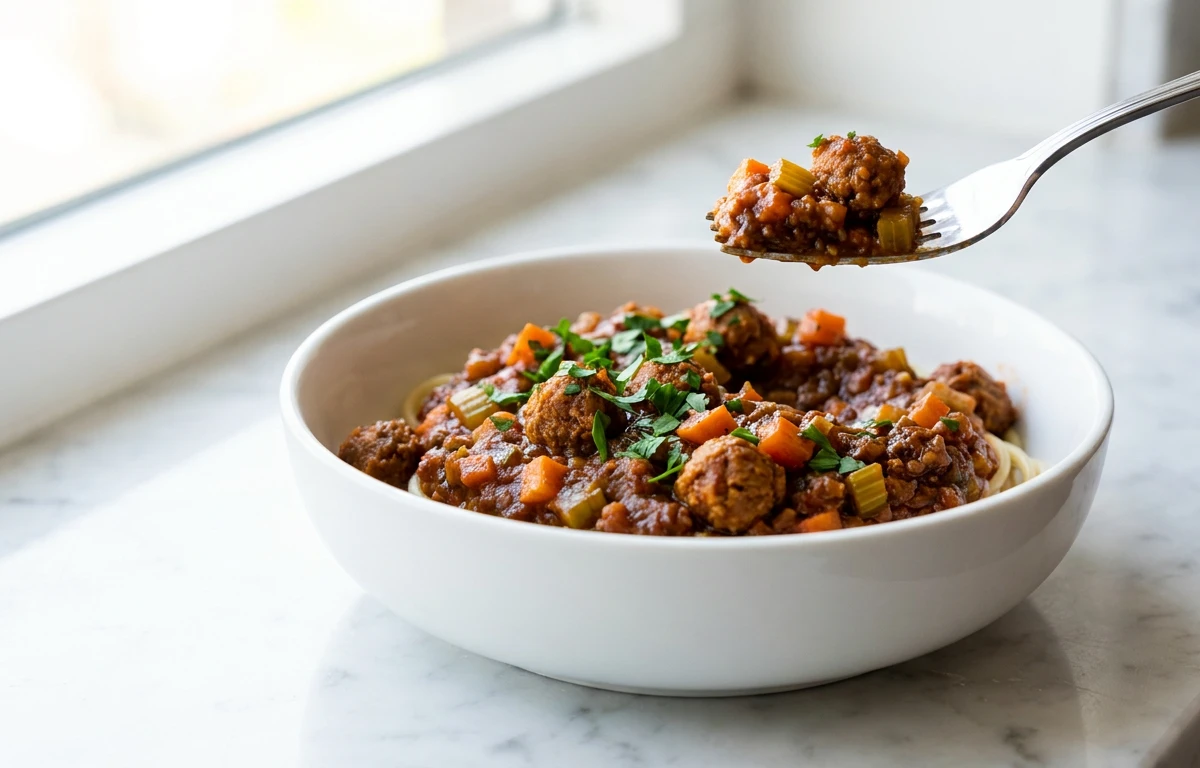
Hearty Soya Chunk Bolognese
A rich, plant-based twist on the Italian classic that swaps ground meat for meaty soya chunks. Slow-simmered in a velvety tomato sauce with garlic, herbs, and a splash of milk for depth, this hearty sauce clings beautifully to al dente spaghetti. Ready in under an hour, it delivers all the comfort of traditional Bolognese without the meat.
For 4 servings
- prep · ~10 min
Rehydrate and prepare the soya chunks.
1.Bring a medium pot of water to a rolling boil.2.Add the dry soya chunks and boil for 5 minutes until puffed and tender.3.Drain immediately and rinse under cold water to cool.4.Squeeze each chunk firmly to expel excess water, then roughly chop into a mince-like texture.TIPSqueeze out as much water as possible — dry chunks absorb sauce better, leading to a meatier bite. - saute · ~9 min
Sauté the aromatics and vegetables.
1.Heat olive oil in a large skillet over medium heat.2.Add chopped onion, carrot, and celery. Cook until softened and translucent (6-8 min).3.Stir in minced garlic, dried oregano, dried basil, and chili flakes. Sauté until fragrant (1 min).TIPDon't rush the soffritto — the vegetables should be soft and sweet before adding garlic. - saute · ~6 min
Brown the chopped soya mince.
1.Add the chopped soya chunks to the skillet.2.Cook, stirring occasionally, until the soya is lightly browned and begins to crisp at the edges (5-7 min).TIPResist the urge to stir constantly — letting the soya sit undisturbed for a minute develops a deeper flavor. - simmer · ~20 min
Build and simmer the Bolognese sauce.
1.Pour in the crushed canned tomatoes and water. Stir well to combine.2.Add salt and freshly ground black pepper.3.Bring to a gentle simmer, then reduce heat to low.4.Pour in the milk and stir.5.Cover and let the sauce bubble gently for 15-20 minutes, stirring occasionally, until rich and thickened.TIPThe milk adds a subtle creaminess and balances the acidity of the tomatoes. Add it off the heat if the sauce is boiling vigorously to prevent curdling. - boil · ~10 min
Cook the spaghetti until al dente.
While the sauce simmers, bring a large pot of water to a boil. Add the spaghetti and cook according to package directions until al dente. Reserve 1/2 cup of the pasta cooking water before draining.
TIPAlways save a mug of starchy pasta water — it's liquid gold for loosening the sauce and helping it cling to the noodles. - assemble · ~2 min
Toss the pasta with the soya Bolognese.
1.Add the drained spaghetti directly into the skillet with the sauce.2.Toss vigorously, adding splashes of reserved pasta water as needed to create a glossy, cohesive sauce that coats every strand.TIPFinish cooking the pasta IN the sauce for the final minute — it absorbs more flavor. - serve
Plate, garnish with parmesan and fresh basil, and serve immediately.
Divide the pasta among bowls. Top generously with grated parmesan cheese and a scatter of torn fresh basil leaves. Finish with an extra crack of black pepper.
What to keep in mind.
6 tips from the recipe — small details that make a real difference to the final dish.
- 1Squeeze soya chunks thoroughly after boiling – drier chunks soak up more sauce for a meatier texture.
- 2Cook the soffritto (onion, carrot, celery) until truly soft and sweet before adding garlic to build depth.
- 3Let the soya mince sit undisturbed in the pan for a minute to develop a deeper, browned flavor.
- 4Add the milk off the heat and stir gently to prevent it from curdling in the acid tomato sauce.
- 5Reserve a cup of pasta water before draining – starchy water helps the sauce cling to spaghetti.
- 6Finish cooking the pasta in the sauce for the last minute to let it absorb maximum flavor.
Adapt it for your goals.
Vegan
Replace whole milk with unsweetened oat or soy milk, and omit Parmesan – use nutritional yeast or a vegan parmesan substitute for a fully plant-based dish.
gluten freeGluten-free
Swap spaghetti for gluten-free pasta (rice or corn-based) and ensure the soya chunks are certified gluten-free, as some brands may contain traces.
low oilLow-oil
Reduce olive oil to 1 teaspoon and dry-sauté the aromatics in a splash of water or vegetable broth, then proceed as usual for a lighter version.
high proteinHigh-protein
Add a cup of cooked red lentils or finely chopped mushrooms alongside the soya chunks to boost protein and fiber content even further.
Why this is on our healthy list.
High in Plant Protein
Soya chunks are a concentrated source of plant-based protein, supporting muscle repair and keeping you full longer.
Rich in Dietary Fiber
Soya chunks, carrots, and celery provide fiber that aids digestion and helps maintain steady blood sugar levels.
Low in Saturated Fat
This meatless bolognese uses olive oil and whole milk in modest amounts, keeping saturated fat lower than traditional beef versions.
Good Source of Lycopene
Canned tomatoes are rich in lycopene, an antioxidant that supports heart health – and cooking with olive oil boosts its absorption.
Frequently asked questions
Yes, TVP works well – use 120 g dry TVP, rehydrate in boiling water for 5 minutes, then drain and squeeze dry before browning.