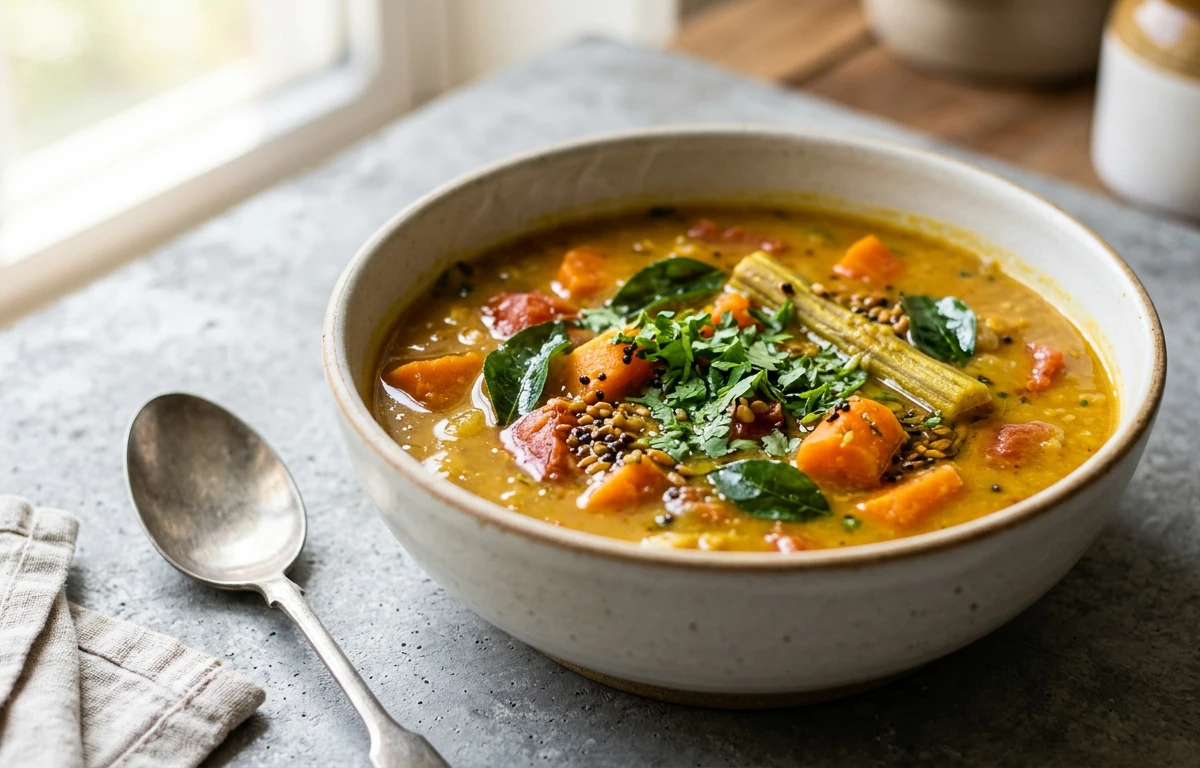
Hearty Toor Dal Sambar
A warm, tangy lentil stew from South India loaded with toor dal, mixed vegetables, and a fragrant homemade sambar masala. Slow-simmered with tamarind and finished with a crackling mustard seed tempering, this sambar brings deep, comforting flavor to every spoonful.
For 4 servings
- prep
Soak the tamarind and dal.
1.Soak toor dal in enough water to cover by 2 inches for 30 minutes, then drain.2.Soak the tamarind in ½ cup warm water for 15 minutes, then squeeze and extract the pulp. Discard the fibrous solids. - pressure cook · ~20 min
Pressure cook the dal with aromatics.
1.Add drained toor dal, 3 cups fresh water, turmeric powder, whole shallots, and quartered tomato to the pressure cooker.2.Close the lid and pressure cook on medium heat for 4-5 whistles until the dal is soft and mushy.3.Let the pressure release naturally, then mash the cooked dal lightly with a ladle.TIPWaiting for natural pressure release makes the dal creamier — the residual steam finishes the cooking gently. - simmer · ~17 min
Cook the vegetables with sambar powder.
1.Pour the mashed dal-tomato mixture into a heavy-bottomed pot and add the drumstick pieces.2.Bring to a gentle simmer over medium-low heat and cook the drumsticks for 5 minutes.3.Add carrot, pumpkin, and brinjal pieces, then sprinkle in sambar powder and red chili powder.4.Stir well and continue simmering for 10-12 minutes until the vegetables are tender but still hold their shape. - simmer · ~6 min
Add tamarind extract and season.
1.Pour the tamarind pulp into the simmering sambar and stir to combine.2.Add salt and let the sambar bubble gently for 5-6 minutes so the tamarind loses its raw edge.3.Taste and adjust — the sambar should be tangy, mildly spicy, and have a pourable, stew-like consistency. If too thick, add a splash of hot water.TIPDon't skip the final simmer after adding tamarind — raw tamarind tastes harsh; a few minutes of cooking rounds out the tang. - temper · ~2 min
Make the tempering.
1.Heat coconut oil in a small tempering pan over medium heat until shimmering.2.Add mustard seeds and let them splutter and pop fully (30-40 seconds).3.Drop in cumin seeds, dried red chili, asafoetida, and fresh curry leaves.4.Swirl the pan for 10-15 seconds until the leaves are crisp and fragrant.TIPCook the asafoetida for only 5 seconds — it burns fast and turns bitter. - mix · ~5 min
Pour the tempering over the sambar.
Immediately pour the crackling tempering over the hot sambar — it should sizzle on contact. Stir it in gently and let the sambar rest, covered, for 5 minutes so the tempering infuses.
- garnish
Garnish with fresh coriander leaves and serve hot.
What to keep in mind.
6 tips from the recipe — small details that make a real difference to the final dish.
- 1Soak the toor dal for at least 30 minutes to ensure even cooking and a creamy texture.
- 2Use a heavy-bottomed pot for simmering to prevent the sambar from sticking or burning.
- 3Add the tamarind extract only after the vegetables are tender — acid slows down cooking.
- 4Let the tempering sizzle on contact with the sambar for maximum fragrance; cover and rest for 5 minutes.
- 5Adjust the consistency with hot water; sambar thickens as it cools.
- 6For deeper flavor, use homemade sambar powder roasted with fresh coconut and spices.
Adapt it for your goals.
Vegan
This dish is already vegan as written — no changes needed. It uses coconut oil and plant-based ingredients throughout.
low oilLow-oil
Reduce coconut oil in tempering to 1 teaspoon and skip the final oil drizzle. Dry-roast mustard seeds and cumin in a non-stick pan for a lighter version.
high proteinHigh-protein
Add ½ cup of cooked chickpeas or moong dal along with the vegetables to boost protein without changing the flavor profile.
gluten freeGluten-free
Ensure your sambar powder and asafoetida are certified gluten-free (some asafoetida has wheat flour). The recipe is naturally gluten-free.
Why this is on our healthy list.
Rich in Plant Protein
Toor dal provides a solid base of plant-based protein and fiber, supporting muscle repair and digestive health.
Packed with Vegetables
Drumstick, carrot, pumpkin, and eggplant add a spectrum of vitamins, antioxidants, and dietary fiber in one bowl.
Low in Saturated Fat
Using coconut oil only in the tempering keeps the dish light on saturated fat while retaining authentic flavor.
Good Source of Iron
Toor dal and tamarind both contribute iron, which helps combat fatigue and supports healthy blood circulation.
Frequently asked questions
Yes, you can substitute with masoor dal (red lentils) or moong dal, but the cooking time and texture will differ — masoor cooks faster and yields a thinner sambar.