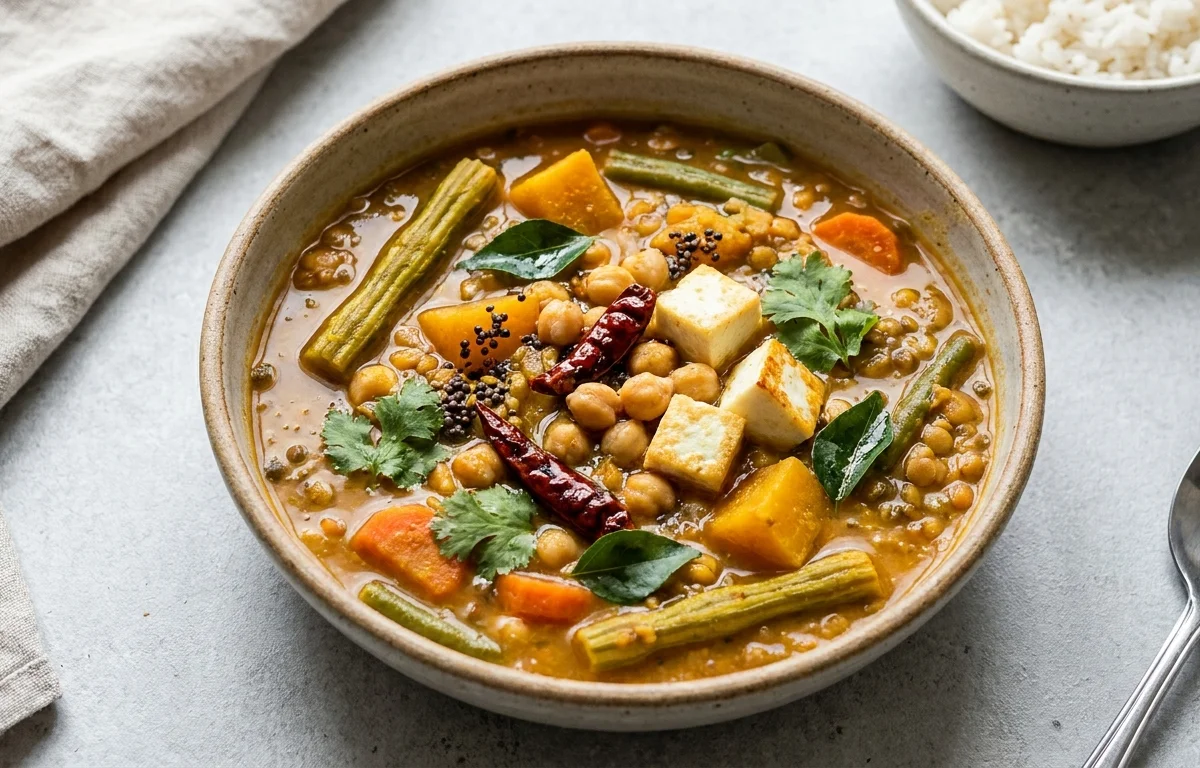
High-Protein Sambar
A hearty, protein-packed South Indian lentil stew loaded with toor dal, mixed vegetables, and a fragrant tamarind-spice base. This sambar is thicker and more substantial than the classic version, making it a satisfying meal on its own. Finished with a crackling mustard seed and curry leaf tempering, it pairs perfectly with steamed rice, idli, or dosa.
For 4 servings
- prep
Soak the dals and extract tamarind pulp.
1.Wash toor dal and moong dal together. Soak in enough water for 30 minutes, then drain.2.Soak tamarind in 0.5 cup warm water for 15 minutes. Squeeze well and extract the pulp. Discard the solids. - pressure cook · ~14 min
Pressure cook the dals until soft.
1.Add soaked dals, 3 cups water, and turmeric powder to a pressure cooker.2.Close the lid and cook on medium heat for 4 whistles (about 12-14 minutes).3.Let the pressure release naturally. Open and mash the dals well with a ladle.TIPMash the dals while still warm — they break down faster and yield a creamier texture. - boil · ~8 min
Cook the vegetables.
1.Bring 1.5 cups water to a boil in a deep pot.2.Add carrot, drumstick, pumpkin, and green beans. Cook until tender but still holding shape (6-8 minutes).3.Do not drain — keep the vegetables in the cooking water.TIPCut vegetables into uniform sizes so they cook evenly. Drumstick takes the longest — add it first. - saute · ~9 min
Build the aromatic base.
1.Heat 1 tsp oil in a small pan over medium heat.2.Add chopped onion and sauté until translucent (3-4 minutes).3.Add chopped tomatoes and cook until soft and mushy (3-4 minutes).4.Stir in sambar powder, red chili powder, and asafoetida. Cook for 1 minute until fragrant.TIPCook the sambar powder well — raw spice powder leaves a bitter aftertaste. A minute of sautéing wakes up the aroma. - simmer · ~12 min
Combine everything and simmer.
1.Add the sautéed onion-tomato-spice mixture to the pot with cooked vegetables.2.Pour in the mashed dals and tamarind pulp. Add salt.3.Add extra water if needed to achieve a pouring consistency — sambar thickens as it sits.4.Bring to a gentle boil, then reduce heat and simmer for 10-12 minutes. Stir occasionally.TIPThe longer it simmers, the deeper the flavor. Let it bubble gently until the raw tamarind smell disappears and the sambar smells fragrant. - temper · ~2 min
Make the tempering.
1.Heat ghee in a small tempering pan over medium heat.2.Add mustard seeds and let them splutter (30 seconds).3.Add cumin seeds and dried red chilies. Sauté for 20 seconds.4.Drop in curry leaves and switch off the heat — they will sizzle and release aroma.TIPPour the tempering immediately over the hot sambar. The sizzle when the tadka hits the dal is what infuses the whole pot with flavor. - garnish
Finish and serve.
Pour the crackling tempering over the simmering sambar. Stir once, top with fresh coriander leaves, and serve hot with steamed rice, idli, or dosa.
What to keep in mind.
7 tips from the recipe — small details that make a real difference to the final dish.
- 1Soak the dals for at least 30 minutes to ensure even cooking and a creamy texture.
- 2Mash the cooked dals while still warm for a smoother, creamier consistency.
- 3Cook drumstick pieces first as they take longer to become tender than other vegetables.
- 4Let the sambar simmer until the raw tamarind smell disappears for a well-rounded flavor.
- 5Pour the hot tempering immediately over the sambar to maximize the aromatic infusion.
- 6Sambar thickens as it cools; adjust water to a slightly thinner consistency when cooking.
- 7Stir in the sambar powder well and sauté for a minute to remove any raw, bitter taste.
Adapt it for your goals.
High-protein
Replace half the moong dal with additional toor dal or add a spoonful of masoor dal (red lentils) for a higher protein content without altering the classic taste.
low oilLow-oil
Skip the oil for sautéing the onion-tomato base and instead dry-sauté them in a non-stick pan with a splash of water; use only 1 tsp ghee for the tempering to reduce fat.
jainJain
Omit onion and garlic (already not present), replace drumstick with more pumpkin and carrot, and skip asafoetida if it contains wheat starch — use hing labeled 'gluten-free' or substitute with a pinch of cumin powder.
veganVegan
Substitute ghee in the tempering with coconut oil or a neutral vegetable oil to keep the dish entirely plant-based while retaining the nutty flavor.
Why this is on our healthy list.
Rich in Plant Protein
The combination of toor dal and moong dal provides a complete amino acid profile, making this stew an excellent source of plant-based protein for muscle repair and satiety.
High in Dietary Fiber
Both lentils and vegetables like carrot, pumpkin, and beans contribute ample fiber, supporting digestive health and promoting steady blood sugar levels.
Packed with Antioxidants
Turmeric, curry leaves, and tamarind are rich in polyphenols and flavonoids that help fight oxidative stress and inflammation in the body.
Good Source of Vitamin A
Yellow pumpkin and carrots are loaded with beta-carotene, which the body converts into vitamin A for healthy vision and immune function.
Frequently asked questions
Yes, you can cook the dals in a pot: simmer them in 4 cups of water for 30-40 minutes until soft, then mash. Increase the simmering time for the vegetables accordingly.