Home-Canned Tomatoes
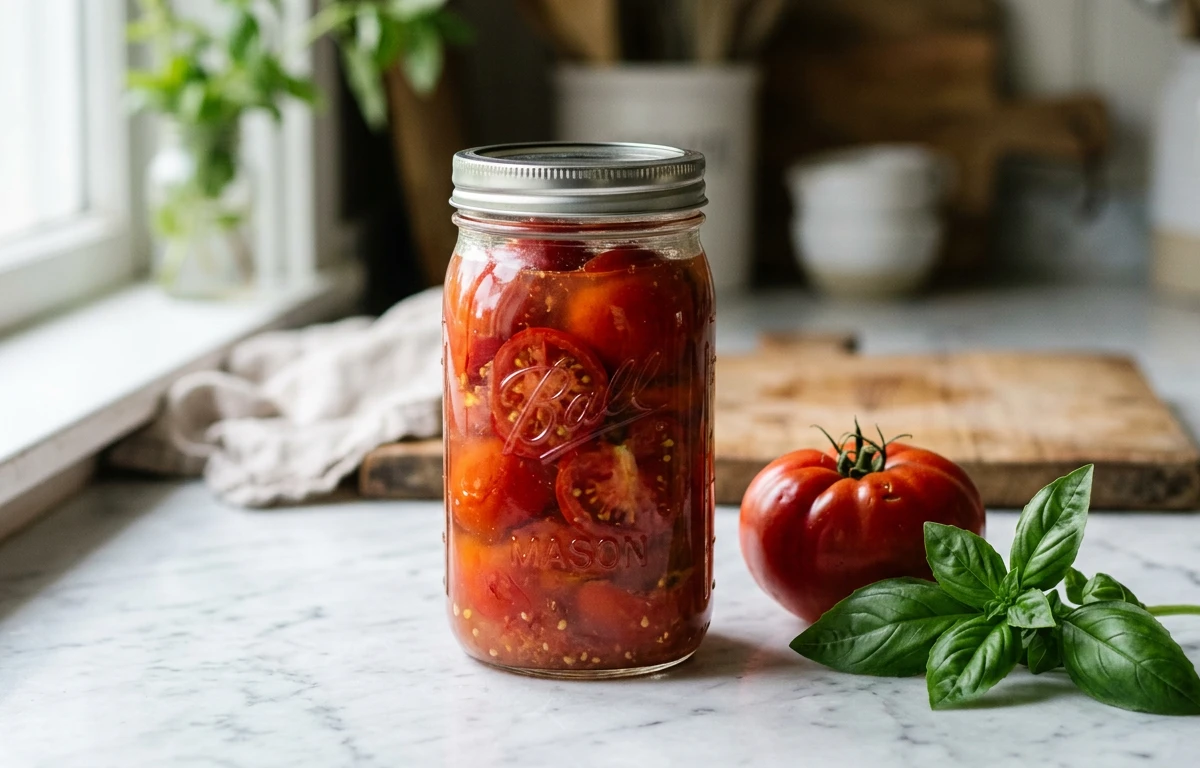
Capture peak summer flavor with these simple home-canned tomatoes. Whole, peeled tomatoes packed in their own juices with nothing but freshness and a touch of lemon for brightness. Perfect for sauces, soups, and stews all winter long.
For 4 servings
- prep · ~20 min
Sterilize the jars and prepare the canner.
1.Wash canning jars, lids, and bands in hot soapy water. Rinse well.2.Place jars in a large stockpot of simmering water to keep hot until ready to fill.3.Fill the water-bath canner about halfway with water and bring to a simmer.TIPKeep jars hot to prevent cracking when filled with hot tomatoes. - prep · ~10 min
Blanch and peel the tomatoes.
1.Score a shallow X on the bottom of each tomato with a paring knife.2.Working in batches, drop tomatoes into a large pot of boiling water for 30 to 60 seconds, until skins start to split.3.Transfer immediately to a bowl of ice water to stop cooking.4.Slip off the skins and core each tomato. Leave whole or halve if large.TIPWork quickly — the tomatoes should be peeled while still firm to keep their shape. - assemble · ~10 min
Pack the tomatoes into hot jars.
1.Add 1/2 tablespoon of lemon juice and a pinch of salt to each hot pint jar.2.Carefully pack peeled whole tomatoes into the jars, pressing gently to fill spaces without crushing.3.Pour in hot water, leaving 1/2 inch headspace at the top.4.Run a non-metallic spatula around the inside of each jar to release trapped air bubbles.5.Wipe jar rims with a clean, damp cloth to ensure a perfect seal. - assemble · ~2 min
Seal the jars.
1.Center a warm lid on each jar and screw on the band until fingertip-tight — do not overtighten.2.Check that the band is secure but still allows air to escape during processing. - boil · ~45 min
Process the jars in a water-bath canner.
1.Use the jar lifter to lower jars carefully into the simmering canner. Ensure they are spaced apart and covered by at least 2 inches of water.2.Bring the water to a full rolling boil. Once boiling, cover the canner and process pint jars for 45 minutes (adjust for altitude if needed).3.Maintain a steady boil the entire time; add more boiling water if necessary to keep jars submerged.TIPStart timing only after the water returns to a full rolling boil. - rest · ~5 min
Cool the jars and check the seals.
1.When processing time is up, turn off heat. Let jars sit in the canner for 5 minutes.2.Using the jar lifter, transfer jars to a towel-lined counter without tilting. Keep them upright.3.Leave jars undisturbed for 12 to 24 hours to cool completely.4.Check seals by pressing the center of each lid. If it doesn't flex or pop, the seal is good. Refrigerate any unsealed jars and use within one week.TIPDon't tighten bands after removing from canner — it can break the seal.
What to keep in mind.
6 tips from the recipe — small details that make a real difference to the final dish.
- 1Use only ripe, firm, blemish-free tomatoes for the best flavor and texture—overripe tomatoes can turn mushy.
- 2Blanch tomatoes in boiling water just until the skins split (30–60 seconds) to make peeling easy without cooking the flesh.
- 3Pack tomatoes tightly into jars to minimize air gaps, but don't crush them; they should maintain their shape during processing.
- 4Always use bottled lemon juice for acidification because its acidity level is consistent and guaranteed safe for canning.
- 5After processing, let jars cool undisturbed for 12–24 hours; tightening bands can break the seal and ruin preservation.
- 6Store home-canned tomatoes in a cool, dark place and use within one year for best quality and safety.
Adapt it for your goals.
Low-sodium
Omit the salt entirely or reduce to a tiny pinch per jar. This variation is ideal for those on a low-salt diet while still preserving the tomatoes' pure flavor.
herbedHerbed
Add a fresh basil leaf or a sprig of oregano to each jar before packing. This infuses the tomatoes with subtle herb notes perfect for Italian sauces and soups.
fire roasted styleFire-roasted style
Before peeling, char the tomatoes on a grill or under a broiler until skin blisters. Then peel and can as directed. This imparts a smoky depth for salsas and chili.
crushed tomatoesCrushed tomatoes
After peeling, roughly crush the tomatoes by hand before packing. This yields a chunkier, saucier product ideal for quick pasta sauces and stews, reducing cook time later.
Why this is on our healthy list.
Rich in Lycopene
Tomatoes are a top source of lycopene, a powerful antioxidant linked to heart health and reduced inflammation. Canning actually makes lycopene more bioavailable.
Low in Calories and Fat
Home-canned tomatoes contain no added fats or sugars, making them a nutrient-dense, guilt-free base for meals. They are naturally low in calories.
Natural Source of Vitamin C
Fresh tomatoes provide vitamin C, which supports immune function. Though some is lost during canning, these tomatoes still retain meaningful amounts.
No Preservatives
This recipe uses only tomatoes, lemon juice, and salt — no artificial preservatives or additives, giving you full control over your food's purity.
Frequently asked questions
Bottled lemon juice has a consistent, standardized acidity (usually 5% or higher), which is essential for safe canning. Fresh lemon juice can vary in acidity and may not prevent botulism.