Homemade Pad Thai with Shrimp or Tofu
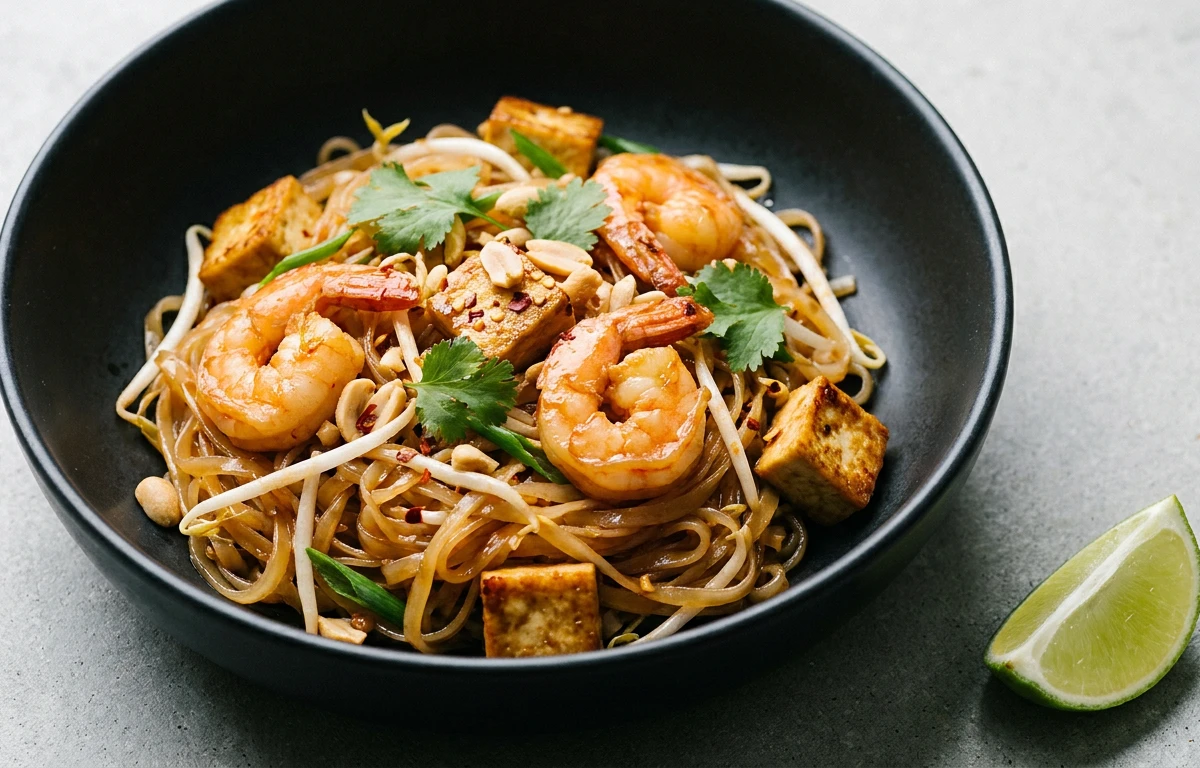
Authentic, stir-fried rice noodles with a perfectly balanced sweet-sour-savory tamarind sauce, studded with succulent shrimp, scrambled egg, crunchy peanuts, and fresh bean sprouts. A classic Thai street food that comes together in one wok in under 30 minutes.
For 4 servings
- prep · ~30 min
Soak the rice noodles.
Place the dried rice noodles in a large bowl and cover with warm tap water. Let soak until pliable but still slightly firm, about 30 minutes. Drain well and set aside.
TIPDon't soak in boiling water — the noodles will turn mushy during stir-frying. They should be flexible but not fully soft. - mix · ~2 min
Make the pad thai sauce.
1.In a small bowl, combine the tamarind paste, fish sauce, and sugar.2.Add 2 tablespoons of water and stir until the sugar dissolves completely.3.Taste and adjust — it should be tangy, salty, and sweet in balance.TIPEvery brand of tamarind paste varies in sourness. Start with 2.5 tablespoons and add more if you like it tangier. - prep
Prep all ingredients within arm's reach.
Pad thai cooks fast. Arrange the shrimp, drained noodles, sauce, minced garlic, sliced shallots, crushed chili, eggs, bean sprouts, peanuts, and green onions near the stove.
- fry · ~2 min
Cook the shrimp.
1.Heat 1 tablespoon of oil in a wok over high heat until shimmering.2.Add the shrimp and sear for 1 minute per side until pink and just cooked through.3.Transfer to a plate and set aside.TIPShrimp curl into a 'C' shape when done. Overcooking makes them tough — pull them off the heat as soon as they're opaque. - fry · ~2 min
Scramble the eggs and build the base.
1.Add the remaining 2 tablespoons of oil to the wok over medium-high heat.2.Add the shallots and garlic, stir-frying for 30 seconds until fragrant.3.Crack the eggs directly into the wok and scramble lightly, breaking them into small curds. - fry · ~2 min
Stir-fry the noodles.
1.Increase heat to high. Add the drained noodles and pour the sauce over them.2.Toss continuously using tongs or two spatulas, coating every strand, for 1 to 2 minutes.3.If the noodles seem dry or stick, splash in a tablespoon of warm water at a time.TIPDon't crowd the wok — work quickly and keep the noodles moving. A hot wok is the secret to that subtle smoky char. - mix · ~1 min
Add the shrimp, sprouts, and green onions.
1.Return the cooked shrimp to the wok and toss through.2.Add the bean sprouts and green onions, fold in gently, and cook for 30 seconds.3.Sprinkle the crushed chili and toss once more. - assemble · ~1 min
Plate and garnish.
1.Divide the pad thai among warm plates or a large platter.2.Top generously with crushed peanuts and chopped cilantro.3.Serve immediately with lime wedges on the side for squeezing over.
What to keep in mind.
7 tips from the recipe — small details that make a real difference to the final dish.
- 1Soak noodles in warm (not boiling) water until pliable but still firm to avoid mushy texture.
- 2Prep all ingredients before cooking — pad thai comes together in under 2 minutes in the wok.
- 3Use high heat and keep noodles moving constantly to achieve the signature smoky wok hei.
- 4Add a splash of warm water if noodles clump or seem dry during stir-frying.
- 5Cook shrimp just until opaque and curled into a 'C' shape to keep them tender.
- 6Squeeze fresh lime over the finished dish right before eating to brighten the flavors.
- 7Store leftovers in an airtight container; reheat in a hot wok with a splash of water to revive texture.
Adapt it for your goals.
Vegetarian
Replace shrimp with extra-firm tofu (pan-fried until golden) and use soy sauce or mushroom stir-fry sauce instead of fish sauce for a plant-based version that retains the savory depth.
low oilLow-oil
Reduce oil to 1 tablespoon total and use a non-stick pan; the noodles will be less glossy but still flavorful. Add a splash of water or veggie broth to prevent sticking.
chicken pad thaiChicken pad thai
Substitute shrimp with thinly sliced chicken breast or thigh, stir-fried until just cooked through. Chicken pairs beautifully with the tamarind sauce and adds heartiness.
spicySpicy
Double the crushed dried chili or add 1 teaspoon of Thai chili flakes for a fiery kick. You can also stir in a sliced fresh bird’s eye chili with the garlic for extra heat.
Why this is on our healthy list.
Lean Protein from Shrimp
Shrimp provide high-quality, low-fat protein and essential minerals like selenium and iodine, supporting muscle repair and thyroid function.
Rich in Antioxidants
Tamarind paste is packed with polyphenols and anti-inflammatory compounds, while bean sprouts and cilantro add a fresh dose of vitamin C and detoxifying chlorophyll.
Healthy Fats from Peanuts
Roasted peanuts contribute monounsaturated fats and vitamin E, which support heart health and help keep you full after the meal.
Frequently asked questions
Yes, but dilute it with water at a ratio of 1:1 (or to taste) to mimic the texture and sourness of pure tamarind paste.