Homemade Pasta Dough
A simple, silky-smooth pasta dough made with just a handful of pantry staples. This classic Italian recipe yields a tender, slightly chewy pasta that cooks up in minutes, perfect for fettuccine, pappardelle, or filled ravioli. Once you try fresh pasta, you'll never look back.
For 4 servings
- prep
Mound the flour and make a well.
1.Place the all-purpose flour on a clean work surface or in a large bowl.2.Mix the pinch of salt into the flour.3.Create a wide well in the center of the flour mound. - mix
Add the wet ingredients into the well.
1.Crack the whole eggs and egg yolks directly into the center of the well.2.Add the olive oil. - mix
Gradually incorporate the flour into the eggs.
Using a fork, gently beat the eggs and oil together without breaking the flour walls. Slowly begin to draw flour from the sides into the egg mixture, little by little, until a shaggy dough forms.
- prep
Test and adjust the dough texture.
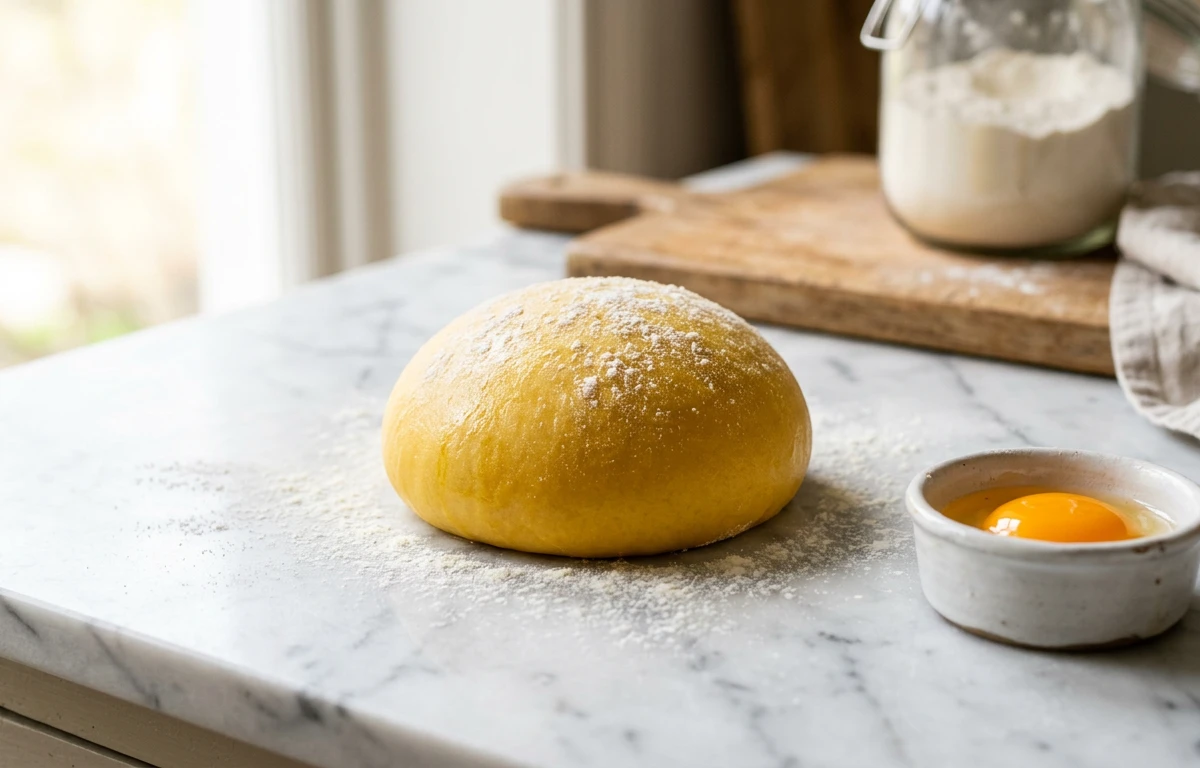
Pinch the shaggy dough. It should feel like play dough — tacky but not sticky. If it feels too sticky, lightly dust with more flour. If it feels too dry, add a teaspoon of water.
- knead · ~10 min
Knead the dough until smooth and elastic.
Using the heels of your hands, firmly push the dough away from you, then fold it back over. Rotate and repeat. Knead continuously for about 10 minutes. The dough should transform from shaggy to satiny-smooth, and spring back when poked.
- rest · ~30 min
Rest the dough.
Tightly wrap the ball of dough in plastic wrap. Let it rest at room temperature for at least 30 minutes. This relaxes the gluten, making the dough much easier to roll out.
TIPDon't rush the rest. Tough, overly elastic dough that refuses to roll thin is almost always dough that hasn't rested long enough. - prep
Divide the dough and prepare to roll.
Unwrap the rested dough and press it into a flat disc. Cut it into 4 equal portions. Immediately re-wrap the portions you are not working with to prevent them from drying out.
- mix
Flatten and roll the first portion.
1.Dust a portion lightly with flour and press it into an oval shape with your fingers.2.Set your pasta machine to the widest setting (usually '0' or '1').3.Feed the dough through the machine. Fold the sheet into thirds (like a letter), rotate 90 degrees, and pass it through again. Repeat this folding and rolling process 2-3 times for a smoother sheet. - mix
Roll out the long pasta sheet.
Now roll the dough through the machine without folding. Progressively decrease the thickness setting by one notch with each pass, dusting lightly with flour as needed to prevent sticking. Stop when the pasta is thin enough to see the outline of your hand through it (setting 6 or 7 on most machines).
- prep
Cut the pasta into desired shape.
Lay the long sheet on a lightly floured surface. Dust the top with flour, then gently fold the sheet over itself a few times to create a flat roll. Using a sharp chef's knife, cut the roll into even strips for fettuccine (about 1/4-inch wide). Gently toss the cut pasta with a bit of flour to prevent sticking.
- boil · ~3 min
Cook the fresh pasta in boiling water.
Bring a large pot of generously salted water to a rolling boil. Add the fresh pasta and cook for 2-3 minutes, or until it floats to the top and is tender but still has bite. Fresh pasta cooks much faster than dried.
- serve
Drain and serve immediately.
Reserve a cup of the starchy pasta water, then drain the pasta. Toss the hot pasta directly with your favorite sauce, adding a splash of pasta water to create a silky, emulsified coating.
What to keep in mind.
7 tips from the recipe — small details that make a real difference to the final dish.
- 1Weigh your flour and eggs for consistent dough; volume measures vary too much.
- 2Keep a small bowl of water nearby to moisten dough if it feels dry during kneading.
- 3Rest the dough for at least 30 minutes to relax gluten and prevent shrinkage.
- 4When rolling, dust sheets lightly with flour and keep unused portions wrapped to avoid drying.
- 5Cook fresh pasta in a large pot of generously salted water; it takes just 2-3 minutes.
- 6Reserve pasta water before draining; a splash helps emulsify and cling sauce to noodles.
- 7For filled pasta, roll sheets to setting 7 and use egg wash as glue for sealing.
Adapt it for your goals.
Spinach pasta
Blanch, squeeze dry, and puree 100g of spinach; replace one whole egg with the puree for a vibrant green, mildly earthy pasta.
semolina pastaSemolina pasta
Substitute half the all-purpose flour with fine semolina flour for a firmer, more rustic texture that holds up well in hearty, brothy pasta dishes.
gluten freeGluten-free
Replace the flour with a 1:1 gluten-free blend plus 1/2 tsp xanthan gum; the dough will be more delicate, so handle gently and roll between parchment paper.
high proteinHigh-protein
Replace 50g of the all-purpose flour with chickpea or lentil flour; this boosts protein and adds a nutty flavor, perfect for savory ragù sauces.
Why this is on our healthy list.
Rich in High-Quality Protein
Eggs provide all nine essential amino acids, making fresh pasta a notably higher-protein choice than standard dry pasta.
Good Source of B Vitamins
Eggs contribute B12 and riboflavin, which support energy metabolism and red blood cell formation.
Lower Sodium Potential
With just a pinch of added salt, you control the sodium entirely—perfect for those monitoring their intake.
Easier to Digest
A long rest helps break down the gluten, making fresh pasta gentler on the stomach for some individuals.
Frequently asked questions
This traditional egg-based dough won't work vegan; instead, make a separate dough with semolina and water for a classic egg-free pasta.