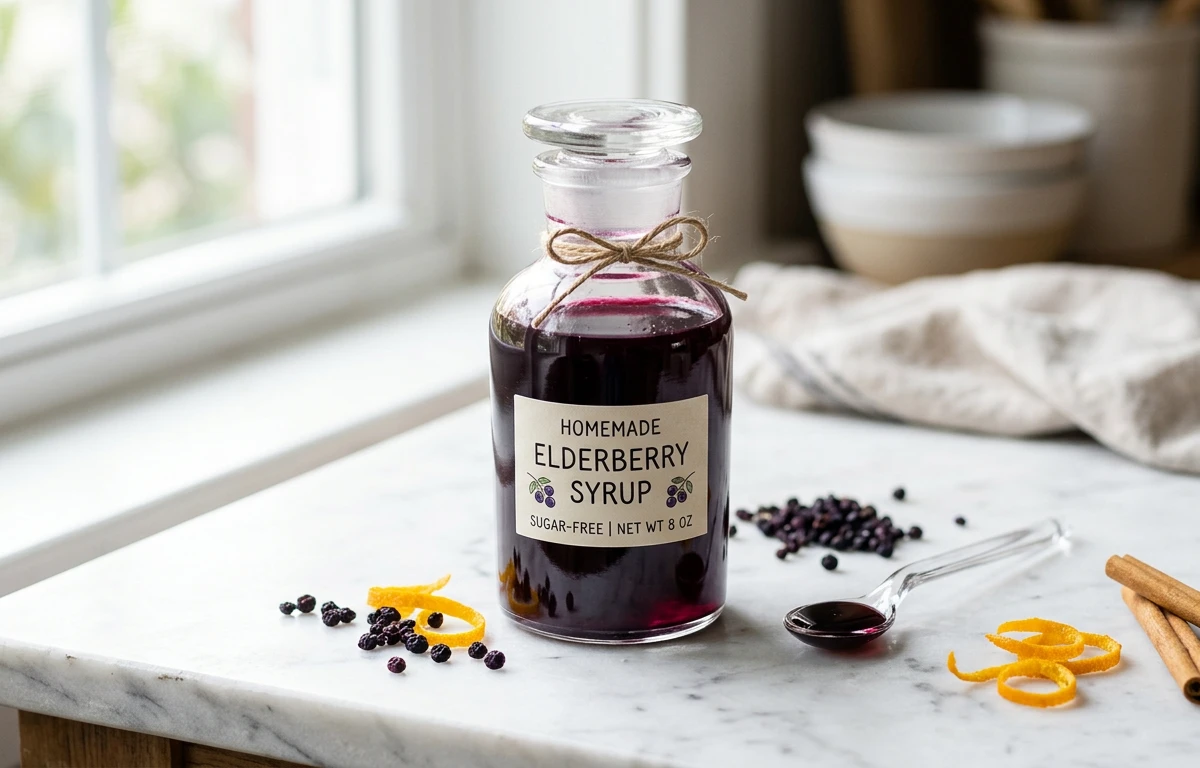
Homemade Sugar-Free Elderberry Syrup
A deep purple, immune-supporting syrup made by gently simmering dried elderberries with warm spices and citrus. Sweetened naturally without refined sugar, it has a tart, fruity flavor with notes of cinnamon and ginger. Perfect by the spoonful during cold season or drizzled over pancakes and yogurt.
For 24 servings
- prep
Combine elderberries, water, and spices in a saucepan.
Place the dried elderberries, filtered water, cinnamon stick, sliced ginger, and whole cloves into a medium saucepan.
- boil · ~3 min
Bring the mixture to a boil.
Set the saucepan over high heat and bring the liquid to a rolling boil, watching closely to prevent it from boiling over.
- simmer · ~40 min
Simmer until reduced by half.
Reduce the heat to low, cover with a lid slightly ajar, and let the mixture simmer gently for 35 to 45 minutes. The liquid should reduce by roughly half to concentrate the flavors. Stir occasionally.
- other · ~15 min
Cool the mixture slightly.
Remove the saucepan from the heat and let it cool for about 15 minutes until it is safe to handle.
TIPCooling makes the mixture safer to strain and allows the flavors to settle. - other · ~2 min
Strain the syrup through a cheesecloth.
Set a fine mesh strainer lined with a double layer of cheesecloth over a clean bowl. Pour the cooled mixture through the strainer. Gather the corners of the cheesecloth and squeeze firmly to extract all the remaining liquid and pulp from the berries.
TIPSqueezing the cheesecloth extracts the most concentrated elderberry goodness and yields a thicker syrup. - mix · ~1 min
Stir in the sweetener and lemon juice.
While the strained liquid is still warm, add the granulated monk fruit sweetener and fresh lemon juice. Stir or whisk until the sweetener is completely dissolved. Taste and adjust sweetness if desired.
TIPAdding the sweetener while the liquid is warm helps it dissolve smoothly without a gritty texture. - other
Bottle and refrigerate the finished syrup.
Pour the finished sugar-free elderberry syrup into a sterilized glass bottle. Seal tightly and store in the refrigerator. The syrup will thicken slightly as it chills.
What to keep in mind.
6 tips from the recipe — small details that make a real difference to the final dish.
- 1Simmer until the liquid reduces by half to concentrate the elderberry flavor and immune-boosting compounds.
- 2Use a double layer of cheesecloth when straining to catch tiny berry bits and ensure a smooth syrup.
- 3Squeeze the cheesecloth bundle firmly to extract every last drop of the dark, nutrient-rich liquid.
- 4Always add the monk fruit sweetener while the liquid is still warm so it dissolves completely without grittiness.
- 5Store the syrup in a sterilized glass bottle to prevent spoilage and extend refrigerator shelf life.
- 6This syrup thickens as it chills, so don't worry if it seems thin after bottling.
Adapt it for your goals.
Honey-sweetened
Replace monk fruit sweetener with 2-3 tablespoons of raw honey (added after straining and cooling to below 115°F to preserve honey's enzymes). Ideal for those who prefer natural liquid sweeteners.
spicier versionSpicier version
Add 1/4 teaspoon of cayenne pepper or a star anise pod with the spices for a warming, flu-season kick that complements the ginger and cloves.
orange citrus twistOrange-citrus twist
Swap the lemon juice for fresh orange juice and add a strip of orange zest during simmering. This brightens the flavor with a sweeter, less tart citrus note.
alcohol free tincture alternativeAlcohol-free tincture alternative
Omit the sweetener and lemon juice, then simmer an extra 10 minutes to make a concentrated, unsweetened base that can be used as a potent mixer in teas or smoothies.
Why this is on our healthy list.
Rich in Antioxidants
Elderberries are packed with anthocyanins and flavonoids that help combat oxidative stress and support the immune system.
Naturally Sugar-Free
Using monk fruit sweetener provides sweetness without added sugar or artificial sweeteners, making this syrup suitable for those monitoring blood sugar.
Anti-Inflammatory Spices
Fresh ginger and whole cloves contain compounds like gingerol and eugenol that have natural anti-inflammatory and soothing properties.
Vitamin C from Lemon
Fresh lemon juice contributes a small amount of vitamin C, which works synergistically with elderberry's immune-supportive effects.
Frequently asked questions
Stored in a sterilized, sealed glass bottle, this syrup keeps well for up to 2-3 weeks in the refrigerator.