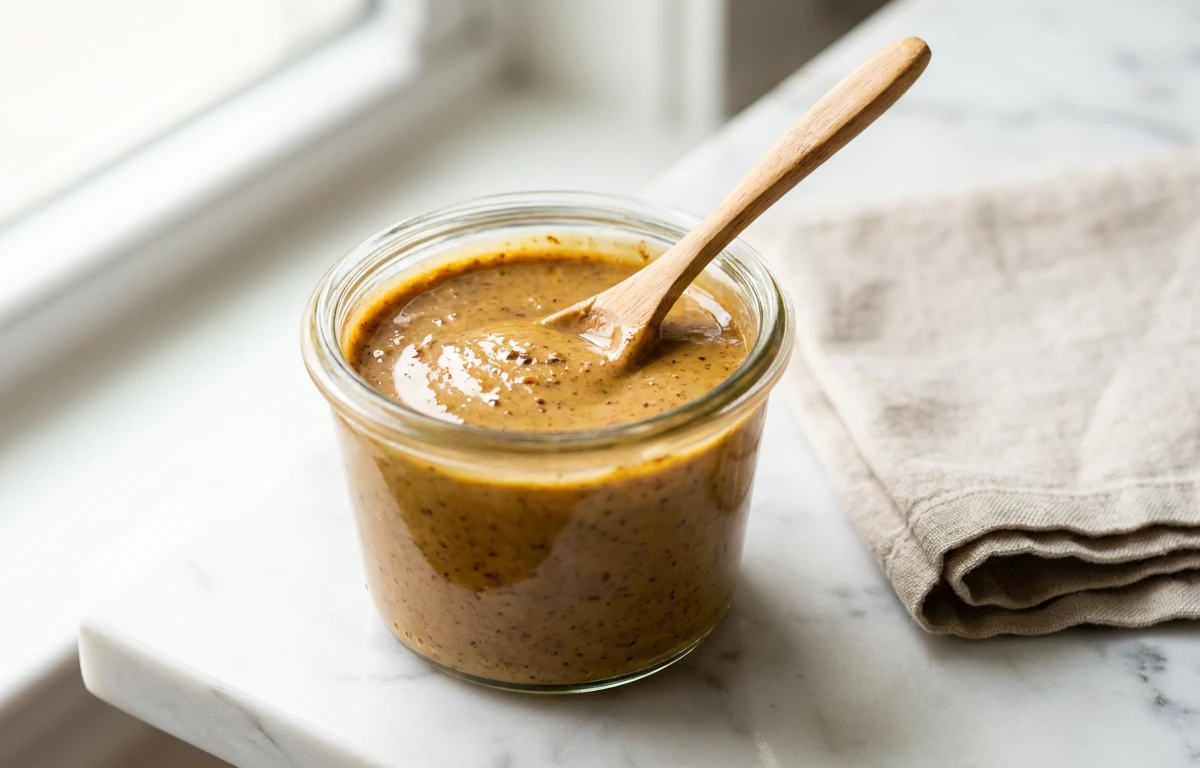
Homemade Sunflower Seed Butter
Creamy, nutty, and naturally sweet, this homemade sunflower seed butter is an incredible nut-free alternative to peanut butter. Just one ingredient (plus a pinch of salt) transforms roasted seeds into a silky, spreadable butter in minutes. Perfect for toast, smoothies, or baking.
For 8 servings
- roast · ~10 min
Roast the sunflower seeds.
1.Preheat oven to 175°C (350°F).2.Spread sunflower seeds in a single layer on a baking sheet.3.Roast for 8-10 minutes, stirring halfway, until lightly golden and fragrant. Watch closely as they burn fast.4.Let cool on the tray for 5 minutes.TIPRoasting deepens the flavor massively — don't skip it. But pull them out the moment they turn golden. - mix · ~8 min
Process into butter.
1.Transfer the cooled seeds to a food processor.2.Add the salt.3.Blend on high for 1 minute until a fine powder forms.4.Stop and scrape down the sides and bottom with a spatula.5.Continue blending, stopping to scrape every 30 seconds, until the mixture releases its oils and turns into a smooth, pourable butter. This takes 5-8 minutes total.TIPIt will go from powder to a thick clump to a smooth liquid — don't give up. Patience is key. If it remains dry, keep blending. - other
Store the sunflower seed butter.
Transfer the butter to a clean glass jar. Cool completely before sealing. Store in the refrigerator for up to 3 weeks.
TIPSeparation is natural — just stir it back together before using.
What to keep in mind.
6 tips from the recipe — small details that make a real difference to the final dish.
- 1Toast the seeds just until fragrant and golden — they burn in seconds and become bitter.
- 2Scrape down the food processor sides and bottom between blending intervals for even processing.
- 3Be patient through the thick clump phase — it will suddenly turn silky smooth after 5-8 minutes.
- 4Store in a clean, airtight glass jar in the fridge for up to 3 weeks to prevent rancidity.
- 5If the butter stays too thick, add 1–2 teaspoons of neutral oil to help it loosen.
- 6Stir well before each use — natural oil separation is normal and expected.
Adapt it for your goals.
Sweet cinnamon
Add 1–2 tablespoons of maple syrup or honey and 1 teaspoon of cinnamon during blending for a subtly sweet, spiced sunflower butter perfect on pancakes or toast.
chocolateChocolate
Blend in 2 tablespoons of unsweetened cocoa powder and 1 tablespoon of maple syrup after the butter becomes smooth for a nut-free chocolate spread.
savory herbSavory herb
Mix in ½ teaspoon of garlic powder, ½ teaspoon of onion powder, and a pinch of cayenne for a savory dip or sandwich spread.
crunchyCrunchy
Reserve 2 tablespoons of roasted, roughly chopped sunflower seeds and stir them into the finished butter for added texture.
Why this is on our healthy list.
Rich in Vitamin E
Sunflower seeds are an excellent source of vitamin E, a powerful antioxidant that supports skin health and immune function.
Nut-Free Alternative
This butter is completely nut-free, making it a safe and protein-rich option for those with tree nut or peanut allergies.
Good Source of Magnesium
Sunflower seeds provide magnesium, a mineral essential for muscle function, nerve health, and maintaining steady energy levels.
High in Healthy Fats
The seeds offer polyunsaturated and monounsaturated fats, which support heart health when consumed as part of a balanced diet.
Frequently asked questions
If the seeds are undermixed or too cool, they won't release enough oil. Continue blending patiently for up to 10 minutes, and add a teaspoon of neutral oil if needed.