
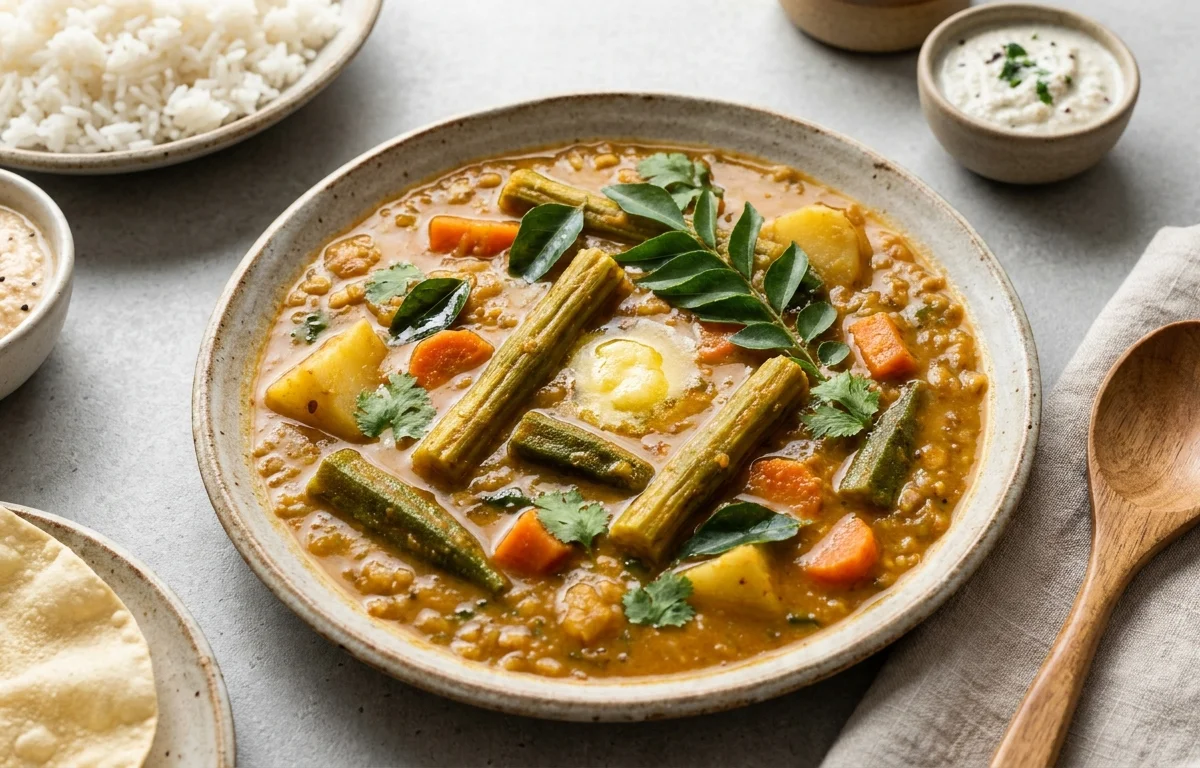
Homestyle Sambar
A warm, comforting bowl of sambar just like the one your grandmother makes. Toor dal is pressure-cooked until buttery soft, then simmered with tender vegetables and a tangy tamarind broth. The final tempering of mustard seeds, curry leaves, and dried red chilies sizzled in ghee brings this South Indian staple to life. Perfect with steamed rice or a stack of hot idlis.
For 4 servings
- prep · ~5 min
Soak the tamarind and prepare vegetables.
1.Soak tamarind pulp in half cup warm water for 15 minutes. Squeeze and extract the pulp, discarding fibers.2.Chop drumstick into 3-inch batons, carrot and potato into cubes, quarter the tomatoes, and halve the shallots.3.Slit green chilies lengthwise.TIPWarm water helps extract tamarind pulp faster. Squeeze firmly to get all the tangy juice. - pressure cook · ~15 min
Pressure cook the dal until soft and mushy.
1.Add rinsed toor dal to the pressure cooker with 1.5 cups water and turmeric powder.2.Close lid and pressure cook on medium heat for 3 whistles, then lower flame and cook 3 more minutes.3.Turn off heat and let pressure release naturally. Whisk the cooked dal until smooth.TIPLet the pressure drop naturally — the residual heat makes the dal even softer. - boil · ~15 min
Cook the vegetables in tamarind broth.
1.Transfer mashed dal to a saucepan and add 1.5 cups water. Bring to a gentle boil.2.Add drumstick, carrot, potato, and salt. Cook for 8 minutes until vegetables are fork-tender.3.Add shallots, tomatoes, green chili, sambar powder, and tamarind extract. Stir well.4.Simmer everything together for 6-8 minutes on medium-low heat, stirring occasionally. Adjust water if too thick.TIPAdd drumstick and root vegetables first — they take longer. Tomatoes and shallots go in later so they keep some texture. - temper · ~2 min
Make the tempering.
1.Heat ghee in a small tempering pan over medium heat until it shimmers.2.Add mustard seeds and wait until they splutter completely (30 seconds).3.Add cumin seeds, dried red chili, and asafoetida. Stir until fragrant (15 seconds).4.Toss in curry leaves and stand back — they'll crackle. Immediately pour the tempering into the simmering sambar.TIPPour the tempering while it's still sizzling. That crackle when it hits the sambar is pure magic. - simmer · ~4 min
Simmer the sambar to bring flavors together.
Let the sambar bubble gently for 3-4 minutes after adding the tempering. Check seasoning and add a splash of hot water if it has thickened too much.
TIPThe sambar will thicken as it sits. Keep it slightly thinner than you need — it'll be perfect by serving time. - garnish
Garnish with fresh coriander leaves and serve hot.
Ladle into bowls and top generously with chopped coriander leaves. Serve steaming hot with rice, idli, or dosa.
What to keep in mind.
7 tips from the recipe — small details that make a real difference to the final dish.
- 1For the smoothest dal, whisk it vigorously with a potato masher or immersion blender after pressure cooking.
- 2Soak tamarind in warm water, not hot, to extract maximum tang without bitterness.
- 3Drumstick is done when the skin wrinkles easily and the flesh separates from the fibrous core.
- 4Adjust sambar powder amount to your spice tolerance; start with 1.5 tbsp if you're unsure.
- 5Make a double batch of tempering and use half as a final drizzle for extra aroma.
- 6Sambar thickens on standing; reserve ½ cup hot water to adjust consistency before serving.
- 7For make-ahead, prepare sambar without the tempering, then finish with fresh tempering when reheating.
Adapt it for your goals.
Low-oil
Swap ghee for coconut oil in the tempering and use only 1 teaspoon; the coconut oil still releases the spices' aroma with less fat.
high proteinHigh-protein
Add a handful of cooked chana dal or a cubed paneer during the simmering step to boost protein without altering the South Indian flavor profile.
jainJain
Omit onion, garlic, potato, carrot, and shallots; use only pumpkin, raw banana, and drumstick. Replace asafoetida with a pinch of hing-free variant and skip green chili seeds.
veganVegan
Replace ghee with any neutral vegetable oil or coconut oil for the tempering—the dish remains fully plant-based without losing depth.
instant potInstant-pot
Use the Instant Pot's sauté function for tempering, then pressure cook dal and vegetables together on high for 12 minutes with natural release.
Why this is on our healthy list.
Rich in Plant Protein
Toor dal (split pigeon peas) provides a solid source of plant-based protein and dietary fiber, supporting muscle health and digestive regularity.
Packed with Antioxidants
Turmeric, curry leaves, and tamarind contain antioxidant compounds like curcumin and polyphenols that help combat oxidative stress.
Gut-Friendly Fiber
The combination of lentils, drumstick, carrot, and potato delivers soluble and insoluble fiber, promoting healthy digestion and satiety.
Frequently asked questions
Yes, but reduce cooking time drastically. Add pre-cooked dal during the vegetable simmering step and skip pressure cooking entirely.


