Honey-Mustard Glazed Salmon
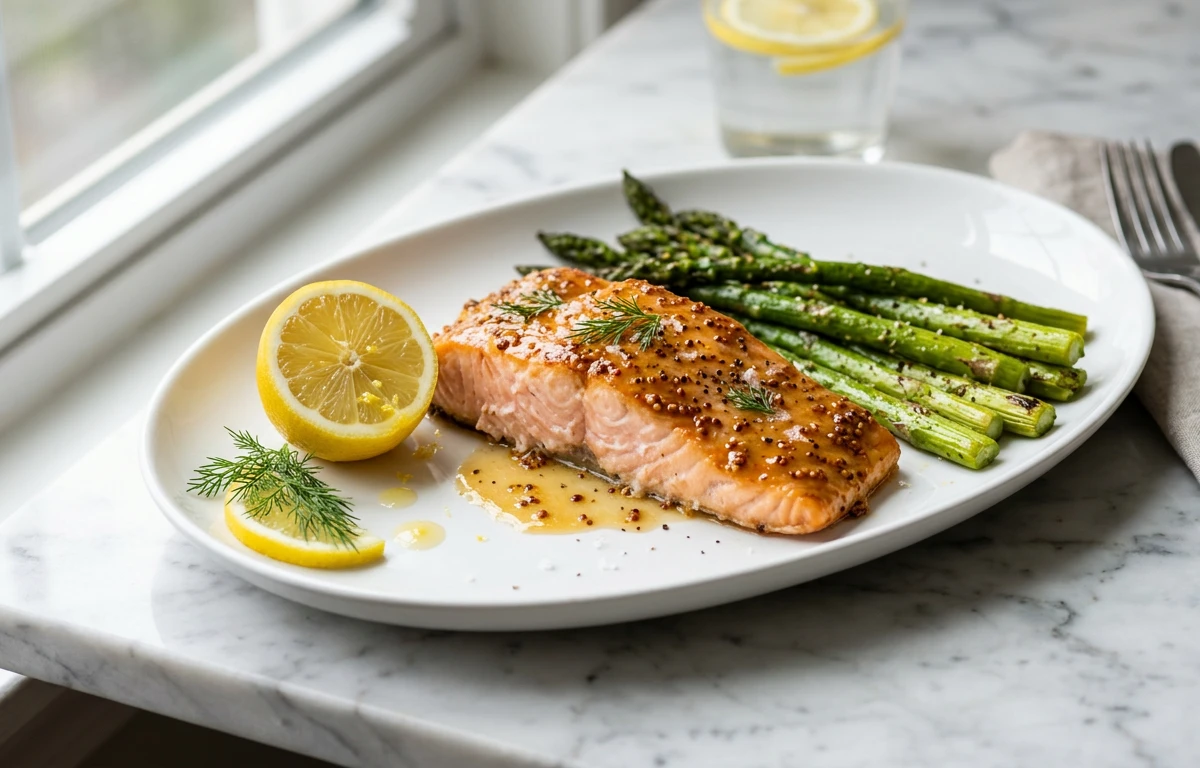
Tender, flaky salmon fillets coated in a sweet and tangy honey-mustard glaze that caramelizes beautifully under the broiler. This quick weeknight dinner comes together in under 30 minutes with just a handful of pantry staples. Perfect with roasted vegetables or a simple green salad.
For 4 servings
- prep
Preheat the broiler.
Position an oven rack about 6 inches from the broiler element. Preheat the broiler to high. Line a baking sheet with parchment paper or foil.
TIPUse the top rack position for best caramelization. Keep a close eye on the fish — broilers vary in intensity. - mix · ~2 min
Make the honey-mustard glaze.
1.In a small bowl, combine 3 tbsp honey, 2 tbsp dijon mustard, and 2 minced garlic cloves.2.Add 1 tbsp olive oil, 1 tbsp lemon juice, 1 pinch smoked paprika, 1 pinch salt, and 1 pinch black pepper.3.Whisk until smooth and well blended.TIPThe glaze should taste boldly sweet-tangy — it mellows under the broiler. Taste and adjust honey or mustard balance now. - prep · ~1 min
Pat the salmon dry and season.
Use paper towels to pat all 4 salmon fillets completely dry. Place them on the prepared baking sheet, skin-side down if skin-on. The surface must be dry for the glaze to stick and caramelize properly.
- prep · ~1 min
Brush the salmon generously with glaze.
Using a pastry brush or spoon, coat each fillet evenly with about three-quarters of the glaze. Reserve the remaining glaze for basting. Make sure the sides are coated too, not just the tops.
- bake · ~6 min
Broil the salmon for 6 minutes.
Slide the baking sheet under the broiler and cook for 6 minutes. The glaze will begin to bubble and darken around the edges.
TIPDo not walk away — honey caramelizes quickly and can burn in seconds under high heat. - bake · ~3 min
Baste with remaining glaze and finish broiling.
1.Remove the pan from the oven. Brush the reserved glaze over each fillet.2.Return to the broiler for 2 to 3 more minutes, until the glaze is deeply caramelized and bubbling.3.Check doneness: the salmon should flake easily with a fork and reach an internal temperature of 145°F (63°C).TIPIf the glaze browns too fast before the salmon is done, loosely tent with foil and continue broiling in 1-minute increments. - garnish
Garnish with cilantro and serve immediately.
Transfer the salmon to plates. Scatter chopped fresh cilantro over the top and serve right away while the glaze is glossy and warm.
TIPA squeeze of extra lemon juice at the table brightens the rich, sweet glaze beautifully.
What to keep in mind.
6 tips from the recipe — small details that make a real difference to the final dish.
- 1For extra-crispy skin, pat the fillets bone-dry and broil skin-side up for the first 2 minutes, then flip to finish.
- 2If using skinless fillets, brush the baking sheet with a little oil to prevent sticking.
- 3Let the salmon rest for 2 minutes after broiling so the glaze sets slightly and doesn't slide off.
- 4Reserve a portion of the glaze before brushing to avoid cross-contamination from raw fish.
- 5Thicker fillets (2.5 cm / 1 inch) may need an extra minute per side; check doneness with a fork.
- 6To make ahead, combine the glaze up to 3 days in advance and refrigerate — whisk before using.
Adapt it for your goals.
Spicy maple variation
Swap honey for maple syrup and add 1/2 tsp cayenne or red pepper flakes — the smokiness of the paprika pairs perfectly with the heat.
low oil versionLow-oil version
Reduce olive oil to 1/2 tbsp and increase lemon juice to 1.5 tbsp for a brighter, less oily glaze that still caramelizes well.
herb crusted twistHerb-crusted twist
Mix 1 tbsp chopped fresh dill or thyme into the glaze for an extra layer of herbal freshness that complements the dijon.
Why this is on our healthy list.
Rich in Omega-3s
Salmon is one of the best sources of anti-inflammatory long-chain omega-3 fatty acids (EPA and DHA), which support heart and brain health.
High-Quality Protein
Each fillet provides about 30 g of complete protein, essential for muscle repair and satiety.
Low in Saturated Fat
This dish relies on olive oil and a broiler, keeping the saturated fat content low compared to pan-fried alternatives.
Natural Vitamin D Source
Wild salmon is one of the few natural food sources of vitamin D, important for bone health and immune function.
Frequently asked questions
Yes, but thaw completely in the refrigerator overnight and pat very dry — excess moisture prevents caramelization.