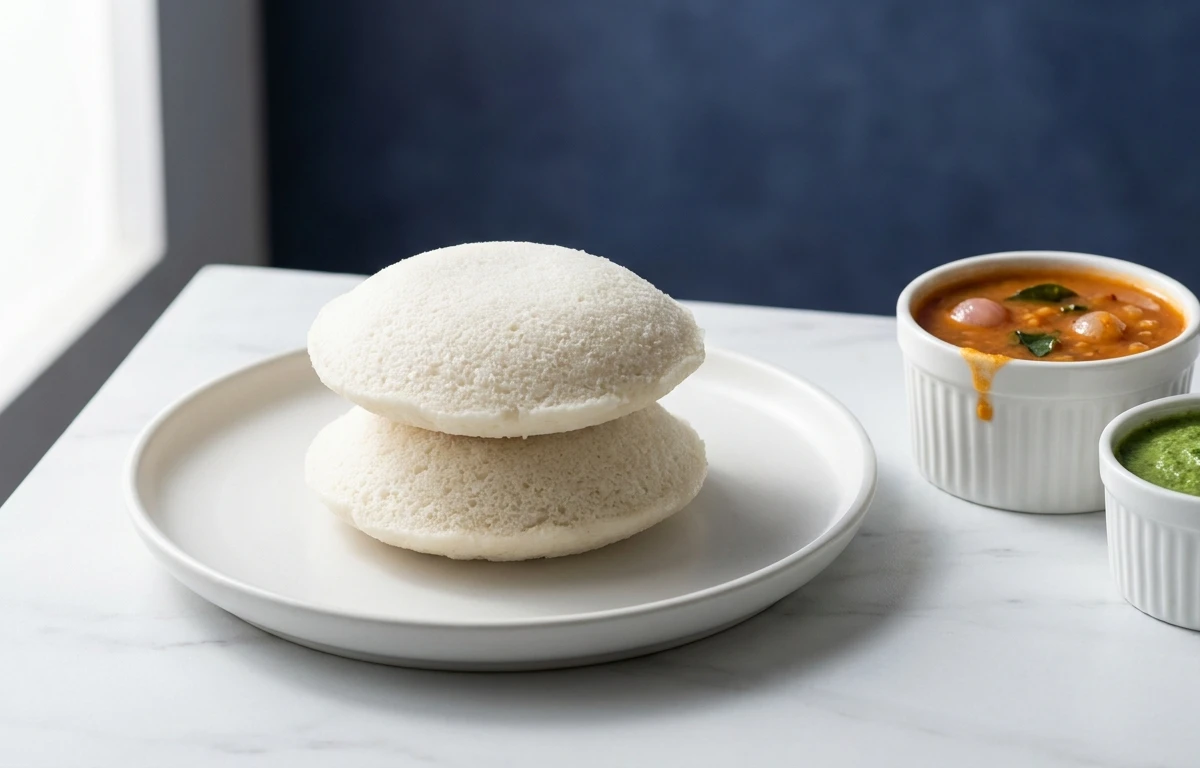
Idli
Soft, airy steamed rice cakes with a gentle tang from overnight fermentation. Idli is a South Indian staple that feels light yet satisfying, and it pairs perfectly with chutney, sambar, or podi.
For 8 servings
- prep · ~360 min
Soak the rice and dal.
1.Wash the idli rice well until the water runs mostly clear.2.Soak the rice in plenty of water for 6 hours.3.Wash the urad dal and soak it with fenugreek seeds for 6 hours. - mix · ~20 min
Grind the soaked ingredients.
1.Drain the urad dal and fenugreek seeds, then grind with a little water to a light, fluffy batter.2.Drain the rice and grind it separately with a little water to a slightly grainy batter.3.Mix both batters together in a deep bowl until smooth and well combined.TIPKeep the batter slightly thick. A thin batter makes flat idlis. - rest · ~480 min
Ferment the batter overnight.
Cover the bowl loosely and leave the batter in a warm spot for 8 hours, or until it rises well and smells lightly tangy.
TIPLeave enough space in the bowl because the batter will expand as it ferments. - mix · ~5 min
Add salt and prepare the steamer.
Stir the fermented batter gently, add the salt, and mix just enough to combine. Lightly grease the idli plates with oil and bring water to a simmer in the steamer.
- steam · ~12 min
Steam the idlis.
Pour the batter into the greased molds, filling each one about three-quarters full. Steam for 10 to 12 minutes, until the tops look set and a skewer comes out clean.
TIPDo not open the steamer too early or the idlis may sink. - rest · ~2 min
Cool the idlis briefly.
Let the steamed idlis stand for 2 minutes so they release more easily from the molds.
- serve
Unmold and serve the idlis hot.
What to keep in mind.
8 tips from the recipe — small details that make a real difference to the final dish.
- 1Grind the urad dal until very fluffy; this trapped air is what gives idlis their lift.
- 2Keep the rice batter slightly coarse, not perfectly smooth, so the idlis hold a soft yet structured crumb.
- 3Use a deep bowl for fermenting and leave plenty of headspace because idli batter can nearly double overnight.
- 4If your kitchen is cool, ferment the batter in the oven with just the light on for a steadier rise.
- 5After fermentation, stir only gently when adding salt so you do not knock out the air bubbles.
- 6Steam on a steady simmer, not a hard boil, to prevent water droplets from falling onto the idlis.
- 7Let the idlis rest for 2 minutes after steaming, then use a wet spoon to lift them out cleanly.
- 8Leftover idlis keep well refrigerated and can be sliced for podi idli or pan-fried idli upma the next day.
Adapt it for your goals.
Mini-idli
Steam the batter in small molds for bite-size idlis that are perfect for sambar soaking or lunchboxes.
jainJain
Serve with coconut chutney and a no-onion, no-garlic sambar or vegetable side to keep the meal Jain-friendly.
millet idliMillet-idli
Replace part of the idli rice with little millet or foxtail millet for a nuttier flavor and a more whole-grain style idli.
kanchipuram styleKanchipuram-style
Add crushed pepper, cumin, ginger, and a little ghee to the batter for a more aromatic, temple-style variation.
Why this is on our healthy list.
Light Steamed Breakfast
Because idlis are steamed rather than fried, they feel gentle and light while still being filling.
Balanced Grain-and-Dal Mix
The combination of idli rice and urad dal gives a satisfying mix of carbohydrates and plant-based protein.
Fermented for Easier Eating
Overnight fermentation develops flavor and can make the rice-and-dal batter feel easier to digest for many people.
Frequently asked questions
Usually the batter was too thin, the urad dal was not ground fluffy enough, or the batter did not ferment fully before steaming.