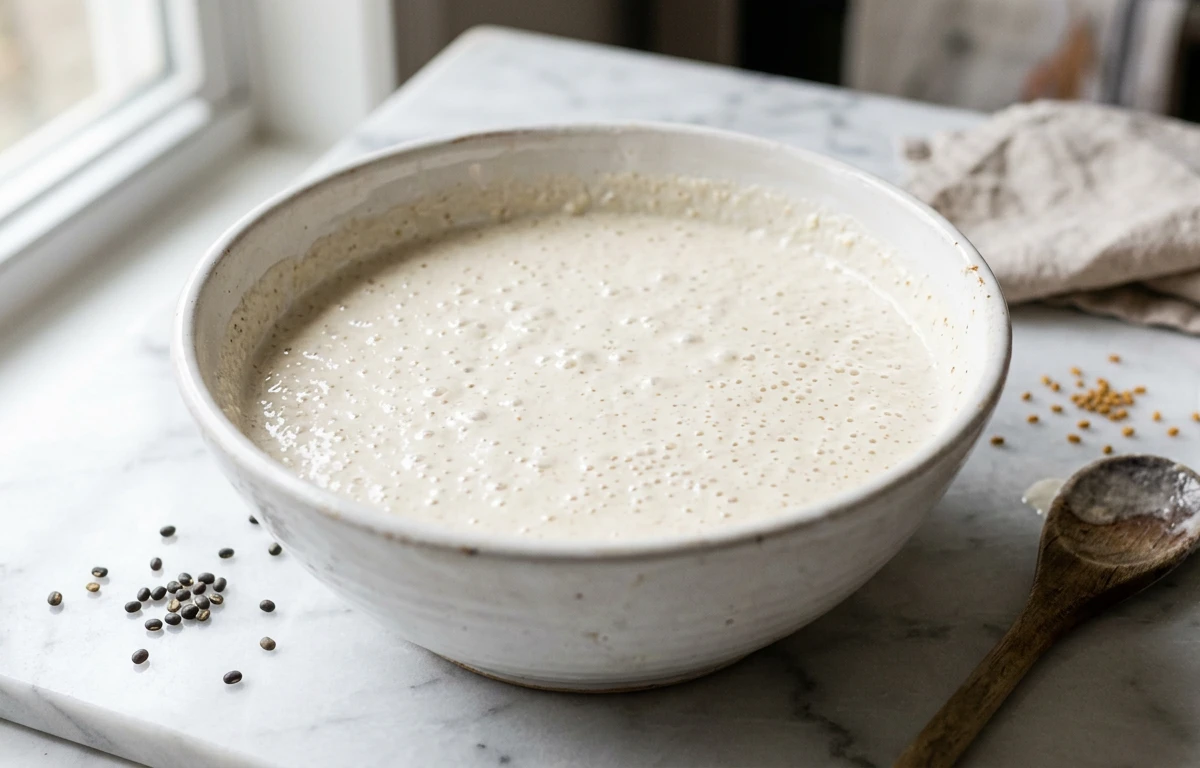
Idli & Dosa Batter Base
A light, airy, fermented batter made from rice and urad dal—the foundation for soft, fluffy idlis and crispy golden dosas. With just a little planning for soaking and fermentation, you'll have a versatile batter that brings the authentic taste of a South Indian tiffin kitchen right to your home.
For 20 servings
- prep · ~300 min
Wash and soak the rice and dal separately.
1.Rinse the idli rice in 3-4 changes of water until the water runs clear.2.Rinse the urad dal and methi seeds together until the water is clear.3.Soak the rice in enough water to cover by 2 inches in a large bowl.4.Soak the urad dal and methi seeds together in another bowl with water covering by 2 inches.5.Let both soak for at least 4 to 5 hours.TIPLong soaking hydrates the grains thoroughly, which helps the batter ferment well and yields softer idlis. - mix · ~20 min
Grind the urad dal to a smooth, fluffy paste.
1.Drain the soaked urad dal and methi seeds, reserving the soaking water.2.Transfer to a wet grinder or blender.3.Add the reserved soaking water slowly, a little at a time, grinding until the batter is smooth, light, and fluffy.4.The batter should double in volume and have a satiny sheen. This takes about 15-20 minutes in a wet grinder.TIPUse ice-cold water while grinding if the motor runs hot. Heat can kill the natural yeast needed for fermentation. - mix · ~15 min
Grind the rice to a slightly grainy paste.
1.Drain the soaked rice.2.Transfer to the grinder and add fresh water gradually.3.Grind to a fine paste that still has a hint of graininess—not as smooth as the dal batter.4.The rice batter should feel like very fine semolina between your fingers.TIPA little coarseness in the rice batter helps idlis stay soft while dosas get that perfect crisp edge. - mix · ~4 min
Combine batters and mix with your hand.
1.Pour the urad dal batter and rice batter into a single very large bowl.2.Add the salt.3.Use your clean hand to mix the two batters together thoroughly for 3-4 minutes.4.The warmth from your hand and the mixing action introduces wild yeast that kick-starts fermentation.TIPHand mixing genuinely makes a difference. The natural microbes on your skin are excellent fermentation starters for this batter. - rest · ~600 min
Ferment the batter overnight.
1.Cover the bowl loosely with a lid or cloth. Do not seal airtight; the batter needs oxygen.2.Place it in a warm spot, ideally an oven with just the light on or a corner of the kitchen.3.Let it ferment for 8 to 10 hours, or until the batter has doubled and is riddled with tiny bubbles.4.In cooler climates, it may need up to 12-14 hours.TIPKeep the bowl warm and draft-free. In winter, wrap the bowl in a thick towel or place it near a warm appliance. - prep
Use immediately or store the batter.
Once fermented, the batter is ready to use for soft idlis or crispy dosas. If not using right away, transfer to the refrigerator where it keeps well for up to 4-5 days. Stir gently before each use.
TIPAlways bring refrigerated batter to room temperature for 30 minutes before making dosas for better spreadability.
What to keep in mind.
7 tips from the recipe — small details that make a real difference to the final dish.
- 1Soak rice and urad dal separately to ensure even hydration and optimal grinding texture.
- 2Use ice-cold water while grinding urad dal to prevent the batter from overheating and killing fermentation microbes.
- 3The rice batter should feel slightly grainy between your fingers; over-grinding makes idlis dense.
- 4Hand-mix the combined batters for 3-4 minutes to introduce natural wild yeast from your skin.
- 5Ferment in a warm, draft-free spot (like an oven with the light on) for 8-12 hours until doubled and bubbly.
- 6Refrigerated batter keeps for 4-5 days; bring to room temperature 30 minutes before making dosas.
- 7Never seal the fermentation bowl airtight — the batter needs oxygen to rise properly.
Adapt it for your goals.
Instant Pot batter
Use a blender for grinding (wetter batter) and ferment in the Instant Pot on yogurt mode for 8-10 hours — great for consistent results in cooler climates.
Brown rice & quinoaBrown rice & quinoa
Replace idli rice with brown rice and add ¼ cup quinoa for extra fiber and a nuttier flavor; increase soaking time to 6-8 hours.
Oats & moong dalOats & moong dal
Swap urad dal with skinned moong dal and replace half the rice with rolled oats for a lighter, faster-fermenting batter (4-6 hours) that's easier to digest.
Vegan & oil freeVegan & oil-free
This batter is naturally vegan; simply use no oil on the griddle for dosas and skip any greasing for idlis — still tastes wonderful.
High protein milletHigh-protein millet
Substitute 1 cup of idli rice with foxtail millet (thinai) for a protein-rich, gluten-free twist with a subtly earthy taste.
Why this is on our healthy list.
Naturally Vegan & Gluten-Free
This batter contains no animal products or wheat, making it suitable for vegan and gluten-free diets while still being filling and nutritious.
Rich in Plant Protein
Urad dal is a excellent source of plant-based protein and dietary fiber, supporting muscle repair and digestive health.
Probiotic-Rich Fermented Food
Natural fermentation creates beneficial lactic acid bacteria, which can support gut health and improve nutrient absorption.
Low Glycemic Index
The combination of rice and lentils, plus the fermentation process, slows down carbohydrate digestion, helping maintain steady blood sugar levels.
Frequently asked questions
The batter needs consistent warmth (75-85°F), a draft-free spot, and natural yeast from hand-mixing. In cold weather, use an oven with just the light on or a warmed (then turned off) oven.