
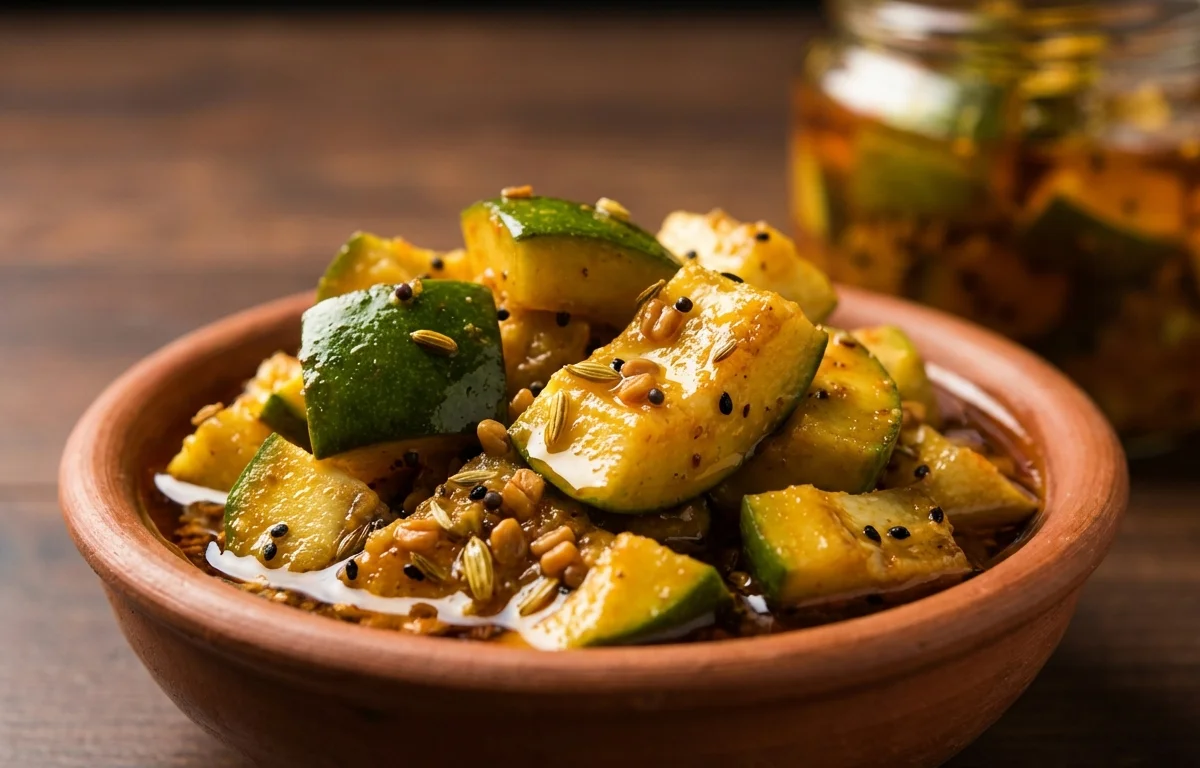
Mango Pickle
Tangy, spicy, and perfectly savory, this traditional Indian raw mango pickle (Aam ka Achar) is a flavor explosion. Made without onion or garlic, it's a Jain-friendly condiment that livens up any meal, from dal and rice to parathas. This recipe uses a sun-drying method for long-lasting preservation and authentic taste.
For 50 servings
Prepare the Mangoes (2-3 hours resting time)
1.Wash the raw mangoes thoroughly and pat them completely dry with a clean kitchen towel. Any moisture can spoil the pickle.2.Cut the mangoes into uniform 1-inch pieces, keeping the skin on but discarding the hard inner seed.3.In a large, dry glass or ceramic bowl, combine the mango pieces with 2 tablespoons of rock salt and 1 teaspoon of turmeric powder. Toss well to coat evenly.4.Cover the bowl and let it rest at room temperature for 2-3 hours. The salt will draw out excess water from the mangoes, which is crucial for preservation.Prepare the Pickle Masala (5 minutes)
1.While the mangoes are resting, heat a dry, heavy-bottomed pan over low heat.2.Add the mustard seeds, fenugreek seeds, and fennel seeds. Dry roast for 1-2 minutes, stirring constantly, until they become fragrant. Be careful not to burn them, as this will make the pickle bitter.3.Remove the spices from the pan and let them cool down completely.4.Once cool, transfer the roasted spices to a grinder and pulse them into a coarse powder.Temper and Cool the Oil (15-20 minutes)
1.Pour the mustard oil into a saucepan. Heat it over medium-high heat until it reaches its smoking point, which takes about 5-7 minutes. You will see faint smoke rising from the surface.2.Immediately turn off the heat. This process mellows the pungent taste of the mustard oil.3.Let the oil cool down completely to room temperature. This is very important; adding hot oil to the spices will burn them and ruin the flavor.Combine the Pickle (5 minutes)
1.After 2-3 hours, you will see a significant amount of water collected at the bottom of the mango bowl. Drain this water completely and discard it.2.In a large, dry mixing bowl, pour the completely cooled mustard oil.3.Add the coarse spice powder, nigella seeds, Kashmiri red chili powder, hing, the remaining 2 tablespoons of salt, and the remaining 1 teaspoon of turmeric powder. Mix everything well to form a spiced oil slurry.4.Add the drained mango pieces to this mixture. Stir with a clean, dry spoon until every piece is thoroughly coated.Jar and Mature the Pickle (4-5 days sunning time)
1.Carefully transfer the pickle into a clean, dry, and sterilized glass jar.2.Press the mango pieces down gently. Ensure there is at least a 1/2-inch layer of oil floating on top, as this acts as a natural preservative.3.Cover the mouth of the jar with a clean piece of muslin or cheesecloth and secure it with a string. This allows moisture to escape while keeping dust out.4.Place the jar in direct sunlight for 4-5 consecutive days, for at least 5-6 hours each day. Bring it indoors at night.5.Stir the pickle once every day with a clean, dry spoon to ensure even maturing.6.After 4-5 days, the mango pieces will have softened slightly and the flavors will have melded. The pickle is ready. Replace the cloth with an airtight lid and store.
What to keep in mind.
6 tips from the recipe — small details that make a real difference to the final dish.
- 1Absolute dryness is key. Ensure the mangoes, bowl, jar, and spoons are completely free of moisture to prevent spoilage.
- 2Sterilize your glass jar by washing it with hot, soapy water, rinsing well, and then drying it completely in a low oven (100°C / 210°F) for 15 minutes.
- 3Always use a clean, dry spoon to serve the pickle. This prevents contamination and extends its shelf life.
- 4The layer of oil on top is crucial for preservation. If the oil level drops, heat more mustard oil, cool it completely, and add it to the jar to keep the mangoes submerged.
- 5Use firm, dark green, and distinctly sour raw mangoes. Ripe or soft mangoes will turn mushy and spoil the pickle.
- 6For a less pungent pickle, you can use a mix of mustard oil and another neutral oil like sunflower oil.
Adapt it for your goals.
Sweeter Version
For a sweet and sour pickle (like Gujarati 'Chundo'), add 1/4 cup of grated jaggery to the spice and oil mixture before adding the mangoes.
Extra SpicyExtra Spicy
Add 5-6 whole green chilies, slit lengthwise, along with the mango pieces for an extra kick of heat.
No Sun MethodNo-Sun Method
If you don't have access to direct sunlight, you can mature the pickle indoors. Keep the jar in a warm, dry place for 2-3 weeks, shaking it every day. The process is slower, but the result is equally delicious.
Why this is on our healthy list.
Promotes Gut Health
The traditional fermentation process involved in making this pickle encourages the growth of beneficial probiotics, which are essential for a healthy gut microbiome and improved digestion.
Aids Digestion
Spices like fennel seeds (saunf) and asafoetida (hing) are well-known in Ayurveda for their carminative properties, which help reduce gas, bloating, and indigestion.
Rich in Antioxidants
This pickle is loaded with spices like turmeric, mustard seeds, and chili powder, which are rich in antioxidants. These compounds help protect the body against damage from free radicals.
Boosts Immunity
Raw mangoes are a good source of Vitamin C, and spices like turmeric contain curcumin, both of which are known to support and strengthen the immune system.
Frequently asked questions
One tablespoon (approx. 18g) of this mango pickle contains about 45-55 calories, primarily from the mustard oil.


