
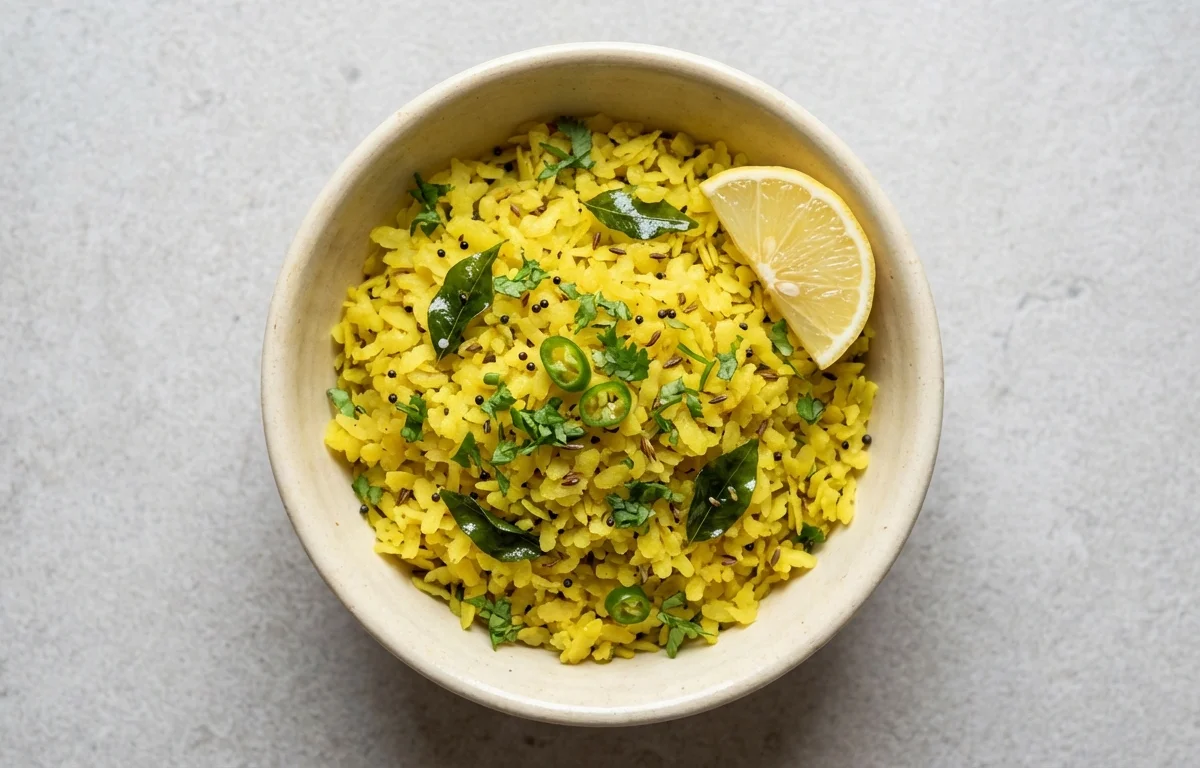
Jain Poha
A light and gentle version of the classic flattened rice breakfast from Maharashtra and Madhya Pradesh, made without onion, garlic, or potatoes. Turmeric-stained poha tossed with green chilies, peanuts, and a bright squeeze of lemon—ready in 15 minutes and perfect for a Jain satvik meal.
For 4 servings
- prep · ~5 min
Wash and drain the poha.
1.Place poha in a colander and rinse gently under running water for 30 seconds.2.Drain completely and set aside for 5 minutes to soften. It should turn fluffy and break easily when pressed.TIPDon't soak the poha too long—thick poha needs only a quick rinse or it will turn mushy. - temper · ~1 min
Make the tempering.
1.Heat oil in a large pan over medium heat until shimmering.2.Add mustard seeds and let them splutter (30 seconds).3.Add cumin seeds and stir until fragrant (10 seconds). - fry · ~4 min
Fry the peanuts and add aromatics.
1.Add the peanuts and fry, stirring, until golden and crunchy (2–3 minutes).2.Add curry leaves and slit green chilies. Sauté until leaves turn crisp (30 seconds).TIPPeanuts should toast to a light golden brown—dark ones taste bitter. - mix · ~2 min
Season and mix in the poha.
1.Lower the heat to low. Add turmeric powder, salt, and sugar. Stir briefly.2.Add the softened poha and gently fold everything together until evenly yellow and well mixed.TIPUse a light hand when mixing—over-stirring breaks the delicate poha flakes. - steam · ~4 min
Cover and steam through.
Cover the pan with a tight-fitting lid and let the poha cook on low heat for 3–4 minutes. The steam will fluff it up and meld the flavors.
TIPKeep the heat low so the bottom doesn't catch or burn. - garnish
Garnish and serve hot.
Turn off the heat, drizzle lemon juice over the poha, and sprinkle with chopped cilantro and grated fresh coconut. Toss lightly once more and serve immediately.
What to keep in mind.
7 tips from the recipe — small details that make a real difference to the final dish.
- 1Use thick poha (flattened rice) for a fluffy texture; thin poha turns mushy. Rinse gently in a colander, not a bowl.
- 2After rinsing, let poha rest for 5 minutes until it's soft and breaks easily when pressed—don't skip this resting step.
- 3Toast peanuts until just light golden; dark peanuts turn bitter and ruin the dish's gentle flavor.
- 4When mixing turmeric and poha, use a light folding motion—over-stirring breaks the delicate flakes.
- 5Cover and steam on the lowest heat so the poha fluffs up without burning on the bottom.
- 6Make-ahead tip: Prep the rinsed poha and chopped garnishes a few hours ahead; temper and assemble just before serving.
- 7For best texture, serve immediately after garnishing—poha softens as it sits and loses its light bite.
Adapt it for your goals.
No-oil
Skip the oil for tempering; dry-roast mustard seeds, cumin, and peanuts in a nonstick pan, then add a splash of water when adding turmeric. Great for low-fat or Jain diets that avoid oil on certain days.
kid friendlyKid-friendly
Reduce or omit green chilies and add a handful of frozen peas or finely chopped carrots along with the peanuts for extra color and mild sweetness.
high proteinHigh-protein
After steaming, fold in crumbled paneer or cubed tofu and a pinch of chaat masala. Makes it a more filling meal for active days.
Why this is on our healthy list.
Light and Easy to Digest
Poha is a low-fat, gluten-free grain that is easily digestible, making this dish ideal for breakfast or a light meal.
Rich in Plant-Based Protein
Peanuts add a good source of plant protein and healthy unsaturated fats, and they provide a satisfying crunch.
Good Source of Iron
Flattened rice (poha) is naturally high in iron, and the lemon juice helps the body absorb more iron from the meal.
Frequently asked questions
You likely rinsed the poha too long or used thick water flow. Rinse gently for only 30 seconds, then drain and rest 5 minutes—no soaking.


